Spot Commodities
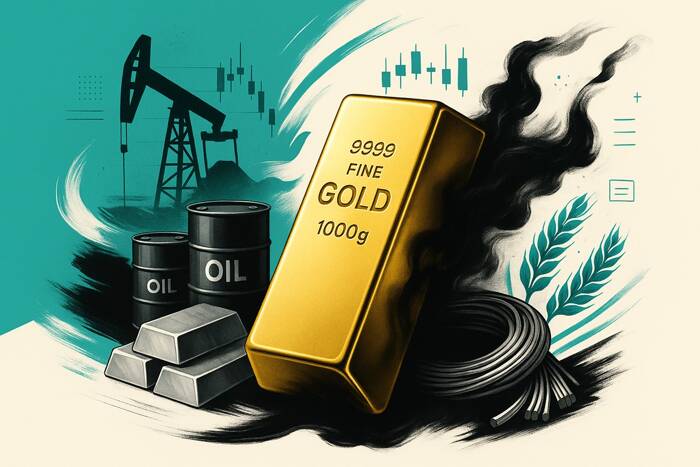
The spot commodity market is exactly what it sounds like – trading the physical commodity for immediate delivery. Here, you’re dealing with actual barrels of oil, bushels of wheat, or ounces of gold that change hands. In the case of precious metals, investors often purchase bullion bars—standardized gold or silver bars valued close to their melt price—as a tangible way to own precious metals.
Who’s trading spot markets?
- Producers: Miners, farmers, oil drillers selling their output
- End users: Manufacturers, refineries, food producers buying inputs
- Wholesalers/Distributors: Moving commodities through the supply chain
- Some investors: Particularly in precious metals
The spot market is where the rubber meets the road (sometimes literally, in the case of rubber). Prices here reflect current supply/demand dynamics with all their messy real-world constraints.
If you want to buy a barrel of WTI crude oil on the spot market, you’d better have somewhere to put it.
Derivatives
Derivatives markets let you gain exposure to commodity price movements without the hassle of physical delivery. These include:
- Futures contracts:
Standardized agreements to buy or sell a commodity or financial asset at a set price on a specific date. Futures trading involves buying and selling standardized futures products, including commodity futures and equity index futures, which allow traders to agree on a set price for a commodity or financial asset to be delivered or settled on a specific date. Many futures contracts are written on financial assets such as equity indices, interest rates, and currencies, in addition to physical commodities.
- Options on futures:
The right (but not obligation) to buy or sell futures contracts at a specific price (strike price) on or before a specific date, making the specific price and specific date crucial elements of these contracts.
- Swaps and CFDs:
OTC agreements to exchange cash flows based on commodity prices. Traders can also trade CFDs on spot commodities, allowing for speculative trading without physical ownership.
- ETFs/ETNs:
Exchange-traded products tracking commodity prices or indices; some ETFs track commodity linked stocks, which are equities tied to the performance of underlying commodities.
Who’s trading derivatives?
- Commercial hedgers: Producers and consumers managing price risk
- Speculators: Traders looking to profit from price moves
- Asset allocators: Institutional investors seeking commodities exposure
- Arbitrageurs: Exploiting price differences between related instruments
- Retail traders: That’s you and me, usually via futures, ETFs or CFDs
These markets are primarily about transferring price risk rather than transferring the physical commodity itself.
Types of Commodities
Commodities come in several distinct categories, each offering unique opportunities and risks for investors interested in commodity trading. The most widely recognized group is energy commodities, which includes crude oil and natural gas—key drivers of the global economy and frequent subjects of price swings due to geopolitical events and supply-demand shifts. Precious metals, such as gold and silver, are another major category, often sought after as safe-haven assets during times of market uncertainty.
Agricultural products form a significant part of the commodities landscape as well. These include staples like corn, soybeans, and wheat, which are essential to the global food supply and can be influenced by weather patterns, crop yields, and international trade policies. Soft commodities, such as sugar, coffee, and cocoa, are also actively traded and can experience sharp price movements based on harvest conditions and consumer demand.
Understanding the different types of commodities is crucial for investors looking to diversify their portfolios and engage in commodity trading. Each category responds to different market forces, so a well-rounded approach can help manage risk and capture opportunities across the commodities spectrum.
Diversification: The Free Lunch You Actually Can Get
One of the most compelling reasons to add commodities to your portfolio is diversification. Portfolio diversification is a key benefit of including commodities, as they can help reduce overall risk and provide a hedge against inflation. Unlike stocks and bonds, which tend to be heavily influenced by interest rates and economic outlook, commodities often dance to their own tune.
For example, platinum prices might surge due to mining strikes in South Africa. Natural gas might skyrocket during a particularly cold winter. Coffee might jump because of a frost in Brazil. These events have little to do with whether interest rates are going up or down.
This independence gives commodities a low correlation to traditional assets over long periods, which is exactly what you want when building a portfolio:
- When post-pandemic inflation hit in 2021 and 2022, commodities shot up – in fact, they were one of the driving causes of inflation in that period.
- During the 2020 COVID crash, gold initially fell but then rallied strongly
- When equities crashed in 2008, gold went up
- In the 1970s inflationary cycle, commodities soared while stocks struggled
Now, these correlations aren’t stable – they can and do change. But on the whole, judiciously adding commodities to a portfolio of stocks and bonds has historically improved risk-adjusted returns.
As a simple example, here’s a simple volatility-targeted ETF portfolio (where each component gets the same volatility target) of US stocks (VTI) and treasuries (TLT) over about 25 years: