By 2050, an additional 2.4 billion people are expected to be living in developing countries, concentrated in South Asia and sub-Saharan Africa.
Agriculture is a key economic sector and a major employment source in these regions.
However, currently, more than 20 per cent of the population is on average food-insecure.
About 75 per cent of the world’s poor live in rural areas, and agriculture is their most important income source.
Raising agricultural productivity and incomes in the smallholder production sector is crucial for reducing poverty and achieving food security, as key elements and drivers of economic transformation and growth, and within the broader context of urbanisation and development of the non-farm sector.
Projections indicate that globally, agricultural production will need to expand by 60 per cent by 2050 to meet increased demand, and most of this will need to come from increased productivity.
Climate change
Climate change affects crop production in several regions of the world, with negative effects more common than positive, and developing countries are highly vulnerable to further negative impacts.
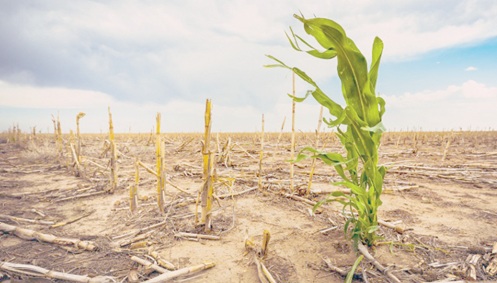
Increases in the frequency and intensity of extreme events, such as drought, heavy rainfall, flooding and high maximum temperatures, are already occurring and expected to accelerate in many regions.
Average and seasonal maximum temperatures are projected to continue rising, with higher average rainfall overall.
However, these effects will not be evenly distributed.
Water scarcity and drought in already dry regions are also likely to increase by the end of the century.
Climate change is estimated to have already reduced global yields of maize and wheat by 3.8 and 5.5 per cent, respectively, and several researchers warn of dramatic decreases in crop productivity when temperatures exceed critical physiological thresholds.
Increased climate variability exacerbates production risks and challenges to farmers’ coping ability.
Climate change poses a threat to food access for both rural and urban populations by reducing agricultural production and incomes, increasing risks and disrupting markets.
Poor producers, the landless and marginalised ethnic groups are particularly vulnerable.
The impact of extreme climate events can be long-lasting, as risk exposure and increased uncertainty affect investment incentives and reduce the likelihood of effective farm innovations, while increasing that of low-risk, low-return activities.
Unless we change our approach to planning and investment for agricultural growth and development, we risk misallocating human and financial resources, generating agricultural systems incapable of supporting food security and contributing to increasing climate change.
CSA identifies synergies and trade-offs among food security, adaptation and mitigation as a basis for informing and reorienting policy in response to climate change.
In the absence of such efforts, projections indicate that agriculture and food systems will be less resilient and food security will be at higher risk.
CSA calls for a set of actions by decision-makers from farm to global level to enhance the resilience of agricultural systems and livelihoods and reduce the risk of food insecurity in the present as well as the future.
CSA emphasises agricultural systems that utilise ecosystem services to support productivity, adaptation and mitigation.
Examples include integrated crop, livestock, aquaculture and agroforestry systems; improved pest, water and nutrient management; landscape approaches; improved grassland and forestry management; practices such as reduced tillage and use of diverse varieties and breeds; integrating trees into agricultural systems; restoring degraded lands; improving the efficiency of water and nitrogen fertiliser use; and manure management, including the use of anaerobic bio-digesters.
Enhancing soil quality can generate production, adaptation and mitigation benefits by regulating carbon, oxygen and plant nutrient cycles, leading to enhanced resilience to drought and flooding, and to carbon sequestration.
These supply-side changes need to be complemented by efforts to change consumption patterns, reduce waste and create positive incentives along the production chain.
Effective Implementation
Climate change gives rise to new and increased demands for collective action.
Often, to achieve the scale necessary to significantly reduce risks associated with extreme weather events, coordinated efforts are required by many farmers, those involved in managing communal resources and those managing public lands.
Multi-stakeholder dialogues to support improved governance of tenure systems for land and water that take into account the interests of women, poor and marginalised groups are a promising direction, in addition to more traditional efforts to increase tenure security over privately held and managed land.
Comprehensive risk management strategies require a better understanding of the robustness of different risk management instruments under climate uncertainty, and coordination of actions by public, private and civil society actors from the international to local levels.
National governments could provide mechanisms for proactive and integrated risk management, such as a national board that coordinates risk management strategies and institutions for risk monitoring, prevention, and response.
The private sector can play a key role in risk management, but effective engagement must be enabled by transparent, efficient and enforceable regulations and innovative public-private partnerships.
Social protection programs that guarantee minimum incomes or food access also affect risk exposure, with potential impacts on production choices, and there has been considerable expansion globally of such programs in recent years.
Way forward
Climate change alters agricultural production and food systems, and thus the approach to transforming agricultural systems to support global food security and poverty reduction.
Climate change introduces greater uncertainty and risk among farmers and policy-makers, but need not lead to analysis paralysis.
An integrated, evidence-based and transformative approach to addressing food and climate security at all levels requires coordinated actions from the global to local levels, from research to policies and investments, and across private, public and civil society sectors to achieve the scale and rate of change required.
With the right practices, policies and investments, the agriculture sector can move onto CSA pathways, resulting in decreased food insecurity and poverty in the short term while contributing to reducing climate change as a threat to food security over the longer term.
The writer is the Registrar, Chartered Institute of Agriculture, Ghana
Email: