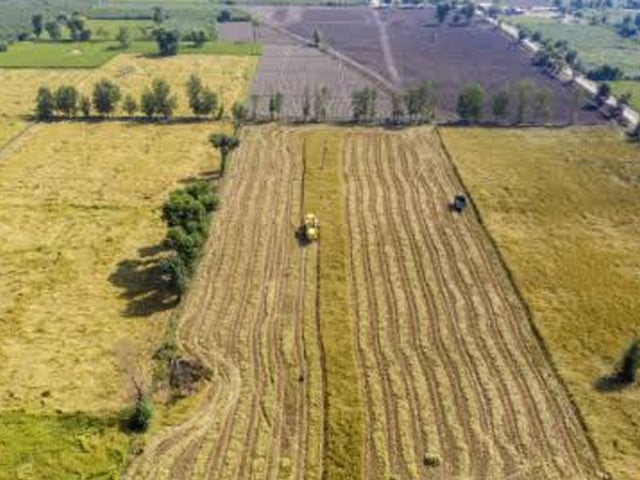
A joint China-Pakistan desert agriculture and horticulture lab has been launched in Multan under CPEC. Prof Cheng Xizhong said the project will introduce water-saving and solar-powered technologies for arid land farming.
MULTAN: A joint China-Pakistan facility focused on desert agriculture and horticulture has been launched in Multan, with officials and researchers presenting it as a step forward in bilateral agricultural cooperation under the China-Pakistan Economic Corridor.
According to Prof Cheng Xizhong, a senior research fellow at the Charhar Institute, the new Joint Laboratory for Desert Agriculture and Science and Technology Backyard for Desert Horticulture is Pakistan’s first such initiative. He said the project combines China’s established desert farming methods with Pakistan’s largely underused arid land resources.
Cheng said Pakistan’s agriculture sector has faced persistent water scarcity and weak land utilisation, while nearly 15% of the country’s total land area consists of uncultivated desert. He said the collaboration is aimed at addressing these structural constraints directly.
Technology transfer for arid land farming
The project is drawing on technologies developed and tested by Tarim University in Xinjiang. These include solar-powered greenhouses, precision farming systems, drone-based crop monitoring and drip irrigation designed to conserve water.
Cheng identified the low-cost, high-efficiency solar greenhouse as a central feature of the initiative. He said the technology is intended to overcome the operational weaknesses of conventional greenhouses and can raise land productivity by up to 35%.
He said the greenhouse has a modular design that allows rapid assembly while maintaining strong daylight transmission and heat insulation. He added that its water-curtain floor heating system stores solar energy during the day and releases the retained heat at night, helping stabilise the internal environment, increase nighttime temperatures and cut energy use significantly.
Links to wider development goals
Cheng said the project is aligned with Pakistan’s Green Pakistan Initiative and supports sustainable land restoration, the cultivation of drought-resistant crops and the development of the rural economy. He said the effort could help strengthen food security, encourage the growth of local supporting industries and raise the income and living standards of rural communities.
He also said the cooperation model could be replicated in other arid regions, including parts of Central Asia and the Middle East. According to Cheng, the project reflects the practical and people-centred character of the China-Pakistan all-weather strategic cooperative partnership by seeking to convert barren land into productive farmland and support long-term green development in broader regional economic cooperation.