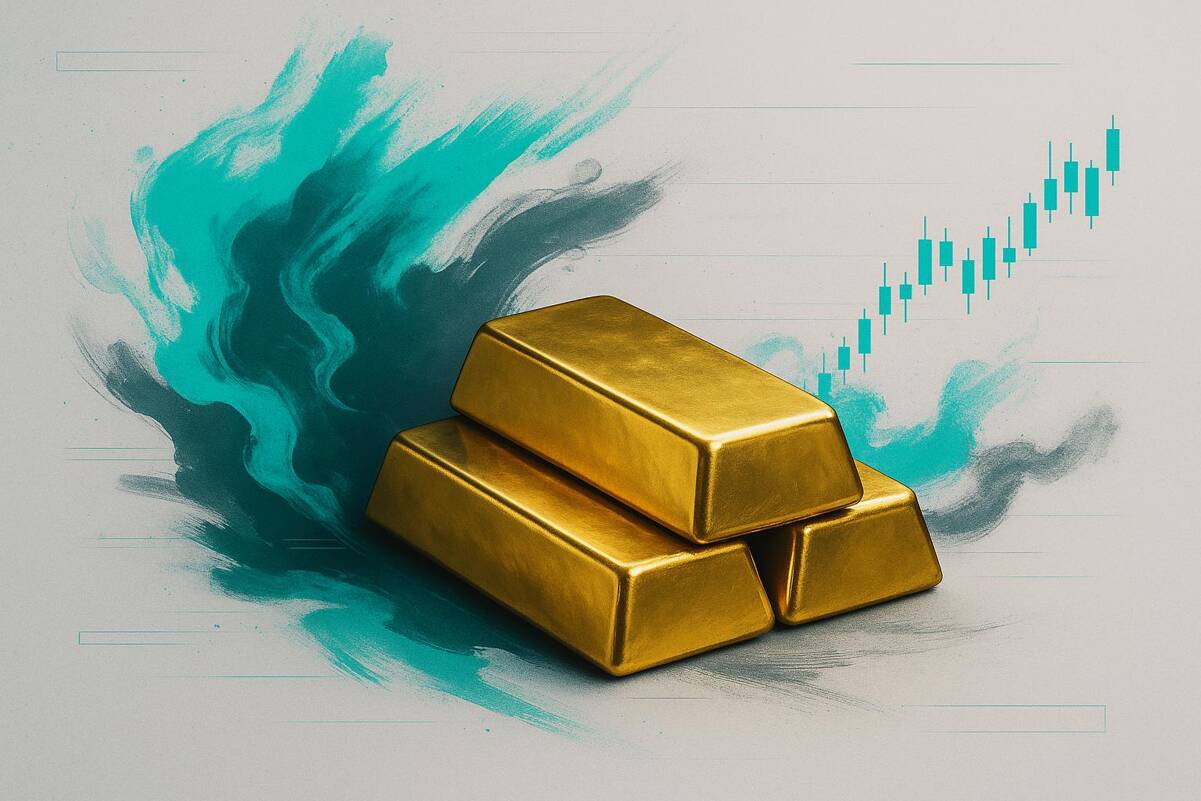
Historically, Silver often lags Gold in the early stages of a precious metals move – then catches up violently. That is why many traders view Silver as the high-beta opportunity of the Commodity complex.
“If Gold is the foundation, Silver is the accelerator,” Hansen says. “The Silver market is much smaller, much tighter and much more sensitive to inflows. When momentum arrives, the moves can be dramatic.”
The artificial intelligence boom is not only a software story. It is a power story. Data centres require electricity, cooling systems, grid upgrades, transformers and vast amounts of Copper.
Copper is also essential for electric vehicles, renewable energy, defence systems, housing, infrastructure and industrial expansion. Yet supply remains structurally constrained. New mines are difficult to permit, expensive to finance and slow to build.
The world wants instant electrification, but Copper supply does not move at the speed of artificial intelligence.
“The market still treats Copper like an old-economy metal,” Hansen says. “That is a major mistake. Copper is one of the most important bottlenecks of the AI and electrification supercycle.”
Oil And Natural Gas: The Energy Security Trade
The idea that Oil and Natural Gas are dead has been one of the most dangerous assumptions in global markets.
The world still runs on Energy. Airlines, shipping, manufacturing, petrochemicals, logistics, agriculture and power generation all depend on reliable energy supply. Meanwhile, Natural Gas is becoming increasingly important as data centres, LNG demand and electricity consumption surge.
Energy transition does not remove the need for Oil and Gas. In many cases, it increases the pressure on Energy systems that are already underinvested and politically fragile.
“Energy is not going away,” Hansen says. “What is changing is that Energy security is once again becoming a national priority. That is extremely bullish for Oil and Natural Gas over the medium term.”
The Hard-Asset Rotation Has Barely Started
The biggest market moves usually begin when traders are distracted elsewhere.
Right now, capital remains crowded in equities, technology and cash. But Commodities remain under-owned relative to the scale of the opportunity. That is where the potential lies.
When capital eventually rotates into Hard Assets, the move can be fast and highly lucrative. By the time mainstream traders fully recognize the opportunity, prices may already have repriced significantly higher.
This is the essence of the Commodities opportunity now: limited supply, rising demand, inflation protection, geopolitical risk, monetary uncertainty and strategic scarcity – all converging at the same time.
The Question Is Not Whether Commodities Matter. It’s Whether You’re Positioned
For traders and investors alike, the risk is no longer being too early. The bigger risk may be being too late.
Commodities are not simply another asset class. They are the raw materials of economic survival. They power the grid, build infrastructure, fuel transportation, support defence and enable the next technological revolution.
That is why the current setup is so compelling.
Gold protects wealth. Silver amplifies momentum. Copper powers the AI economy. Oil secures global transport and industry. Natural Gas fuels the next wave of electricity demand.
Together, they form one of the most powerful hard-asset opportunities of 2026.
As Hansen puts it: “This is not just a Commodities trade. This is a global repricing of scarcity. Traders who understand that early may be the ones who benefit most.”
The window is open now. But in Commodity markets, these windows rarely stay open for long.