Gold and silver prices fall explained
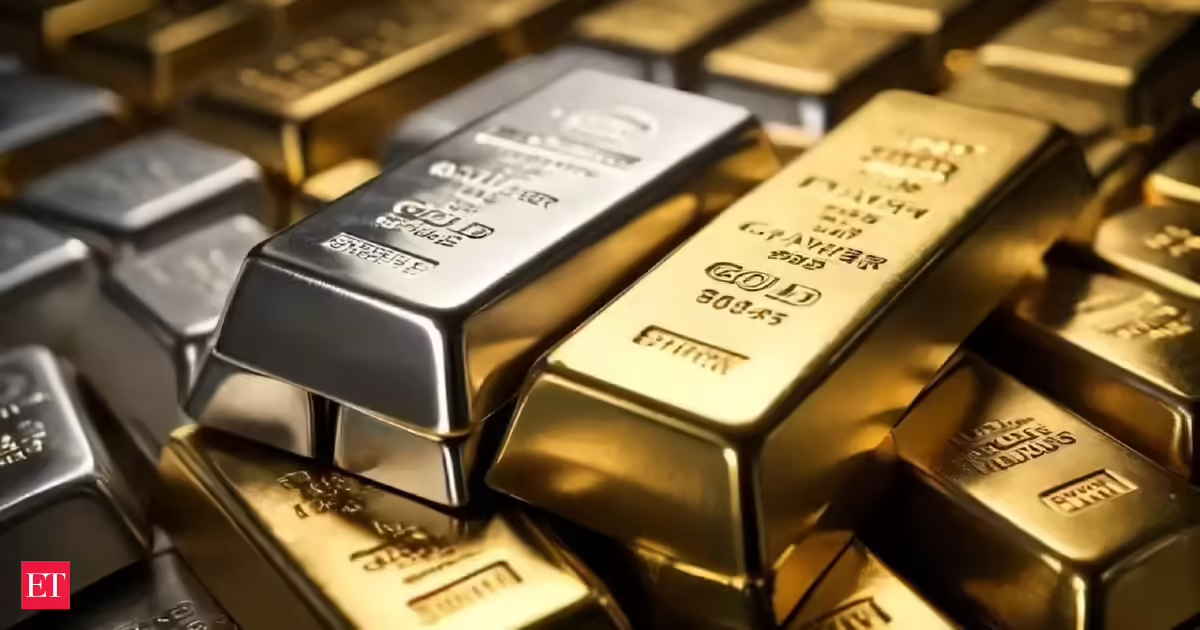
Gold and silver prices moved lower on Wednesday as investors reacted to rising U.S. Treasury yields, a stronger U.S. dollar, and growing expectations that the U.S. Federal Reserve could raise interest rates again later this year. The decline came ahead of important economic reports that could provide more information about the direction of monetary policy.
Gold has now fallen for three straight trading sessions. The decline also marked the metal’s first quarterly loss since January 2024. Investors remain focused on interest rates because they directly affect the appeal of holding precious metals.
Gold prices decline as bond yields move higher
Spot gold fell 0.8% to $3,974.75 per ounce by 0849 GMT. During the previous trading session, the metal touched $3,942.99 per ounce, its lowest level since November. U.S. gold futures for August delivery also declined. Futures were down 1.3%, trading at $3,987.70 per ounce.
One of the main reasons behind the fall was the rise in U.S. Treasury yields. On Tuesday, investors sold U.S. government bonds, pushing the benchmark 10-year Treasury yield up by as much as nine basis points before easing slightly. On Wednesday, yields increased again and traded around 4.465%, rising faster than bond yields in the euro zone.

Higher Treasury yields usually reduce demand for gold because gold does not pay interest. Investors often shift money toward government bonds when bond returns become more attractive.
Why are gold and silver prices down today?
The latest decline was also linked to expectations that the Federal Reserve may keep interest rates higher or even increase them again if inflation remains above its target.UBS analyst Giovanni Staunovo said the weakness in gold prices was partly driven by comments from Federal Reserve Bank of Cleveland President Beth Hammack, who suggested that another rate increase could be needed if inflation pressures do not ease. According to the CME FedWatch Tool, traders are now pricing in nearly a 67% chance of a Federal Reserve rate hike by September.
Higher interest rates generally reduce the appeal of gold because the metal does not generate income like interest-paying assets. Investors therefore often move funds into assets that provide better returns. Staunovo also noted that exchange-traded fund (ETF) holdings backed by gold have seen fresh outflows in recent days, showing that investment demand has weakened.
Economic reports could shape the next move
Investors are now waiting for fresh economic data from the United States before making larger investment decisions. The June ADP employment report is scheduled for release later on Wednesday. The report provides an estimate of private-sector job growth and is often watched before the government’s official employment report. On Thursday, the U.S. nonfarm payrolls report will be released. The report is one of the most closely followed economic indicators because it shows the health of the labour market.
If employment data remains strong, it could strengthen expectations that the Federal Reserve will keep interest rates higher for longer. That could continue to pressure gold and silver prices. On the other hand, weaker employment numbers could reduce expectations for additional rate hikes, which may support precious metals.
Central bank meeting and global developments remain in focus
Apart from economic data, investors are also paying attention to speeches from central bank officials attending the European Central Bank’s annual conference in Sintra. Federal Reserve Chair Kevin Warsh and European Central Bank President Christine Lagarde are expected to speak during the conference. Financial markets will closely examine their comments for any signals about future interest rate decisions.
Global political developments are also being monitored. Concerns remain over relations between the United States and Iran after Tehran said it would not meet senior U.S. officials who travelled to the region following the recent conflict. Political uncertainty can sometimes increase demand for gold as a safe-haven asset. However, current market attention remains focused mainly on interest rates and economic data.
Will precious metals continue to drop or rise again?
The direction of precious metals will largely depend on upcoming economic data, interest rate expectations, inflation trends, and movements in the U.S. dollar. If Treasury yields continue rising and the Federal Reserve signals more interest rate increases, gold and silver could remain under pressure because investors may continue moving toward interest-bearing assets.
However, if inflation slows and economic data weakens, expectations for future rate hikes may decline. That could improve demand for gold and silver as investors seek protection against economic uncertainty. Market experts also expect price swings to remain high throughout the week because several important economic reports are scheduled for release.
Analysts insights and market outlook
Analysts believe that investors are becoming more cautious as they wait for clearer signals from policymakers. Giovanni Staunovo of UBS said expectations for additional rate increases are limiting investment demand for gold. He also pointed to renewed outflows from gold-backed ETFs as another sign that investors are reducing exposure to the metal.
Analysts expect markets to remain sensitive to every major economic release this week. Employment data, inflation expectations, and comments from Federal Reserve officials could all influence gold and silver prices over the coming days. Currency movements will also remain important. A stronger U.S. dollar makes gold more expensive for buyers using other currencies, which can reduce international demand.
What should investors do now?
Investors may continue watching economic reports before making fresh decisions. Interest rate expectations remain the biggest factor influencing precious metals. Any changes in inflation data or labour market reports could quickly change market sentiment.
Investors may also monitor Treasury yields, the U.S. dollar, and statements from Federal Reserve officials to understand whether current market expectations remain unchanged. Those considering investments in gold or silver may benefit from following both economic indicators and global developments, as both can affect short-term price movements.
Other precious metals also moved lower
The weakness was not limited to gold.
- Spot silver fell 1.4% to $57.75 per ounce.
- Platinum declined 0.6% to $1,542.70 per ounce after touching its lowest level since November.
- Palladium dropped 1.4% to $1,187.01 per ounce.
The decline across precious metals reflected cautious investor sentiment as markets prepared for key economic announcements.
FAQs
Q1. Why are gold and silver prices falling today?
Gold and silver prices declined because U.S. Treasury yields increased, the U.S. dollar strengthened, and investors raised expectations that the Federal Reserve could increase interest rates again after upcoming economic data.
Q2. Will gold and silver prices recover soon?
Future prices will depend on employment reports, inflation trends, Federal Reserve decisions, Treasury yields, and dollar movements. Weaker economic data could support precious metals, while higher rates may keep prices under pressure.