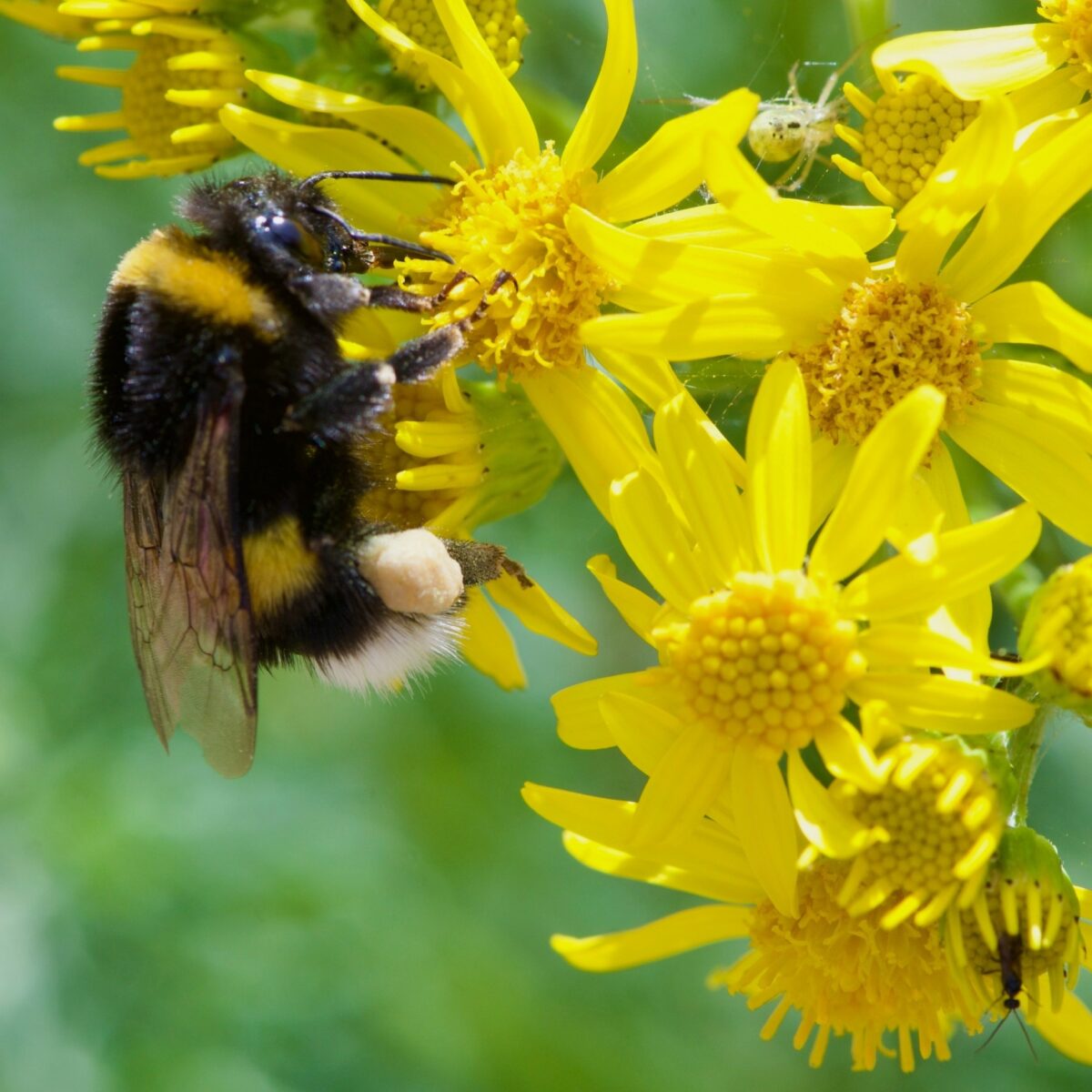
A bumblebee spends its day moving from flower to flower, gathering pollen and nectar that sustain its colony while helping pollinate countless flowering plants.
Along with those valuable resources, however, the bee may also carry home tiny traces of toxic metals that cling to pollen, dust, and soil.

Lead, cadmium, and arsenic are extremely harmful for wildlife. Even in small quantities, these toxins may impair cognition and reproduction of wildlife.
In bumblebees, these effects can include difficulties with finding food, nurturing their offspring, and maintaining the good condition of colonies.
Recent studies have shown that bumblebees experience much greater exposure to toxic metals compared to honeybees in the same conditions.
Two familiar bees
Scientists from the Department of Zoology at the University of Cambridge discovered that bumblebees carried substantially higher concentrations of toxic heavy metals than honeybees.
Both bee types search for food in the same landscape, but research showed that bumblebees had between two and seven times more heavy metals in pollen than honeybees.
They also carried roughly three times higher metal concentrations. Samples measured levels of arsenic, cadmium, chromium, cobalt, lead, and tin in both pollen and adult bees.
The work took place in Cambridgeshire, a rural area that generally has relatively low levels of metal contamination in its soil.
Facing greater exposure
The difference comes down to how the two species live and gather food. Honeybees usually nest above ground in hollow trees or managed hives.
Their colonies are enormous, often containing between 30,000 and 60,000 bees.
They can travel as far as about 6 miles while foraging, giving them access to many different flowers across a wide area.
Because they collect large amounts of pollen from many plant species, contamination from one source can become diluted.
A riskier way of life
Bumblebees have a very different lifestyle. Usually, they nest underground in soil or leaf litter, and their colonies are much smaller, often numbering only 50 to 500 individuals.
They typically forage no farther than about one mile from the nest, limiting their options if nearby plants or soil contain heavy metals.
They also tend to collect pollen from fewer types of flowers, and some plants absorb more metals than others.
In addition, the bodies of bumblebees are covered in hair, meaning they collect more dust particles that carry metal pollution.
Dr. Sarah Scott conducted the research while at the University of Cambridge and is now based at Newcastle University.
“Most metal levels we found were not high enough to kill bees, but even low levels can still harm bee health and colony success in subtle but important ways, such as affecting their ability to forage and reproduce,” said Dr. Scott.
Heavy metal exposure can impair bees’ ability to learn, remember, and navigate. This makes it hard for them to find flowers or reach their nests.
Metals also lead to reduced breeding success as well as the abnormal development of the offspring.
The far reach of pollution
Metal contamination is normally linked to industrial sites, mining facilities, and cities, but it does not remain there.
Winds can carry contaminated air into rural areas, while sewage sludge, fertilizer, and agricultural products might also contribute to metal contamination.
Professor Lynn Dicks from the Department of Zoology at the University of Cambridge was the study’s senior author.
“Even in areas that we usually consider safe or lower risk for heavy metals – typically rural areas, away from industrial or mining areas – bees can pick up toxic metals,” said Professor Dicks.
“Bumblebee colonies tend to have fewer workers available to perform tasks, so the loss of individuals can have a big impact on overall colony function.”
Some food is better than none
Honeybees have often been used as indicators of environmental contamination, but this research shows they may not reflect what other bee species experience.
Bumblebees appear to be much more vulnerable, meaning studies focused on honeybees alone could overlook important risks.
Even with concerns about pollution, researchers say people should continue creating spaces where bees can find food.
“Bees play a critical role in both biodiversity and food security, so we’d still encourage people to plant flowers to help them, even if you live in an area more likely to be contaminated,” said Dr. Scott.
“At the end of the day, bees still need food. Even if it carries traces of heavy metals, having some food is better than having no food.”
The full study was published in the journal Ecological Entomology.
—–
Like what you read? Subscribe to our newsletter for engaging articles, exclusive content, and the latest updates.
Check us out on EarthSnap, a free app brought to you by Eric Ralls and Earth.com.
—–