
-
Nigeria has signed a partnership with OCP Africa and Ground Truth Analytics to launch the National Agro-Productivity System (NAPS), an AI- and satellite-powered agricultural monitoring platform.
-
The system will provide real-time data on crop areas, crop development, yield forecasts and production risks to improve agricultural policymaking and food security.
-
The initiative builds on Nigeria’s previous investments in space technologies, including CropWatch and the Innovative Agriculture project developed with the European Space Agency.
On July 17, a Nigerian government delegation visiting Morocco signed a memorandum of understanding with OCP Africa, the agricultural solutions subsidiary of Morocco’s OCP Group, and Ground Truth Analytics, a company specializing in geospatial technologies.
According to local media reports, the partnership launches the National Agro-Productivity System (NAPS), an agricultural monitoring platform powered by artificial intelligence (AI) and satellite data.
What Is the National Agro-Productivity System?
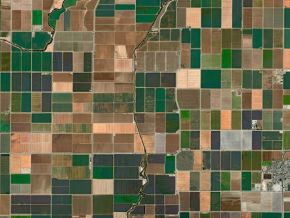
The system analyzes satellite imagery with artificial intelligence algorithms. The algorithms automatically identify farmland, recognize planted crops and monitor crop development throughout the growing season using satellite images updated every five days.
The platform will enable federal and state authorities to monitor cultivated land, crop distribution, crop growth stages, expected yields and production risks in real time.
Nigeria plans to deploy the system gradually. Authorities will first launch a pilot program in one state before expanding it to three states and later to 15 priority states. The government also said it will host all generated data on domestic servers to preserve national data sovereignty.
Building on Existing Digital Agriculture Expertise
The initiative extends Nigeria’s broader effort to modernize agriculture through digital technologies. The country has integrated space-based technologies into agricultural management for several years.
Through the National Space Research and Development Agency (NASRDA), Nigeria has already developed multiple Earth observation tools for agriculture. In 2024, the agency launched CropWatch, a crop monitoring system that uses satellite data.
Nigeria expanded that strategy in 2025 by announcing the Innovative Agriculture project in partnership with the European Space Agency (ESA). The project provides smallholder farmers with information on soil quality, suitable crops and planting schedules using space-based data.
However, NAPS represents a broader step forward. While earlier initiatives primarily supported farmers, the new platform aims to provide policymakers with consolidated information on agricultural production cycles to guide decisions on production, trade and national food stock management.
Collecting Better Data to Improve Decision-Making
Nigeria primarily seeks to close the real-time information gap that has constrained effective agricultural governance through the deployment of NAPS. The government wants to provide policymakers with reliable pre-harvest data so they can anticipate production shortfalls or surpluses before harvests begin.
The platform will improve agricultural planning, support import and export decisions, strengthen food reserve management and guide investment across the sector.
Government officials said public policy decisions often rely on forecasts or farmer declarations without sufficient visibility into actual planting activity or crop development during the growing season.
“In-season monitoring has been our biggest weakness. We reach the end of a farming season and discover that we have not achieved the targets we set at the beginning,” said Marion Moon, Technical Adviser on Agriculture and Food Security to Nigeria’s Vice President.
Given agriculture’s central role in Nigeria’s economy, the initiative could also strengthen the sector’s resilience to climate change while helping the country meet rising food demand.
This article was initially published in French by Stéphanas Assocle
Adapted in English by Ange J. A de Berry Quenum