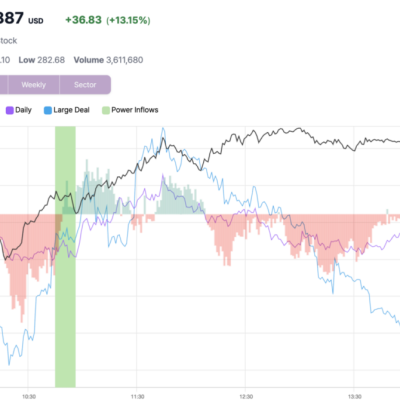

Taxpayers who earned income through futures and options (F&O) or intraday trading during the financial year 2025-26 may have a different Income Tax Return (ITR) filing deadline than salaried individuals and regular taxpayers.
Since both F&O and intraday trading are treated as business income under the Income Tax Act, traders are generally required to file ITR-3 or, in eligible cases, ITR-4 under the presumptive taxation scheme. Taxpayers reporting business income from F&O or intraday trading do not fall under the standard July 31 deadline applicable to most salaried taxpayers, according to reports.
READ THIS: ITR 2026: Filing TDS/TCS return for Q1? New forms, section codes and July 31 deadline explained
What is the ITR deadline?
As per the current filing schedule for Assessment Year 2026-27:
- August 31, 2026: If a tax audit is not applicable.
- October 31, 2026: If the taxpayer’s accounts are subject to a tax audit.
The report notes that even a single F&O or intraday transaction is considered business income, making these extended deadlines applicable instead of the July 31 due date.
How are F&O and intraday trading taxed?
Intraday trading is classified as speculative business income. Profits are taxed according to the individual’s applicable income tax slab and must be reported under “Profits and Gains from Business or Profession.”
On the other hand, Futures & Options (F&O) trading is treated as non-speculative business income. The gains are also reported under the head “Profits and Gains from Business or Profession,” but the tax treatment and loss adjustment rules differ from speculative income.
Different rules for loss adjustment
Losses from intraday trading can only be set off against speculative business income and may be carried forward for up to four assessment years, provided the return is filed within the prescribed due date.
In contrast, F&O losses can be adjusted against any income except salary in the same financial year. Unabsorbed losses can be carried forward for up to eight assessment years and set off against future non-speculative business income.
Books of accounts may be required
According to ClearTax, F&O traders may also need to maintain books of accounts if their income exceeds the prescribed threshold or if turnover crosses the specified limits under the Income Tax Act.