For decades, much of America’s industrial real-estate boom was built around a straightforward formula: Put large warehouses near major population centers and transportation hubs, then fill them with companies moving goods through increasingly sophisticated distribution networks.
The resurgence of U.S. manufacturing is challenging that formula.
Manufacturers looking to expand domestic production are increasingly searching outside major metropolitan areas, where they can find workers, available electric capacity and industrial sites that allow them to begin production quickly. That shift is creating opportunities for a different kind of industrial developer, one focused less on warehouses and more on the long-term needs of factories.
Joe Hollingsworth has been making that bet for decades.
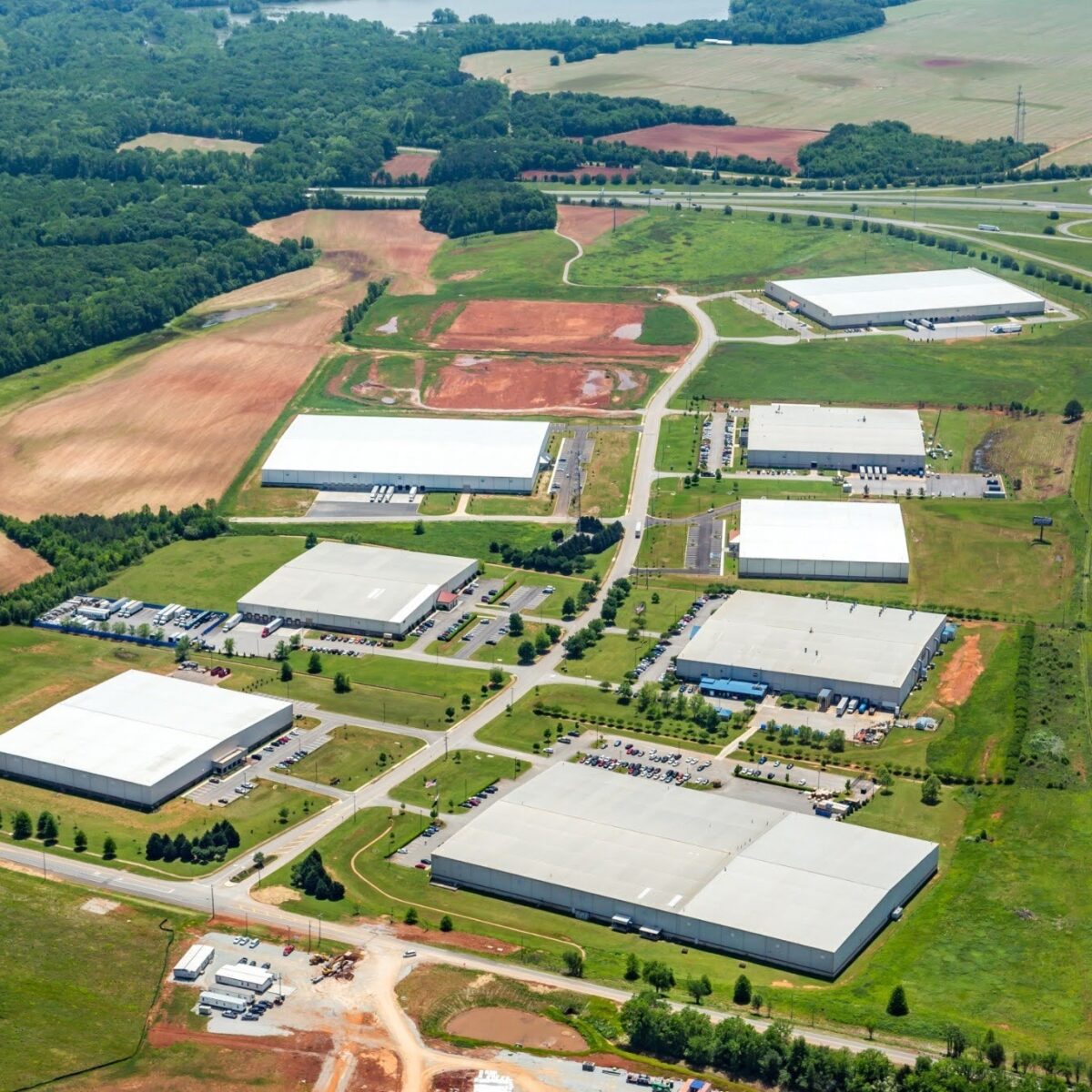
Hollingsworth is chief executive of Hollingsworth Companies, which owns more than 20 million square feet of industrial real estate and describes itself as the largest non-urban industrial real-estate developer in the Southeastern United States. The Tennessee-based company has been developing and holding single-tenant industrial properties since 1972, often in smaller communities along interstate corridors.
“Most of our industry builds for distribution and treats manufacturing as a variation on the same box,” Hollingsworth said. “It is not.”
The distinction is becoming more important as companies reconsider where they make their products.
Manufacturers Are Buying Certainty
A distribution company can move inventory between warehouses. Relocating a factory is considerably harder.
When manufacturers select a site, Hollingsworth said, they are committing expensive production equipment, a trained workforce and customer obligations to a location that could remain part of their operations for decades.
“What they are really buying is certainty,” he said.
That changes what matters in the real-estate decision.
Instead of focusing primarily on proximity to large population centers, manufacturers are looking closely at available workers, electrical capacity, expansion potential and how quickly a facility can become operational.
Hollingsworth’s strategy has been to develop private industrial parks in smaller markets along interstate corridors, with buildings generally ranging from about 130,000 to 250,000 square feet. The company typically holds the properties rather than developing them for an immediate sale.
That ownership model matters to manufacturers, Hollingsworth said, because a company making a 15- or 20-year commitment to a plant may prefer a landlord operating on a similarly long time horizon.
The Supply-Chain Shock Changed the Calculation
The renewed interest in U.S. manufacturing isn’t being driven by any single policy.
Companies that once optimized supply chains primarily around the lowest possible production cost have spent the past several years confronting another variable: reliability.
Pandemic disruptions, volatile freight costs, geopolitical tensions and shifting trade policy exposed the vulnerability of supply chains stretched across continents.
“The disruptions of the last few years taught corporate boards what a broken supply chain actually costs,” Hollingsworth said.
Tariffs have added another layer of uncertainty to long-term sourcing decisions, while Washington’s focus on domestic supply chains for industries including defense, energy and transportation has strengthened the case for locating production closer to U.S. customers.
Recent tax changes could add to that momentum. Hollingsworth points to provisions allowing businesses to expense qualifying investments in new manufacturing facilities as another reason companies may revisit the economics of domestic production.
“Proximity to the customer has value again,” he said.
But federal policy is only part of the equation. States that can deliver skilled workers, dependable electricity, infrastructure and predictable permitting have an advantage, Hollingsworth said.
In his view, much of the Southeast has spent years building exactly that proposition.
Labor and Power Are Becoming the New Location Constraints
For manufacturers, one of the most consequential changes is how they evaluate labor.
The traditional question was often how much workers cost. Increasingly, executives are asking whether they can find enough workers at all—and whether those employees will stay.
“The first question has shifted from what does labor cost to can I actually hire people with low turnover,” Hollingsworth said.
That can favor smaller cities and towns where manufacturers aren’t competing for workers against dozens of large employers clustered in the same metropolitan labor market.
A factory employing several hundred people needs a labor pool capable of supporting the operation not only when the facility opens, but five or 10 years later.
Electricity has become another potential deal breaker.
“Ten years ago electric capacity was a line item,” Hollingsworth said. “Today it can decide the project.”
Manufacturers increasingly want to know how much power is available—and how reliable it is—before getting deeply into discussions about a building.
The growth of data centers and other power-intensive facilities is adding competition for electrical capacity in some markets, making access to the grid an increasingly important part of industrial-site selection.
After labor and power comes speed.
A theoretically attractive industrial site can be of limited use to a manufacturer if it still requires extensive grading, permitting, utility work or infrastructure construction before a building can rise.
The Race to Build Before the Tenant Arrives
That has led Hollingsworth Companies to pursue an unusual strategy: completing much of the development process before knowing who will occupy the property.
The company buys the land, grades sites, installs infrastructure and utilities and, in some cases, constructs industrial buildings before securing a tenant.
The bet is that companies under pressure to bring production online will pay for something increasingly scarce in industrial real estate: time.
“A company that decides to reshore is usually already working against customer commitments,” Hollingsworth said. “They do not have three years to spend on land assembly, rezoning and utility extensions.”
Hollingsworth Companies currently has space available or under development in markets including Cookeville and Sweetwater, Tenn.; Aiken, S.C.; and Grenada, Miss.
The company’s structure is designed to shorten the development process further. Hollingsworth said the company finances construction with its own capital and maintains design and construction capabilities in-house, reducing its dependence on lenders, investment committees and outside construction bidding.
For build-to-suit projects on prepared sites, Hollingsworth said the company typically targets six to nine months from design through completion. For buildings that are already largely complete, tenants may need little more than customized office and operational improvements before moving in.
Some tenants, he said, have become operational within 80 days of signing.
“For a manufacturer, speed is often the whole ballgame,” Hollingsworth said.
Why the Southeast Keeps Winning Factories
The Southeast’s manufacturing growth reflects several advantages that have reinforced one another over time.
The region has a long history of manufacturing in sectors ranging from automobiles and aerospace to chemicals and heavy equipment, creating pockets of experienced industrial labor.
Population growth provides another advantage. While some traditional manufacturing regions face stagnant or declining populations, many Southern states continue to attract residents.
Electricity can also be relatively competitive in certain markets, including areas served by the Tennessee Valley Authority. Meanwhile, interstate corridors connect factories throughout the Southeast with large portions of the U.S. population within a day’s truck drive.
Then there is the political environment.
State and local governments across the region have competed aggressively for manufacturing investments, often combining incentives with workforce programs, infrastructure spending and expedited permitting.
“We made our bet on the Southeast decades ago,” Hollingsworth said, “and the region keeps proving it right.”
Pick the Workers Before the Building
For executives considering bringing manufacturing back to the U.S., Hollingsworth’s advice is to resist starting the search with real estate.
“Pick your labor market before you pick your real estate,” he said. “The building can be adapted. The labor pool cannot.”
Power should be investigated almost as early. A company needs to understand its electricity requirements and confirm that a market has sufficient capacity before committing significant resources to a particular location.
Then executives should establish the date when production actually needs to begin and work backward.
That calculation can expose the difference between sites that appear inexpensive and those that are genuinely ready for manufacturing.
Incentives, Hollingsworth argues, should come later. Tax breaks and economic-development packages can improve the economics of a project, but they can’t compensate for a plant that struggles to hire workers, obtain power or meet customer deadlines.
“Incentives follow a good location decision,” he said. “Incentives do not make a location great.”
That distinction could become increasingly important if America’s manufacturing revival continues. Companies may be eager to shorten supply chains and move production closer to their customers, but reshoring ultimately requires something more tangible than a change in corporate strategy.
It requires places where factories can actually open—and quickly.