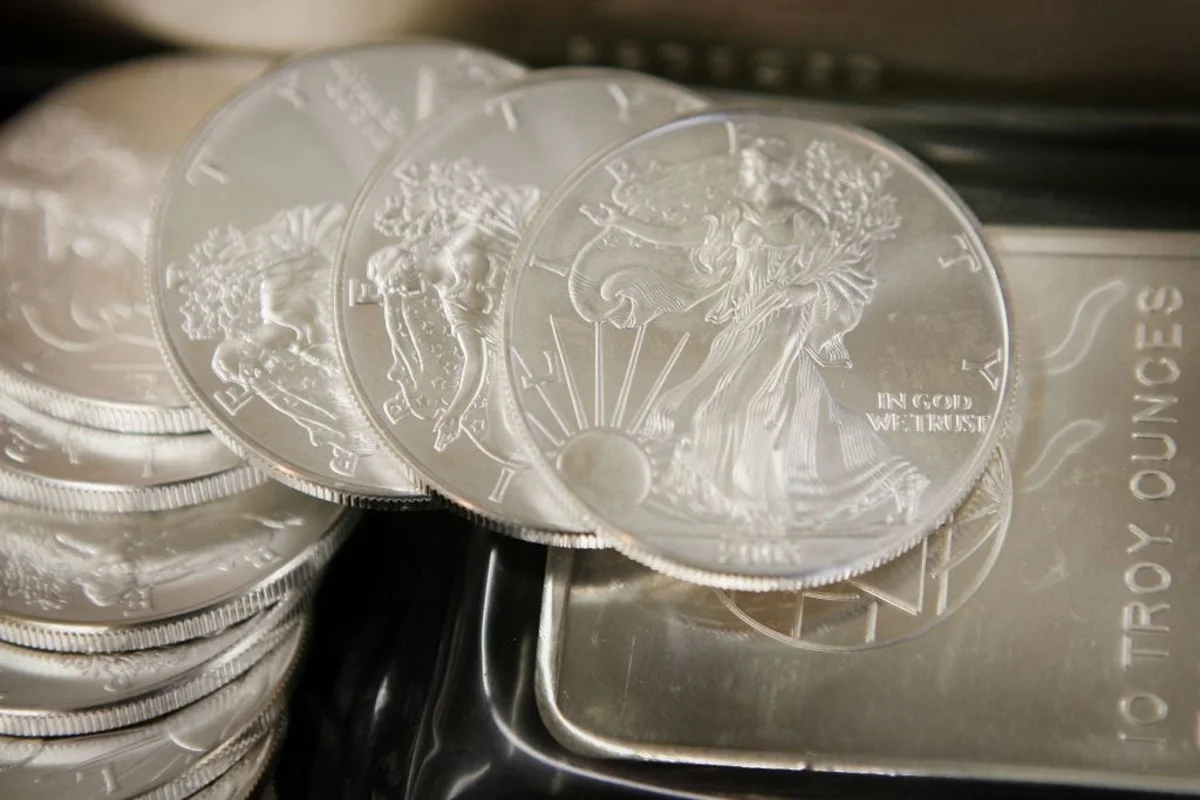
Investors who turn to precious metals usually weigh two main options: gold and silver. The first costs thousands per ounce. The second costs a small fraction of that.
Why is silver so cheap compared to gold? Gold is rarer, but scarcity alone doesn’t explain the dramatic price difference. Gold is globally recognized as a store of value and monetary asset, supporting demand regardless of economic conditions. On the other hand, silver gets much of its demand from industrial uses, and it doesn’t command the same premium from investors and central banks.
Let’s further examine what shapes the gold vs. silver price difference and whether silver’s lower price makes it a bargain.
Ready to buy silver? These are the best silver dealers of 2026
Why is silver cheaper than gold?
While it’s true that gold is rarer than silver, that’s not the only reason it’s so much more expensive per ounce. A large part of gold’s value is from its long-standing role as a store of wealth. Unlike silver, which gets much of its demand from industry, gold is sought by investors and central banks around the world as a monetary asset. This provides a stable source of demand for gold outside of economic highs and lows, keeping gold prices consistently higher than silver prices.
Buy precious metals now
1. Gold is significantly rarer (and more concentrated as a store of value)
“Gold is much rarer than silver in the Earth’s crust and is mined at a 1:8 ratio to silver,” notes Steve Maitland, a research analyst and founder of Maitland Wealth, a Wilmington, Delaware-based publisher offering precious metals analysis. Pulling it out of the ground also costs more, since miners process far more rock to recover the same amount of metal.
Centuries of trust compound that scarcity. “Gold has been a recognized store of value for over 6,000 years,” says Alex Riedel, the head of client portfolio management at Advyzon Investment Management, a registered investment adviser in Chicago, Illinois. Central banks (institutions managing a country’s money supply) stockpile it, and investors turn to it when markets get shaky. Silver gets some of that demand, but not nearly as much as gold.
2. Silver gets ‘used up’ in industry
Factories consume most of the silver that miners produce each year. “The total mine production of silver is around 820 million ounces each year, with industrial demand at around 680.50 million ounces,” Maitland says. That works out to over 80% of newly mined silver ending up in solar panels, electronics, medical equipment and similar products.
Gold sees far less industrial use. Only about 10% of gold demand comes from industry, according to Riedel. The rest moves into jewelry, coins, bars and central bank vaults.
That split shapes the price. Silver’s heavy industrial use ties it to the business cycle (the natural ups and downs of the economy), so demand drops fast when factories slow down. Gold doesn’t face that same pressure, which helps it hold a higher price.
Will silver hit $100 an ounce again? What experts predict will happen
3. Gold dominates as a global monetary asset
“Currently, gold accounts for around one-third of central bank reserves worldwide,” says Riedel. That figure has been growing as countries move away from relying on the U.S. dollar.
Silver, by comparison, makes up less than 1% of those reserves. The shortfall comes down to storage and trust. Silver takes up far more space per dollar of value, and central banks don’t trust it to support their currencies. Without the same level of institutional buying, silver’s price stays well below gold’s.
Get the latest: Gold Price Today on May 19, 2026
4. The silver market is much smaller and more volatile
The gold market is worth about $29 trillion, while silver sits closer to $3.9 trillion, according to Riedel. That makes gold’s market roughly eight times bigger. The extra size means buyers and sellers can move large amounts of gold without pushing the price around much.
Maitland points out that silver’s smaller market needs far less money flowing in or out to cause big price swings. Investors looking for a steady holding tend to choose gold over silver as a result. That reliability keeps demand stronger on gold’s side and keeps its price above silver’s.
5. The gold-to-silver ratio reflects structural differences
The gold-to-silver ratio tells you how many ounces of silver you’d need to buy one ounce of gold. This number has varied greatly over time. Riedel notes that during the years when silver and gold backed currencies, the ratio hovered around 15:1. Today, with neither metal anchoring a currency, it typically lands between 40:1 and 80:1.
Maitland explains that gold now responds to fear, inflation and central bank moves. Silver, on the other hand, tracks factory demand for solar panels, electronics and similar products. The ratio stays elevated because gold pulls steady demand as a store of value, while silver rises and falls with industry.
Read on: 5 reasons silver is trending vs. gold right now
6. Investor perception and demand play a major role
Gold has built a reputation as the go-to “safe haven” — an investment people turn to when markets get rocky. “It’s tied to stability, reserves and wealth preservation,” says Brandon Aversano, the CEO of The Alloy Market, a precious metals buyer in Newtown, Pennsylvania.
Perception drives where the money flows. In moments of fear or uncertainty, institutional players load up on gold first. Silver may draw attention later, often from investors seeking a cheaper alternative or trying to catch a price rally. This pattern keeps gold’s price ahead of silver’s.
Is it better to buy gold or silver?
While one isn’t automatically “better” than the other, gold and silver do serve different roles for investors.
If your primary goal is to preserve wealth and reduce volatility in your portfolio, gold might be the better investment option.
If you want a lower-cost entry point into precious metals, or are seeking a higher growth potential, silver could serve your needs better.
Either way, gold and silver can both diversify your portfolio with assets that don’t necessarily move in lock step with other investments, such as stocks or bonds. This can make either metal a valuable portion of a diversified portfolio, depending on your priorities.
Buy precious metals now
Does cheaper mean undervalued?
Some analysts argue that silver looks undervalued by certain measures. The gold-to-silver ratio is one common yardstick. Once it climbs past 80:1, many investors start treating silver as cheap relative to gold. Industrial demand makes the same case. Solar panels, electric vehicles and electronics have been pulling more silver out of the market than mines can replace.
The counterargument carries weight, too. Silver’s price swings hard. And because so much of its demand comes from industry, that demand can fall fast when the economy cools. The reasons silver costs less than gold are also largely structural: more abundance, smaller market and heavy industrial use. None of those factors is going away anytime soon.
Whether silver is actually undervalued depends less on the price tag and more on how each investor weighs the trade-offs against their own goals.
Get the latest: Silver Price Today on October 20, 2026
Bottom line
The cheaper metal isn’t always the better choice. If precious metals interest you, consider whether you’re after a steadier hedge, exposure to industrial demand or some mix of both. A trusted financial advisor can help you figure out how much of either metal, if any, fits your goals.
FAQs
Is silver cheaper than gold because it’s less rare?
Yes, silver is far more abundant and often comes out of the ground as a byproduct of other mining. Gold is rarer and pricier to extract, so it costs more.
What is the gold-to-silver ratio?
The gold-to-silver ratio tells you how much silver equals one ounce of gold. Calculate it by dividing the price of gold by the price of silver. Historically, a ratio above 80 has suggested that silver is cheap relative to gold, while a ratio below 60 has indicated the opposite.
Does silver ever catch up to gold in price?
No, silver doesn’t catch up to gold in price ounce-for-ounce. In percentage terms, though, silver can outpace gold during strong bull markets.
Why don’t central banks buy silver?
Central banks pass on silver because it doesn’t carry official reserve status. It’s also too volatile and uses too much storage space for the value it provides. Gold offers greater stability and much more value per ounce, which is why it dominates reserves.
Is silver a good investment because it’s cheaper?
Silver can be a good investment because the lower price makes it easier to buy in smaller amounts. Plus, industrial demand adds long-term appeal. But silver prices swing more sharply than gold, so the lower entry point comes with more short-term risk.
This article originally appeared on Money Group Affiliate: Why is silver cheaper than gold? 6 reasons behind the price gap
Our editors independently choose our recommendations. Some content is produced with paid support from a third party, however our editorial decisions remain independent. If you buy through our links, the USA TODAY Network may earn a commission. Prices and availability may change.