


Researchers have developed a new electrode that could help produce green hydrogen without relying on expensive precious metals.
The design uses nickel and cobalt and showed promising efficiency and durability in laboratory and larger-scale tests.
The team at the Korea Institute of Energy Research says the materials used in its electrode cost about 99% less than the precious-metal materials used for comparison. That does not mean the total cost of hydrogen production falls by 99%.
The research, published in Advanced Science, focuses on alkaline water electrolysis. This process uses electricity to split water into hydrogen and oxygen and is attractive for large industrial systems.
Green hydrogen can be produced when the electricity comes from low-emission renewable sources. It could provide fuel or raw materials for industries that are difficult to run directly on electricity.
One obstacle is that the chemical reactions involved in alkaline electrolysis can proceed slowly. Precious metals such as platinum and ruthenium can speed them up, but their high prices create an economic challenge.
The new electrode combines nickel oxide with a nickel-cobalt alloy. The two materials help different steps of the reaction, allowing water molecules to break apart and hydrogen to form more readily.
In the researchers’ comparison, the electrode reached similar hydrogen production rates while requiring roughly 40% of the extra electrical driving force needed by a conventional platinum electrode.
That extra force, called overpotential, represents energy needed beyond the theoretical minimum to make the reaction proceed at a useful rate. Reducing it could help make a system more efficient.
The team also tested a cell fitted with the new electrode. It operated at a voltage 11% lower than a comparable cell using a conventional nickel electrode.
The electrode maintained stable performance through 600 repeated starts and stops. This matters because systems powered by wind or solar energy may need to respond to changing electricity supplies.
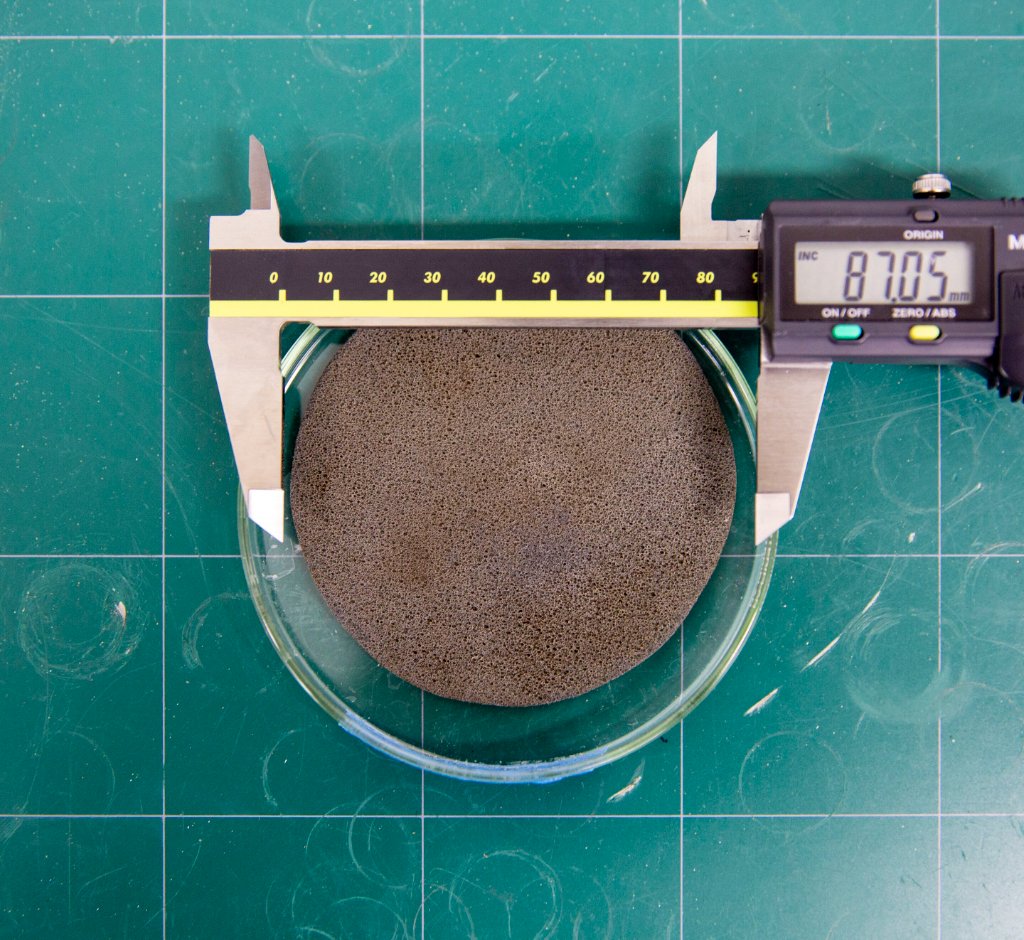
Researchers have also made larger electrodes about 40 centimeters across and are working toward further scale-up. Manufacturing at industrial size, long-term durability and full-system economics still need to be established.
Nickel and cobalt are not without supply and environmental concerns, and their low purchase price is only one part of production economics. Electricity, equipment, maintenance and the lifetime of an electrode will also influence the cost of hydrogen.
The team also tested a larger electrode and reported stable performance after 600 start-stop cycles. Those interruptions matter because equipment powered by wind or solar energy may not run continuously. The researchers have produced electrodes 40 centimeters across and are working toward still larger versions for industrial systems.
The results suggest that carefully combining affordable metals may offer a practical route to more efficient water splitting. The next test is whether those advantages can be sustained in commercial hydrogen plants.
If you are interested in this topic, please read articles about Scientists Create Powerful Water Splitting Catalyst for Clean Hydrogen Fuel, and Scientists Make Clean Hydrogen from Sunlight and Water No Platinum Needed.
For more information, please see articles about A New Low Cost Catalyst Could Make Clean Hydrogen Much Cheaper, and Scientists Create Powerful Three Layered Material to Boost Hydrogen Production.
Source: National Research Council of Science and Technology.


