
Formula 1 has transformed into one of the world’s fastest-growing sports
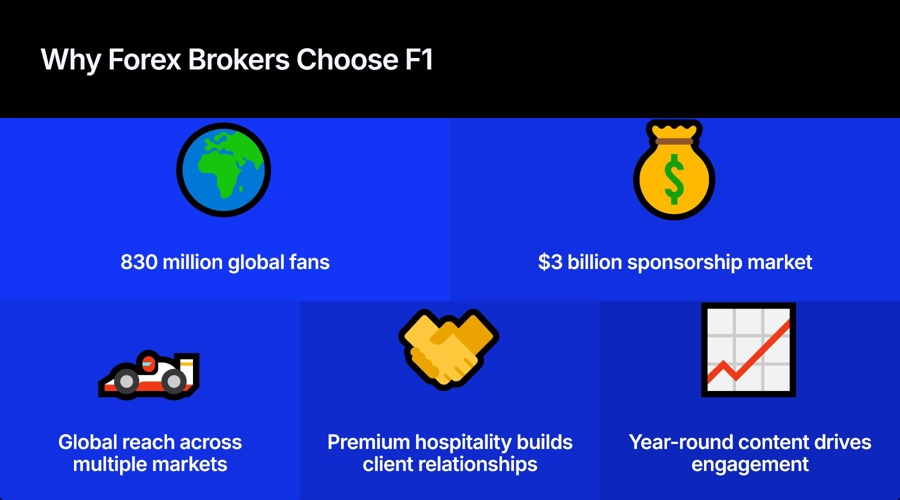
properties, reaching a global fanbase of more than 830 million people, a 12%
year-on-year increase. For brokers, the opportunity goes beyond brand
visibility, with partnerships increasingly becoming platforms for fan
engagement and brand activation.
The trend is particularly evident within the Forex and CFD sector, where
an increasing number of brokers are leveraging F1 as a global marketing and
brand-building platform. XMTrading, IC Markets, Libertex, Pepperstone,
AvaTrade, INFINOX and Vantage are among the brands that have entered the F1
sponsorship landscape.
London’s trading industry is coming home!
Meanwhile, FxPro stands out for the longevity of its
involvement in the sport, with its current partnership with McLaren dating back
to 2018, following earlier F1 team sponsorships with BMW Sauber and Virgin
Racing.
According to Ampere Analysis, total Formula 1 sponsorship investment
exceeded US$3 billion, with teams generating more than US$2 billion and Formula
1’s commercial rights holders contributing the remaining US$1 billion.
SponsorUnited’s Formula 1 Sponsorship Intelligence Report 2025 also highlights
technology as the largest sponsoring sector, investing US$543 million, while
financial services ranks as the second-largest category.
Team partnerships can
command US$5 million–US$20 million per season, with high-profile
partnerships potentially requiring significantly greater investment, making activation
critical to maximising the value of the partnership.
The growing presence of Forex and CFD brands in Formula 1 is unlikely to
be coincidental.
Joseph Lee
As competition intensifies across the industry, firms are increasingly
looking beyond traditional digital advertising to build stronger brand equity
and earn traders’ trust. Formula 1 provides a unique platform to achieve this
through its global reach, premium positioning and year-round content ecosystem.
Formula 1 also
embodies many of the same attributes that trading platforms seek to communicate:
speed, precision, technology, continuous innovation and high-performance
decision-making. This natural alignment allows sponsorships to feel authentic,
creating stronger brand associations than traditional advertising alone.
What Makes Formula 1 Different?
1. Every Grand Prix Is a Unique Destination
Unlike traditional league competitions, where each match follows a
similar format, every Formula 1 Grand Prix has its own identity.
Historic circuit venues such as Silverstone and Monza showcase the
sport’s rich heritage, while destination races in Monaco, Singapore, Miami, Las
Vegas and Abu Dhabi offer completely different atmospheres and experiences.
Rather than repeating the same event every week, Forex and CFD firms gain a
portfolio of unique destinations that can be tailored to different markets,
client segments and business objectives throughout the season.
2. Formula 1 Is More Than a Sporting Event
Formula 1 has evolved into a lifestyle and entertainment platform rather
than just a racing series. Race weekends increasingly combine elite motorsport
with fine dining, luxury hospitality, live concerts, fashion, celebrity
appearances and premium networking opportunities.
This broader ecosystem allows
sponsors to engage audiences beyond traditional motorsport fans while
positioning their brands alongside innovation, luxury and world-class
experiences.
3. World-Class Hospitality Creates Business Value
Hospitality remains one of Formula 1’s most powerful commercial assets.
Experiences such as Paddock Club access, garage tours, pit lane walks, driver
appearances and behind-the-scenes team access create unforgettable moments that
few sports can match.
For Forex and CFD
firms, these experiences provide valuable opportunities to strengthen
relationships with introducing brokers, affiliates, institutional partners, VIP
clients and prospective customers in a premium business environment where
conversations often extend beyond the race itself.
4. One Partnership, a Truly Global Platform
For Forex and CFD brokers, growth rarely comes from a single region or
market. Formula 1’s truly global calendar gives brokers the opportunity to
engage clients and business partners across North America, the GCC, Europe and
Asia-Pacific, while its diverse hospitality offering allows brands to tailor
experiences to different audiences, even within the same Grand Prix.
This
enables brokers to build a consistent global brand while supporting regional
customer acquisition, partner engagement and business development.
5. F1 Offers More Than Race-Day Exposure
Rather than relying on one-off promotions, brokers can keep partnerships
relevant throughout the customer journey, making Formula 1 an always-on
platform for brand building and customer engagement.
For instance, FxPro has used its McLaren partnership to create
content-led activations, including its Strategy Debrief series, which provides
behind-the-scenes insight into McLaren’s race strategy and key decisions.
By
bringing the team’s expertise and decision-making process to audiences, the
activation creates a natural connection between the high-stakes tactical
decisions of F1 and the principles of precision and risk management in
financial markets.
Pepperstone has taken
a more experiential approach through its Aston Martin Aramco partnership, creating a range of
client and partner experiences, including pit-lane dinners, Monaco yacht
hospitality, driver meet-and-greets, garage tours and Silverstone track days.
These experiences give the broker a platform to deepen relationships with
existing clients, create memorable touchpoints for prospects and engage
business partners in a more personal setting.
Together, these examples illustrate how brokers can use F1 partnerships
for more than brand visibility, creating ongoing opportunities to engage
clients, prospects and partners throughout the season.
6. The Challenge of F1 Partnerships and Making Them Work
For brokers considering an investment in Formula 1, the first step is
recognising that F1 is a truly global property. Unlike other sports
sponsorships centred around relatively fixed home venues and regular matchday
routines, every Grand Prix is a different operating environment.
The circuit, organisers, hospitality infrastructure, transport, local
culture and surrounding events can all vary significantly. Delivering a premium
guest experience therefore starts long before guests arrive at the track, from
the first invitation and travel arrangements through to the final moment of the
race weekend. The details matter.
There is also far more happening around a Grand Prix than the race
itself. Concerts, fireside conversations, fan activities, paddock experiences
and other events can create additional touchpoints throughout the weekend. For
brokers hosting clients, prospects or business partners, these can become
valuable components of a wider experience rather than simply being treated as
ancillary benefits of the partnership.
The opportunity extends beyond the race weekend, too. Team factories,
technical facilities and off-track access can create highly exclusive,
money-can’t-buy experiences. Fireside conversations with team principals,
discussions with technical representatives, driver appearances and factory
tours can give clients a different perspective on the sport while creating more
meaningful engagement with the brand.
Perhaps most importantly, brokers should consider how the partnership
can create value for both sides. The strongest partnerships are no longer
simply about paying for rights and access; they can also involve integrating a
broker’s products, technology or services into the wider F1 ecosystem.
This
creates the potential for two-way business case studies that demonstrate how
the partnership delivers tangible value to the rights holder while giving the
broker an authentic story to take to clients, prospects and relevant industry
stakeholders.
Ultimately, making an F1 partnership work requires more than securing
the rights. It requires understanding the complexity of the calendar, curating
the experience around each race and finding ways for the brand and rights
holder to create value together.
Final Thoughts
For Forex and CFD brands, the opportunity in Formula 1 goes well beyond
securing visibility on a car or access to a race weekend. The global calendar,
diverse hospitality, content opportunities and access to teams and talent
create a platform that can be activated differently across markets and
throughout the season.
But that opportunity also comes with complexity. Every Grand Prix
presents a different environment, audience and set of possibilities, meaning
the value of the partnership ultimately depends on how well a broker
understands the ecosystem and connects it to its own commercial objectives.
The most effective F1 partnerships are therefore not simply
sponsorships. They are platforms for creating experiences, building
relationships and developing stories that have value for both the broker and
the rights holder.