
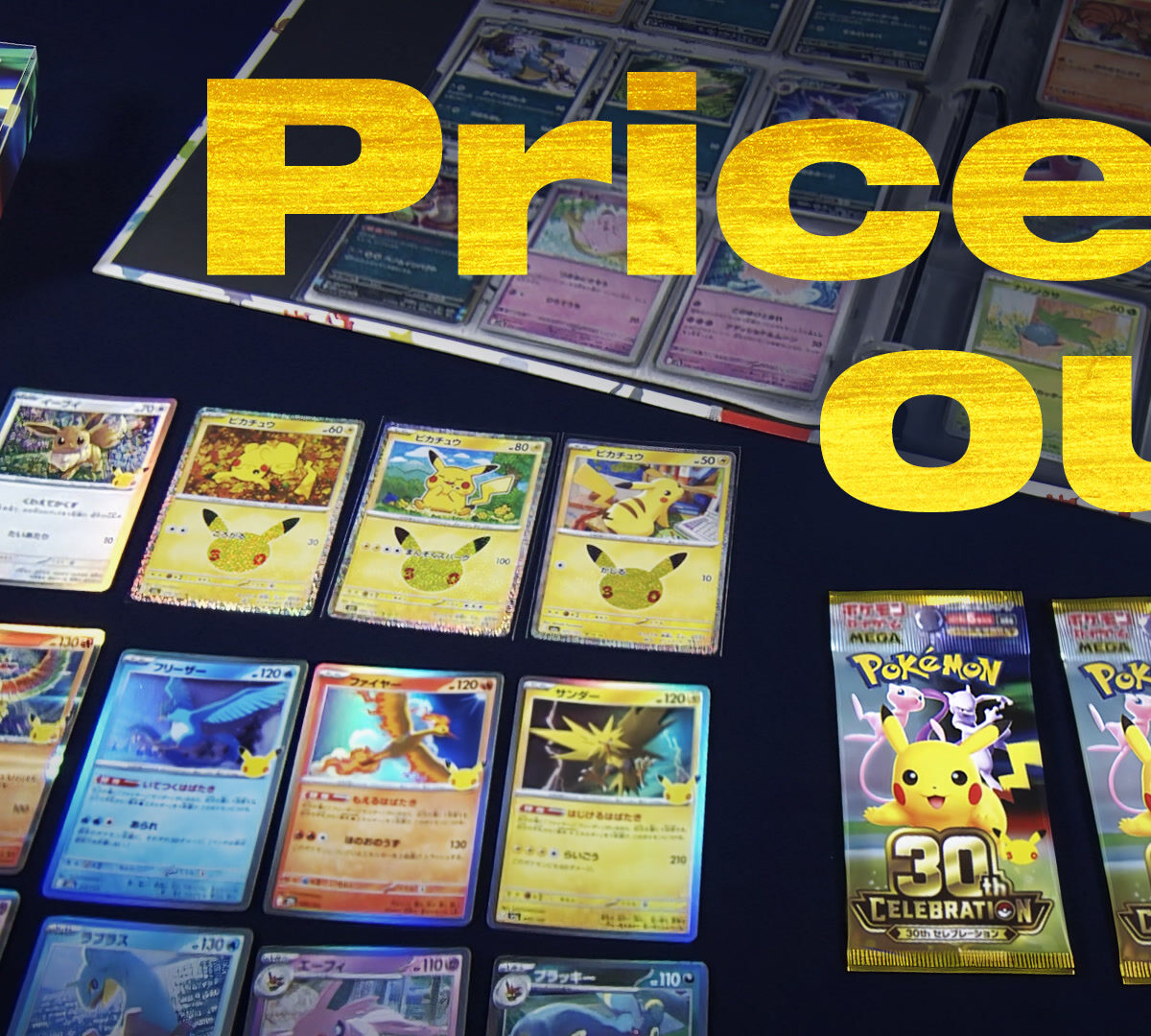
Scalping seems to be everywhere these days, from concert tickets to game consoles and sneakers. Scalping is when resellers, or “scalpers,” buy up popular products, then resell them at a higher price once they become scarce. The trading card industry has been hit especially hard, and Japanese companies are looking at ways to fight scalping and protect consumers.
Trading card craze heats up

Japanese trading cards first started gaining popularity in the 1990s with specially designed sets used in games. Players collected, traded, and used them to build custom decks to fight opponents.
Around 2019, they became even more popular, as YouTubers started taking videos of package openings. During the COVID pandemic, many adults started playing out of a sense of nostalgia, using the time they could not venture outside.
The popularity of these cards has continued rising since, as many adults began collecting new sets of the cards they played with as kids. But this popularity has become a double-edged sword. New products are in short supply and often sell out instantly, driving up the prices.
For example, the latest set of Pokemon cards released in September 2026 has a manufacturer’s suggested retail price of 7,200 yen, or about 45 dollars, for a box containing 20 packs. But as of November, it was being bought and sold online for around 20,000 yen, or about 125 dollars.

Japanese trading cards are extremely popular abroad as well.
In Tokyo’s Akihabara district, a 28-year male shopper from the United States said it has become quite difficult to get Pokemon cards in the US, as scalpers have become so aggressive. “People buy the packs and boxes and then they actually don’t open them. They just hold them and sell them.”
Some Japanese children are feeling sad about the situation.
A 10-year-old girl visiting Akihabara with her parents said, “I can’t get the cards, even at a shopping mall.”
An 11-year-old boy complained, “Scalping makes the cards hard to get. That makes me a little sad. I hope people stop it.”
How are companies responding?

In August, the Pokemon Company introduced an authentication system for online purchases. Users are encouraged to confirm their identities using their My Number Card, a national Japanese identification. It appears to be a way to stop resellers from creating multiple accounts. For physical stores, the company is exploring facial recognition to curb repeat buyers.
The second-hand market is also taking action. In September, the online operator Mercari temporarily banned the sale of Pokemon card sets and unopened packs celebrating the trading card game’s 30th anniversary. It said it was concerned by certain behavior in the market, such as quick turnarounds after releases, insults between users, and sudden price increases. The company says it wants to create a space that everyone can use safely.
Some stores in Akihabara are addressing the problem by focusing on selling to younger customers. A shop in Akihabara called Hareruya2 only sells certain products to those aged 18 and under to give children a chance to buy the cards.
A 7-year-old boy who recently came with his father seemed delighted. His father said he too was thrilled, as they couldn’t get multiple packs anywhere else. “But here, he could buy 15. We’re really so grateful.”

Company spokesperson Watanabe Sho says, “If customers can’t buy the cards, then they might lose interest in the hobby. We want to prevent that.”
He added that the company was making a special effort to sell to children. “Because of their schedules, kids aren’t always able to get these cards right away, but they’re important to them. That’s why we have specific products we only sell to those 18 and under.”

Consumer awareness is key
Fukui Kensaku, a lawyer specializing in intellectual property, says consumers must play a role, insisting, “Scalpers only exist because they have customers.”
“If everyone buys these marked-up products, then you’re just encouraging the scalpers. Then there will be more of them, and it becomes a vicious cycle. Nobody should be buying these unfairly scalped products. That’s how you fight the problem. And it’s necessary for consumers and society at large.”

He says the business of scalping has become much easier in recent years.
“In the past, buying up large quantities of goods to resell at a higher price was not exactly easy. For instance, if you set up a stall on the street to resell items you had bought up, it would look bad, risk ending up with unsold stock, and might even attract the attention of the police.”
He adds that resale platforms, online flea markets, and dedicated apps have now become much more developed.
“While these tools are certainly convenient, that convenience stems from the fact that you can remain anonymous without revealing your identity, and easily connect with the highest bidder, wherever they may be, to conduct transactions safely. This is wonderful in itself, but it is also perfectly suited for illicit resale activities.”
Similar problems widespread overseas
Many of the overseas visitors to Akihabara say the same thing is happening in their home countries.
One 29-year-old male from the UK said, “Back home in the UK, we have a massive issue of it. It’s awful and it kind of takes the enjoyment out for the people who genuinely want to buy and enjoy the cards and just enjoy the hobby.”
A 34-year-old male from Puerto Rico said, “You are at work or something. By the time you get off, already everybody has gone to the store and purchased before you. So you have to get it at the second-hand market. And that is more expensive.”
Lawyer Fukui says that although some measures have been taken to curb the abuses, not much has changed. He points out that there have been calls for second-hand marketplaces, and even the police, to get more involved.
Igarashi Jun
NHK World
Correspondent