Critical Metals jumped 4% to catch up with USA Rare Earth and MP Materials, as rare earth stocks rallied against a weak market.
United States Antimony slipped while peers surged, underscoring that antimony’s defense and flame-retardant drivers differ from the rare earth trade.
Critical Metals offers a BMW lithium deal and a Tanbreez stake boost, but going-concern doubt and a 2028 development target keep risk high.
Building a portfolio and living off one are two completely different skills, and almost nobody teaches the second. This problem is what The Definitive Guide to Retirement Income helps, and it is free today. Read more here. (Sponsor)
Rare earth stocks are extending their rally, and Critical Metals (NASDAQ:CRML) is keeping pace with a group that had pulled well ahead of it. Critical Metals stock is at $5.47, up 3% in morning trading. The Greenland-focused developer is still down 20% year to date (YTD), and it has trailed its peers’ recent rebound, so part of the gain looks like catch-up.
24/7 Wall St.
Broader market conditions are softer, which makes the group’s strength stand out. The small-cap Russell 2000 is down 2%, and the materials sector is among the weakest groups, down 1%. That leaves Critical Metals and its rare earth peers moving against both their sector and small caps generally.
Critical Metals Moves With the Rare Earth Trade
Critical Metals’ gain tracks the sector, with rare earth and critical mineral names rallying as a group. These stocks remain a high-beta trade, meaning they tend to amplify market moves and respond quickly to headlines about U.S. supply chains and China’s export controls. Rotation into that theme while the wider materials sector slides is the best-supported explanation for the move.
On November 11, Critical Metals issued a press release titled “Critical Metals Corp Delivers 2026 Objectives.” That announcement precedes the current move, which is following the broader rare earth group.
——
Now Available: The Definitive Guide to Retirement Income
Many successful investors eventually reach the same moment. The saving is done, the portfolio is built, and the question quietly changes from how much can I grow this to how much can I take out? Get that second question wrong and decades of good investing can come apart in a handful of years.
That is exactly what The Definitive Guide to Retirement Income helps answer. It covers what your retirement could actually cost, which income sources are worth using, and the withdrawal math that decides whether the money lasts. It is free today from Fisher Investments. Read More Here ›
——
What the Peer Group Says About Critical Metals
USA Rare Earth (NASDAQ:USAR) stock is at $8.35, up 3%. USA Rare Earth is moving with the group as the rare earth rally extends.
Shares of MP Materials (NYSE:MP) are at $38.11, up 2%. That’s the smallest gain of the three featured names, even though MP Materials is the most established producer in the group.
Results from November 5 set the backdrop for MP Materials. The company reported Q3 2026 revenue of $147.66 million, up 175.7% year over year (YoY), and adjusted earnings per share (EPS) of $0.04, ahead of expectations for a $0.01 loss. A one-time $31.6 million sale boosted the quarter. The sale was of SEG+ heavy rare earth material to a U.S. aerospace and defense customer, though core volumes grew without it, with neodymium-praseodymium (NdPr) sales volume up 94% to 1,020 metric tons.
United States Antimony (NYSE:UAMY) is the exception among critical mineral names, slipping 2% to $2.86 in morning trading. Critical Metals, USA Rare Earth and MP Materials offer the cleaner read on the rare earth trade.
How Critical Metals Differs From USA Rare Earth and MP Materials
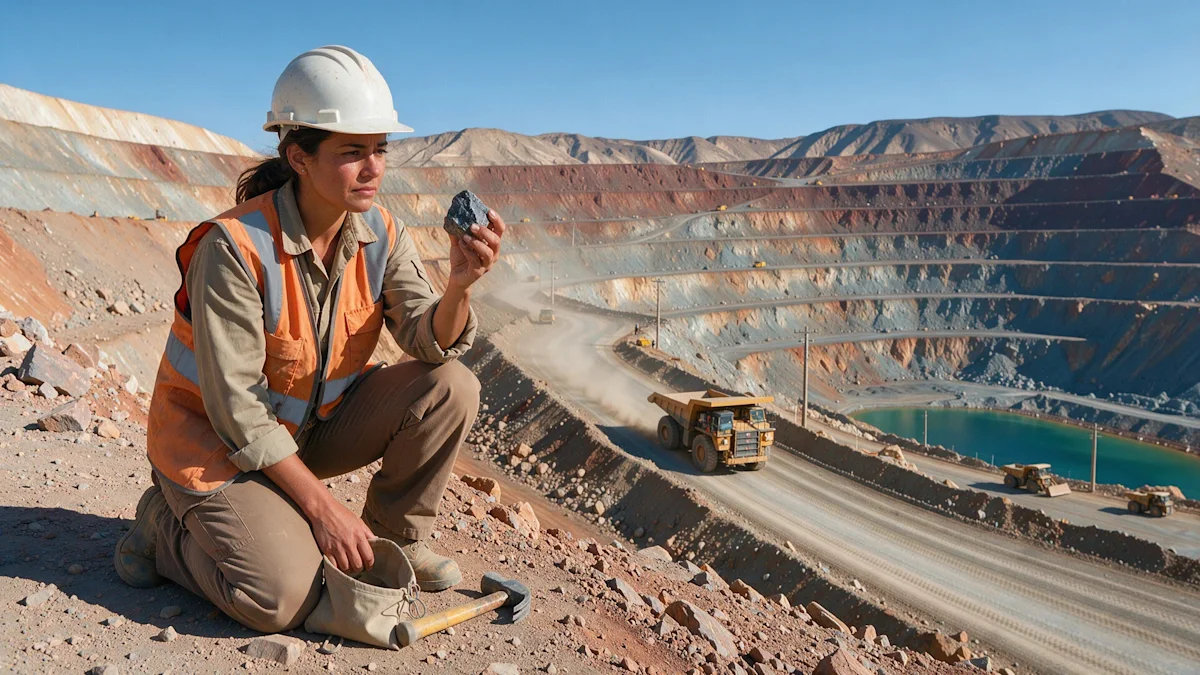
As a pre-revenue developer, Critical Metals has no mine in production, but the company’s core asset is the Tanbreez rare earths project in Greenland, and it also owns the Wolfsberg lithium project in Austria.
USA Rare Earth is building a vertically integrated chain. It runs from mining in Brazil and Texas through metals and alloys in the U.K. to magnets in Oklahoma. MP Materials already mines and separates rare earths at Mountain Pass in California and has started making magnets in Texas, and of the three, MP Materials is furthest along, while Critical Metals carries the most project risk.
United States Antimony shares the non-China supply chain theme but sells antimony and zeolite instead of rare earths. Antimony’s uses in defense and flame retardants give the company a different set of price drivers.
Can Critical Metals Close the Gap With Its Rare Earth Peers?
Critical Metals now faces the question of whether the rare earth rebound holds long enough for the stock to narrow its gap with USA Rare Earth and MP Materials. Critical Metals gives the bulls a binding lithium hydroxide offtake with BMW that includes a $15 million advance payment, plus a pending amendment that would raise its Tanbreez ownership from 42% to 92.5%.
On the other side, the bears focus on funding and timelines. In its half-year results, Critical Metals disclosed substantial doubt about its ability to continue as a going concern, and the company reports no operating revenue. Mineral development at Tanbreez is targeted to begin by the end of 2028, a long runway for a stock that swings hard on headlines.
Investors can watch for fresh U.S. supply-chain or China export-control headlines, which tend to move Critical Metals and its peers together. Critical Metals stock could stay volatile until the gap with its peers closes.
Released: The Definitive Guide to Retirement Income
(Sponsor) Most people spend their entire working lives focusing on one thing: growing a pile of money. Then they retire and discover the skill they actually need is close to the opposite. Turning that pile into steady income, year after year, through good markets and bad, without ever running out.
It may be the least discussed and most consequential transition in personal finance, and plenty of otherwise careful investors walk into it with no real plan. That is exactly what The Definitive Guide to Retirement Income helps answer. It is a free guide from Fisher Investments covering what your retirement will really cost, where the cash flow should come from, and how much you can safely withdraw each year. Learn more here. Learn More Here ›