

When you start studying FX, you will encounter the terms “hedging” and “scalping” at an early stage. Although many people have heard of both, surprisingly few can explain what they actually entail.
In this article, I would like to organize these two basics for those who are about to learn FX. As a subject, I will also touch upon the philosophy of “King Maker FX,” a teaching material that incorporated both hedging and scalping.
*This blog contains PR content intended for affiliate and advertising revenue purposes.
[First, a Review of FX Basics]

FX (Foreign Exchange Margin Trading) is a transaction where you buy and sell currencies and profit or lose based on the difference in price movements. If you think the yen will weaken, you buy dollars; if you think the yen will strengthen, you sell dollars. Being able to start a trade from either buying or selling is a major difference from spot stock trading.
Another feature is leverage. By depositing margin, you can trade amounts many times larger than your deposit. While you can conduct large trades with small capital, the impact when price movements go against you also increases. It is a point to keep in mind from the start that FX is not a transaction where the principal is guaranteed.
[What is Hedging?]
Hedging refers to holding both buy and sell positions for the same currency pair at the same time. For example, it is a state where you buy 10,000 units of dollar-yen and simultaneously sell 10,000 units of dollar-yen.
In this state, even if the market goes up or down, the profit from one side and the loss from the other almost cancel each other out. Therefore, hedging is sometimes used to wait and see in situations where the direction of the market is difficult to read. It is also used in ways such as closing one position first and riding the trend with the remaining one.
■ Things to be careful about with hedging
There are also points to note about hedging.
-
Because spreads are applied to both buying and selling, costs double.
-
For swap points, the amount paid is more likely to be larger than the amount received.
-
Depending on the broker, there may be restrictions on hedging.
Hedging is not an all-purpose defensive measure. It can be said that it is a technique where you choose the situation to use it after understanding the mechanism and costs.
[What is Scalping?]
Scalping is a trading style where you complete trades in a short time ranging from a few seconds to a few minutes, accumulating small price differences. Compared to day trading and swing trading, the time spent holding positions is the shortest.
Since the time held is short, you are less likely to be exposed to sudden price movements while sleeping. On the other hand, because the number of trades increases, spreads accumulate, and you also need time to keep watching the screen. Since you repeat judgments in a short time, whether or not you can cut losses according to pre-determined rules easily affects the results.
[How did King Maker FX handle the two?]

King Maker FX is a teaching material supervised by Takashi Yamaguchi, who is active under the name FX-Jin, and was sold for a limited time in 2023. New applications are currently closed.
This educational material is said to have been built on three pillars: the “W Strategy” which utilizes hedging, the “New Trend Detection Logic” which captures the emergence of new trends, and the “Breakthrough Logic” which focuses on the timing when prices move outside a certain range. The concept of scalping was also incorporated into this.
What is interesting is that it was not intended to be completed with just one method, but rather to be used selectively depending on the situation. When the direction is difficult to read, you prepare with hedging, and when a flow emerges, you make decisions based on trend or breakout concepts. For beginners, the idea of “switching your mindset for each situation” may be more helpful than the techniques themselves.
[Understand Spreads and Swap Points as Well]
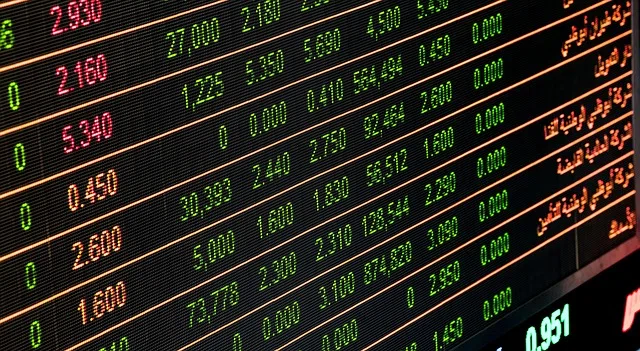
When considering hedging and scalping, spreads and swap points are unavoidable topics.
A spread is the difference between the buy price and the sell price at the same moment. For example, if the buy price is 150.003 yen and the sell price is 150.000 yen, the difference of 0.3 sen is the spread. If you buy and sell immediately, you start with a loss equal to this amount. Even if the difference is small for a single trade, this difference gradually takes its toll in scalping, which involves a high number of trades, and in hedging, where you hold both buy and sell positions simultaneously.
Swap points are adjustments generated from the interest rate difference between currencies, and they occur when you carry a position over to the next day. Basically, if you buy a currency with a high interest rate, you receive them, and if you sell it, you pay them. When you hold both buy and sell positions simultaneously through hedging, it might seem like the receipts and payments would cancel each other out, but in reality, the payment side is often set higher. The longer you continue hedging, the more these negative amounts accumulate.
By knowing not just the content of the methods, but also the structure of these costs, you will be able to understand the explanations in the educational material more concretely.
[What Beginners Should Do First]

Hedging and scalping are two different things: knowing them as knowledge and actually being able to master them. For those who are about to learn, it is reasonable to proceed in the following order.
-
Use a demo account to get a feel for the flow of buying and selling and the spread.
-
Decide on the upper limit of loss you will tolerate for a single trade.
-
Keep a record of your trades and look back on your own decision-making habits.
Regardless of which educational material or method you refer to, the major prerequisite is that rules for fund management come first.
[Summary]

Hedging is used as a preparation for when the direction of the market is difficult to read, and scalping is used as a style to accumulate small price movements over a short period of time. Both have advantages and costs, and it is essential to understand the mechanisms before using them.
The perspective of combining multiple concepts and using them selectively depending on the situation, as in Kingmaker FX, should provide hints for learning FX.
This feature article is a PR.