

Precious metals: The queue at the cash machine is thinning
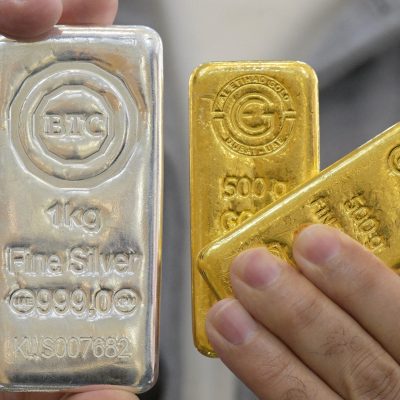
Gold, silver and platinum have staged a strong recovery following another difficult start to the week. Wednesday’s sharp rejection of fresh cycle lows produced bullish hammer formations in all three metals, offering an early indication of selling exhaustion following months of increasingly aggressive liquidation.
From Wednesday’s USD 3,427 low, gold has recovered to around USD 3,680 at the time of writing, while silver has rebounded approximately 16% from its recent low at USD 38.21 to trade back above USD 44.
Beyond the improved technical setup, the recovery highlights the role precious metals can play as a cash machine (ATM) during periods of financial market stress. Their liquidity makes them a convenient source of cash when investors face margin calls, rising funding costs or losses elsewhere in their portfolios. With AI-related technology stocks recovering and broader risk appetite improving, the queue at the cash machine appears to be thinning.
Perhaps the most encouraging aspect of Friday’s strong recovery in metals is that it has occurred despite rising bond yields and a sharp rebound in crude oil prices – developments that would ordinarily raise concerns about inflation and further monetary tightening. The important caveat, however, is that refined fuel prices, which have a more direct impact on consumers and businesses, have fallen this week.
The simultaneous rally in metals and equities reinforces the view that liquidity concerns, rather than inflation and interest rate expectations alone, have been a dominant driver of the latest phase of the selloff. Providing additional support, the Bloomberg Dollar Spot Index trades near unchanged on the week after reaching a fresh 19-month high, suggesting that the recent surge in dollar demand may also be losing momentum.
As highlighted in our recent update, Precious metals: From historic exuberance to historic distress, the timing of the recovery is particularly interesting as the sector is about to enter a historically favourable seasonal period. Gold, silver and platinum have all exhibited a strong tendency to rally during the December–January window over the past two decades.
Seasonality alone is not a reason to turn bullish, but combined with stretched technical conditions, substantially reduced speculative positioning and largely intact long-term fundamental drivers, it adds, in my opinion, another potentially supportive dimension to the outlook.
Beyond the still fragile recovery in AI-related stocks, and with a December rate hike already largely priced in, the bigger question for precious metals is what the Federal Reserve signals about the need for further tightening in 2027. Equally important is how long the prevailing ‘no war, no peace’ situation in the Middle East continues to sustain a risk premium in global energy prices, complicating the inflation outlook and, by extension, the path of monetary policy.
Copper: AI-related demand fears recede
Copper surged the most in ten months on Friday, extending its recovery from an 11-month low as global risk appetite improved and China’s State Council renewed its commitment to stabilising financial markets.
Prices in both London and New York traded sharply higher, with easing concerns about the sustainability of AI-related data centre spending providing a catalyst for a rebound from oversold conditions.
The recent selloff has highlighted copper’s growing sensitivity to developments across the technology sector. However, while uncertainty surrounding future data centre investment has become a significant short-term price driver, it should not overshadow the broader structural demand outlook associated with electrification, power generation and investment in electricity grids.
Meanwhile, copper stocks monitored by the three major futures exchanges rose by another 12,000 tonnes this week to a five-month high of 1.105 million tonnes, having risen in seven of the past eight weeks. However, around 90% of these stocks are held in US warehouses, highlighting a geographical imbalance that leaves physical markets elsewhere, particularly in Asia, vulnerable to periods of tightness.
While copper remains exposed to cyclical demand concerns, particularly in China, and the risk of slowing AI-related investment, the longer-term challenge of expanding mine supply sufficiently to meet structural demand growth has not gone away.
Copper miners have been particularly hard hit during the recent correction, an example being the Global X Copper Miners ETF (COPX), which tracks a basket of major mining companies, slumping 41% from its August peak to a 14-month low. Mining shares have faced a double headwind from falling copper prices, high energy and labour costs, and broader equity market weakness. Given the relatively fixed nature of many mining costs, lower copper prices can have a disproportionately negative impact on profit margins and earnings, while deteriorating equity market sentiment and higher funding costs put additional pressure on valuations. This combination helps explain the miners’ underperformance relative to the underlying metal, but it also highlights their potential to outperform should copper prices and broader risk appetite recover in tandem.