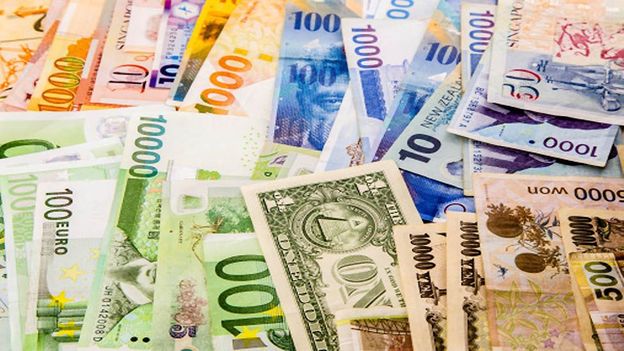
“The technology for counterfeiting is rapidly advancing,” said George Cubaj, editor of the Standard Catalog of World Paper Money. “To be secure, money has to stay on top of new technologies.”
Besides being more secure, the new banknotes are also tough — and potentially cleaner than paper money, which is alive with bacteria. Paper-based money, for instance, can transfer live flu viruses for up to 17 days. The new notes can last longer too: at least 2.5 times as long as paper currency—a typical five-dollar bill has an estimated life of 4.9 years, while a 20-dollar bill lasts an estimated 7.7 years, according to the US Federal Reserve. Another benefit of the plastic -based currency is that it can also be recycled and survive searing heat and freezing temperatures.
“Polymer notes can withstand heat as high as 140 degrees Celsius,” said Richard Wall, the director of currency at the Bank of Canada. “And you can even clean them by wiping them down with water.”
Sun spots and wallet woes
These new notes aren’t without problems.
Nigeria, which is still a largely cash-based society, is going back to old-fashioned cotton paper cash this year. The country began testing low-denomination polymer notes in 2007. But the ink on the notes faded under the blazing sun experienced year-round in the African country — and Nigerian bus conductors and other merchants began rejecting the blurry notes.
Polymer currencies also suffer from another problem: they don’t always stay folded.