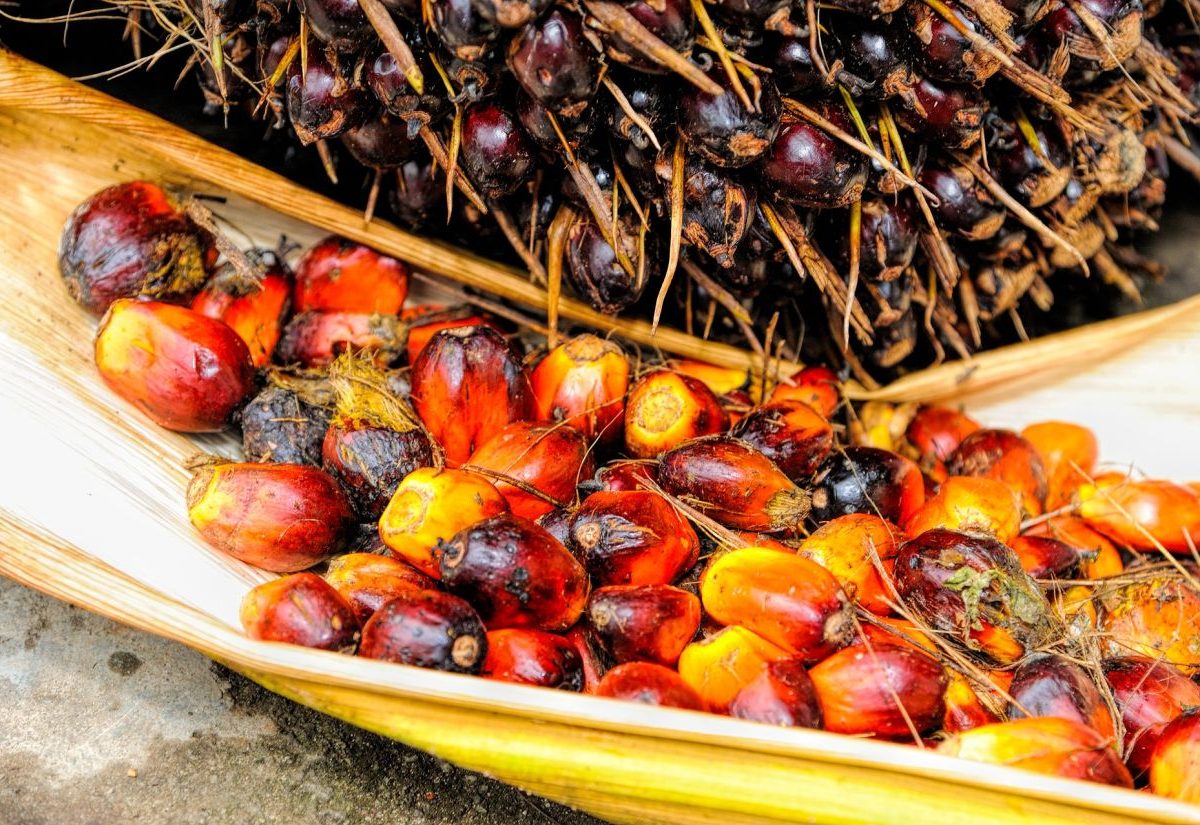
After decades wandering through estates, mills and boardrooms, I have learnt one enduring truth: oil palms always hide another lesson beneath their fronds.
From cultivation to processing, from best practices to global challenges, its supply chain stretches from our fields to dinner tables in more than 170 countries, touching an estimated three billion consumers who may not realise it, but owe part of their breakfast, beauty routine or biodiesel to Malaysia.
Yet one chapter of this story continues to mystify many Malaysians: how crude palm oil (CPO) is traded using futures on our national derivatives exchange.
It sounds like financial rocket science – intimidating, technical, perhaps requiring a spare doctorate.
So let me attempt, in Tek-style, to make it clear, friendly and digestible with your kopi-o.
Say the four-letter word FCPO – Futures Crude Palm Oil – in any kopitiam and you will instantly transform your table into a panel of overnight economists.
Retirees, planters, mill managers and refinery bosses all nod gravely at invisible charts, as if they personally drafted Bursa Malaysia’s contract specifications.
Even those who have never traded a single lot begin to speak with the confidence of someone hiding a Bloomberg terminal under the table and perhaps imagining themselves in the same league as forecasting legends like Dorab Mistry or Thomas Mielke.
But FCPO is no sorcery. It is simply a promise – an agreement today on the price of palm oil tomorrow. A financial “lock dulu”, but enforced by lawyers, algorithms and global traders to ensure nobody conveniently forgets the deal when prices swing.
This humble mechanism quietly influences everything – from tankers rolling out of mills, to the price of cooking oil in your kitchen, to the nation’s export revenue.
To understand the beauty of FCPO and its home, Bursa Malaysia Derivatives (BMD), we must take a short historical detour – not to Kuala Lumpur, but to Osaka, Japan.
The rice merchants who invented tomorrow
In 18th-century Osaka, the Dojima Rice Exchange was not merely a market, it was Japan’s economic heartbeat.
Rice was everything: currency, salary, prestige and political oxygen. Samurai were paid in rice, feudal lords were judged in rice, and merchants handled every grain as though it were a tiny bar of gold.
With no weather apps or satellite forecasts, traders stared anxiously at clouds the way modern investors stare at inflation headlines, praying their fortunes would not drown in the next monsoon.
Faced with feast-or-famine chaos, the merchants of Dojima created something revolutionary: rice futures.
Forward contracts known as nobemai allowed traders to lock in prices today for rice not yet harvested.
It was risk management wrapped in kimono sleeves – a promise made under blue skies to survive tomorrow’s storm.
These Osaka merchants soon became proto-bankers, issuing rice receipts, lending money and creating one of the world’s first organised exchanges.
And, as history faithfully records, markets misbehaved even then: speculation frenzies, hoarding, even rice riots in the 1730s.
Alarmed, the shogunate regulated the exchange in 1773, recognising that rice trading was a matter of national security.
Dojima was eventually absorbed into government agencies, but its legacy endures.
The DNA of modern futures – standardised contracts, clearing systems, delivery rules and hedging philosophy – all trace their lineage to this bustling rice marketplace.
And in a beautiful arc of history, that philosophy travelled from samurai rice to sawit (CPO) futures.
From Osaka rice to Kuala Lumpur screens
If Dojima invented the spirit of futures trading, Bursa Malaysia Derivatives (BMD) is its modern digital heir – a command centre where today’s risks are priced, traded and tamed.
Next, a quick sip of history – and don’t worry, it’s kopi-sized, not textbook-sized. BMD emerged from a series of sensible financial mergers at the turn of the millennium.
The Kuala Lumpur Commodity Exchange merged with the Malaysian Monetary Exchange to form Commex. Commex later merged with the Kuala Lumpur Options and Financial Futures Exchange (Kloffe), giving birth to the Malaysia Derivatives Exchange (MDEX) in 2001.
In 2004, MDEX stepped fully into the Bursa Malaysia family as Bursa Malaysia Derivatives Bhd.
The real global breakthrough came in 2009, when the Chicago Mercantile Exchange (CME Group) acquired a 25% stake.
That single handshake plugged Malaysian futures – especially FCPO – directly into the world’s largest trading screens.
A year later in 2010, BMD’s products migrated onto the CME Globex platform.
Before that, foreign traders needed special local links just to access Malaysian contracts.
After Globex, a trader in Chicago, London or Singapore could trade FCPO as easily as the S&P 500 or crude oil futures.
The result was transformative. Once the doors were opened, volumes did not merely grow – they took flight.
That CME partnership did not just invest in BMD; it catapulted Malaysian derivatives onto the global stage.
Imagine this: a global food manufacturer fears raw materials may cost more tomorrow; a plantation worries buyers may pay less.
BMD offers both a transparent, disciplined arena to hedge their risks – a marketplace where fear becomes foresight, and uncertainty becomes strategy.
Unlike the murky world of over-the-counter deals, where contracts are whispered and tailor-made, BMD’s futures and options are standardised, regulated, centrally cleared and globally accessible. Less gambling, more guardrails. Less guesswork, more governance.
That said, BMD is not risk-free. Leverage has a wicked sense of humour, rewarding and punishing with equal enthusiasm.
But under the watchful eyes of the Securities Commission Malaysia, BMD delivers one priceless commodity: clarity in a world that rarely offers any.
For Malaysia’s palm-oil sector, BMD lives by a simple philosophy: Plan for tomorrow. Trade today.
Future trading FCPO
Malaysia’s futures adventure began with a bang in October 1980, when the KLCE, South-East Asia’s first futures exchange, launched the world’s first FCPO contract.
Trading back then took place via the legendary open-outcry system. Imagine a financial pasar malam where traders shouted prices like fruit sellers competing for customers – chaotic, colourful and thoroughly Malaysian.
By 2001, the shouting gave way to silent keyboards and glowing screens. Malaysia found its rhythm on the global stage.
The evolution that followed was nothing short of cinematic.
In 2001, trading went fully electronic. In 2009, BMD shook hands with CME Group, instantly plugging Malaysian palm oil into the world’s most powerful derivatives network.
CME Globex is tradable during regular Malaysian market hours, five days a week – from Mumbai’s morning chai to Minneapolis’ midnight cocoa.
Then came another milestone. In 2021, FCPO became the world’s first physically delivered futures contract to mandate sustainability certification, using the Malaysian Sustainable Palm Oil (MSPO) standard. Sustainability was no longer just a slogan; it became contract law.
Today, FCPO is the beating heart of Malaysia’s derivatives ecosystem. The relationship is elegantly simple: BMD provides the stadium; FCPO is the main game.
One supplies the rules and the arena; the other fills it with spectators from every time zone. FCPO did not merely put Malaysian palm oil on the world map – it redrew the map.
And then there are days when the market doesn’t whisper – it roars. On Oct 29, BMD shattered records with 197,458 contracts traded in a single session.
FCPO dominated with 118,172 contracts, translating into nearly RM12bil in notional value at the standard 25-tonne lot size. Turbulent vegetable-oil prices, Indonesia’s biodiesel mandate and rumours of rising production provided the perfect bullish storm.
Why futures matter
Even if you have never opened a trading account, FCPO shapes your daily life. Your bottle of cooking oil, the income of over 450,000 smallholders, the margins of processors, the profits of plantation companies and the nation’s export revenue all sway to FCPO’s rhythm.
Futures provide risk management in a sector built on uncertainty.
Mills lock in selling prices. Refineries secure margins. Exporters hedge currency risks. Planters plan budgets without relying solely on divine intervention.
Without BMD, the sector would fly blind through a thunderstorm and as any planter knows, that is how you end up in a ditch.
Strengths, struggles and sawit surprises
Of course, FCPO is not perfect. Prices sometimes behave like moody teenagers. Speculators stir the pot. Smallholders may find futures as distant as Wall Street and twice as confusing.
But these are not weaknesses – they are reminders of why futures exist. Uncertainty never retires. Volatility never takes leave. And risk, much like our monsoon clouds this season, has a habit of gathering quietly before reminding us it never needed permission to arrive.
Which is why every trader must know two things with brutal honesty: the true reach of his authority, and the real depth of his risk appetite. Confuse the two, and the market will happily school you – fees included. But even that is not enough.
As Elaine Tan, formerly of BMD and now with Affin Hwang Investment Bank, once shared with me from her 20 years in the futures market: every trader ultimately survives on just two virtues: discipline and consistency.
Without them, no trader ever makes it past three months. And the market, as always, keeps impeccable records.
Technology promises a brighter horizon: artificial intelligence-powered weather models, satellite yield predictions, blockchain traceability, micro-hedging apps.
Sustainability may birth new derivatives tied to carbon scores or methane reductions. But threats remain – geopolitics, supply-chain shocks, activist narratives, rival oils and algorithm-driven swings.
Still, palm oil is famously resilient. It has weathered storms, shrugged off storms, and occasionally delivers plot twists: bursting into bumper crops after a pounding, or falling only when El Niño finally sends its late invoice. The tree always bounces back, just on its own biological timetable.
Full circle
Strip away the jargon and million-ringgit trades, and futures trading is profoundly human – a dance of fear and foresight, protection and planning, survival and stability.
Buyers imagine scarcity; sellers imagine abundance; both meet halfway so the world can keep cooking, eating and growing.
It began with rice merchants in Osaka seeking peace of mind. Today, that same ancient wisdom steadies Malaysia’s most strategic crop through weather tantrums, policy shifts and global market storms.
From samurai rice to sawit futures, history has been quietly preparing us.
And for all our modern sophistication, one rule still shines: Manage tomorrow’s risks today – because clouds gather long before anyone reaches for an umbrella.