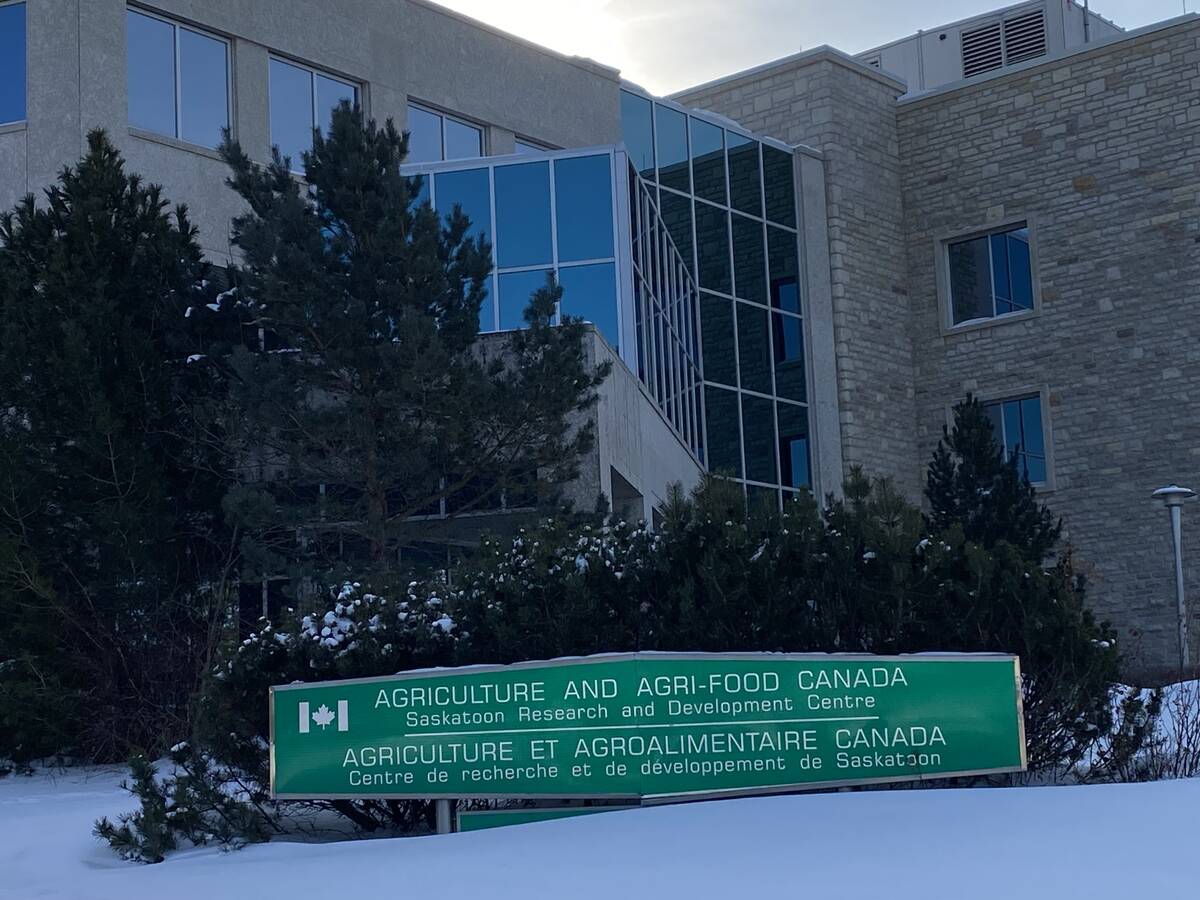
The loss of three Agriculture Canada research and development centres, four satellite research farms and 665 jobs at the department is a serious blow to the sector.
It is not, however, a surprise because it fits a trend that spans four decades of the department pulling back from finishing, registering and commercializing new crop varieties.
A report published last October by the Canadian Agri-Food Policy Institute found total Agriculture Canada spending on research and development is down 21 per cent since 1985.
Read Also

Seven research sites to close, Agriculture and Agri-Food Canada confirms
Saskatchewan agricultural research centres appear to be hard hit by job losses and closures announced Jan. 22, according to initial reports filtering out.
This was before prime minister Mark Carney’s November budget, which reduced the department’s budget by 15 per cent over the next three years as part of a larger government-wide plan to reduce federal public service jobs by up to 40,000.
Every Agriculture Canada research station that’s been cut over the past 40 years significantly reduced the breadth of crop breeding in the country.
These programs made massive genetic improvements to Canadian crops and licensed some of the most important varieties being grown in the country, even while being undercut.
In a column published last summer, Doug Miller, executive director of the Canadian Seed Growers’ Association described how these public breeding programs delivered billions to the Canadian economy and that every dollar invested in public wheat breeding returns $20 to $33 in value.
For instance, wheat yields have increased by more than 25 per cent in Canada over the past 20 years, on the back of public breeding programs.
In 2025, there were 13.8 million acres of CWRS grown in Western Canada ,and AAC cultivars were the top eight varieties grown. They accounted for 82 per cent of insured CWRS acres that used designated varieties.
AAC Synergy was the most popular barley variety last year. It was grown on 35 per cent of the insured acres with designated varieties in Western Canada.
For peas, AAC Carver was the second most grown variety in 2025, AAC Chrome the third most grown and AAC Ardill the fifth most grown on the Prairies. Together, they accounted for 27 percent of insured pea acres with designated varieties.
Agriculture Canada is also an important breeder of beans, mustard, triticale and oats, including AC Morgan, the top oat variety that accounted for 19 per cent of insured acres with designated varieties.
The contribution that Agriculture Canada programs has made toward creating crop varieties ready to be sold to Canadian farmers is clear — what will replace these programs is not.
The writing has been on the wall for decades as the federal government made it clear it wants to get out of the crop-breeding business and focus its resources on upstream germplasm development that can be licensed to industry partners.
This is a critical role the department plays, but it is doubtful seed companies will adequately fill the void left by the federal cuts anytime soon.
For instance, Miller noted in his column that wheat doesn’t lend itself to hybrid systems that generate predictable seed revenue because cereal crops are open-pollinated, regionally adapted and widely farm-saved.
Another concerning aspect is the potential loss of variety research at the Agriculture Canada centres and farms that are being cut, especially considering it can take over a decade to develop new varieties with the characteristics needed for evolving production issues.
It will be very difficult to replace the depth of the federal breeding programs with programs that need to provide returns on shorter timelines.
The debate over what replaces public breeding in Canada has become much more pressing. Farmers will be increasingly pressured to accept more robust variety use agreements or end point royalties to try and entice investment into the country’s seed sector.
Another approach could be the establishment of farmer-owned co-operatives to develop new varieties. This would help farmers retain ownership in the varieties on which their farms depend.
It could be a good time to see if a crop-breeding co-operative could fit within producer group mandates, especially considering there are some very knowledgeable breeders that could soon be looking for work.
One way or another, farmers will end up paying more for new varieties capable of overcoming emerging production challenges because it will be very difficult to match the efficiency of Agriculture Canada’s variety development pipeline.
Karen Briere, Bruce Dyck, Robin Booker, Paul Yanko and Laura Rance collaborate in the writing of Western Producer editorials.