
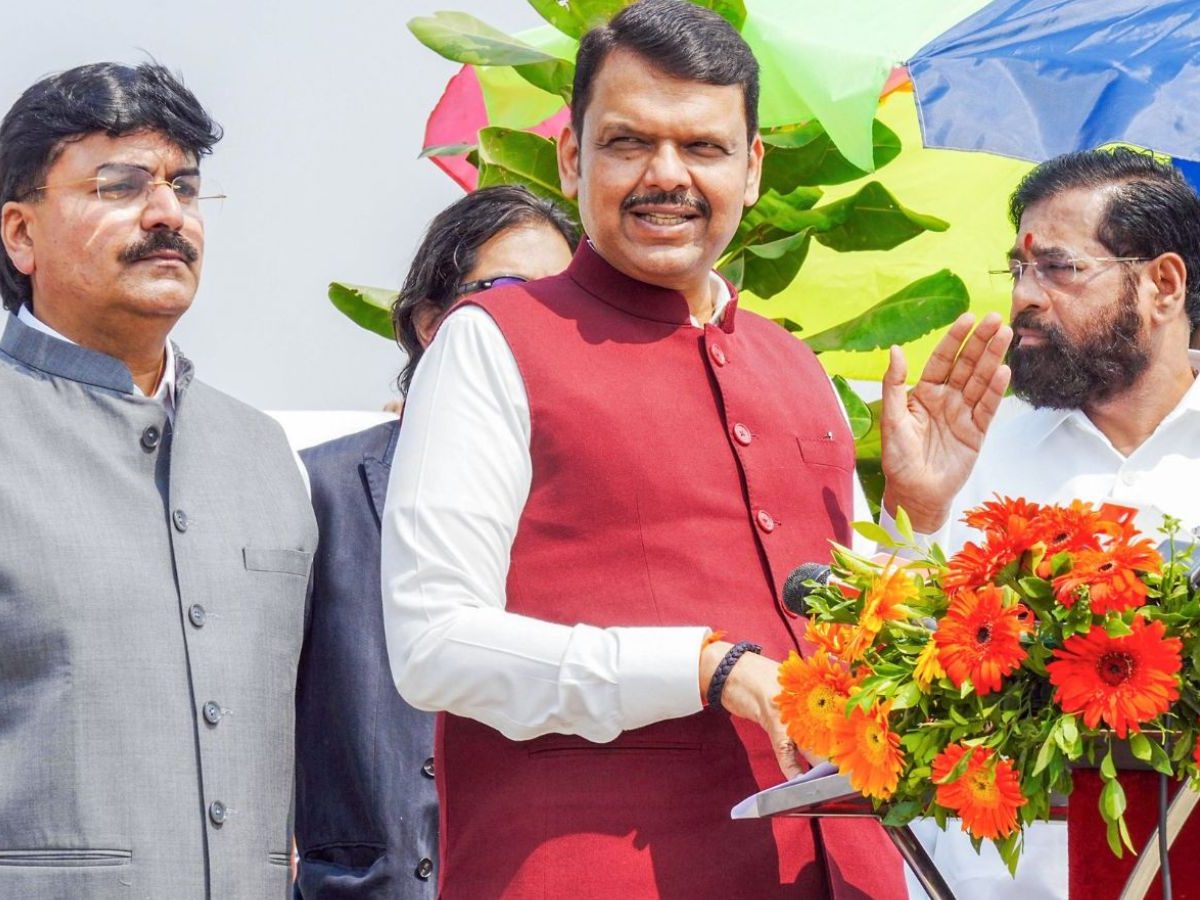
With 55% per cent of state’s population dependent on rural economy, agriculture sector remains a real challenge for Chief Minister Devendra Fadnavis as he presents Maharashtra budget 2026-27 on March 6.
The state government’s ambitious target to achieve one-trillion dollar economy by 2029-30 cannot be driven by industries and services sector alone. The agriculture sector will play a significant component in driving the outcome.
Chief Minister Devendra Fadnavis had said in the state Assembly last week, “If Maharashtra faces no drought in next few years, it will achieve the one-trillion dollar economy goal by 2029-30. If the state faces drought, the timeline will be impacted, delaying it to 2032.”

In a state where agriculture is rain-fed, last four years have seen extremely good monsoon. Despite that, there is no respite from farmer suicides in Marathwada and Vidarbha region which are worst hit by agriculture crisis.
Despite farm compensation package of Rs 32,000 crore to affected farmers, financial problems in agriculture sector remains.
In a written reply to questions on agriculture crisis, state government had last week said, “There have been 1987 cases of farmers’ death reported from Vidarbha and Marathwada region.” Although the compilation of statistics for 2026 is still underway, the instances of farmer suicides have been voiced by MLAs cutting across party lines in the state assembly and council.
According to NCP (MLA) Sulbha Khodke, “Unseasonal rains coupled with fall in prices compounded the crisis for farmers in Western Vidarbha region.”
Former agriculture minister Abdul Sattar said, “Floods in the drought-hit Marathwada region last year led to massive soil erosion, adversely affecting farmers in at least six out of eight districts in the region.”
The concern for agriculture crisis among elected members representing rural belts runs across party lines including those in power and opposition.
In the 2026-27 budget, Fadnavis will have to usher in drastic measures to boost the agriculture growth along with focus on empowerment of small and marginal farmers who constitute 78 per cent of total farmers’ population.
‘Leadership role’ by hosting AI Summit for agriculture
By hosting an Artificial Intelligence summit for agriculture sector in Mumbai last month, Maharashtra has taken the leadership role. The state government has promised sustainability and prosperity in agriculture sector using AI to enhance production and income for farmers. The Agriculture AI policy 2026-2029 lists handholding measures to equip farmers to climate challenges including updates on crop patterns, soil health, fertilizers and quality seeds.
The chief minister has outlined the objective by saying, “The AI will help reduce the input expenditure which will help farmers financially. Along with it, they will get real time updates on weather, crop pattern and doubling production.”
Story continues below this ad
While AI driven agriculture has renewed hopes of better farming practices for two crore farmers in Maharashtra, a larger question which remains unanswered is will it end farmers’ suicide? Can Maharashtra become zero farmers’ suicide state using AI?
Shetkari Sanghatana founder Vijay Jawandhia says, “Swaminathan Commission Report had recommended use if technology to improve agriculture way back in 2004-05. But along with it, there were other recommendations which have been completely ignored by Centre and state. If AI helps to double crop production, will state government ensure fair renumeration? The basic problem that farmers face is failure to get Minimum Support Price for crops. Unless you enforce Swaminathan Commission C2+50 formula, you cannot help farmers,” he said.
It is to be noted that renowned agriculture scientist M S Swaminathan in his report had recommended a formula to calculate MSP for farmers’ crops. The formula C2+50, as it is popularly known, states, “MSP should be 50 per cent above the comprehensive cost of production. It should factor all aid out expenses including land rents, interest of fixed capital, family labour etc. ”
A senior officer in agriculture department said, “The reforms take longer time to yield results. Given the complexities and rain-dependent agriculture in state, we cannot expect solutions immediately. Access to water to small and marginal farmers in drought-hit districts remains a perennial concern. With no fool-proof financial support mechanism, farmers are always pushed to private money lenders who charge higher interest rates up to 40 per cent.”
Story continues below this ad
Vidarbha-based farmer leader Jawandhia argues, “State and Centre will have to enhance financial subsidies to help farmers. A one-time loan waiver is not the solution.”
“If farmers in developing countries with land holding upto 1,000 acres avail subsidies from US government, why are small and marginal farmers with 2 to 5 acres land holding are deprived in our state?” he asked.
If farmers suicides have to stop, government will have to ensure they are economically strong, he added.