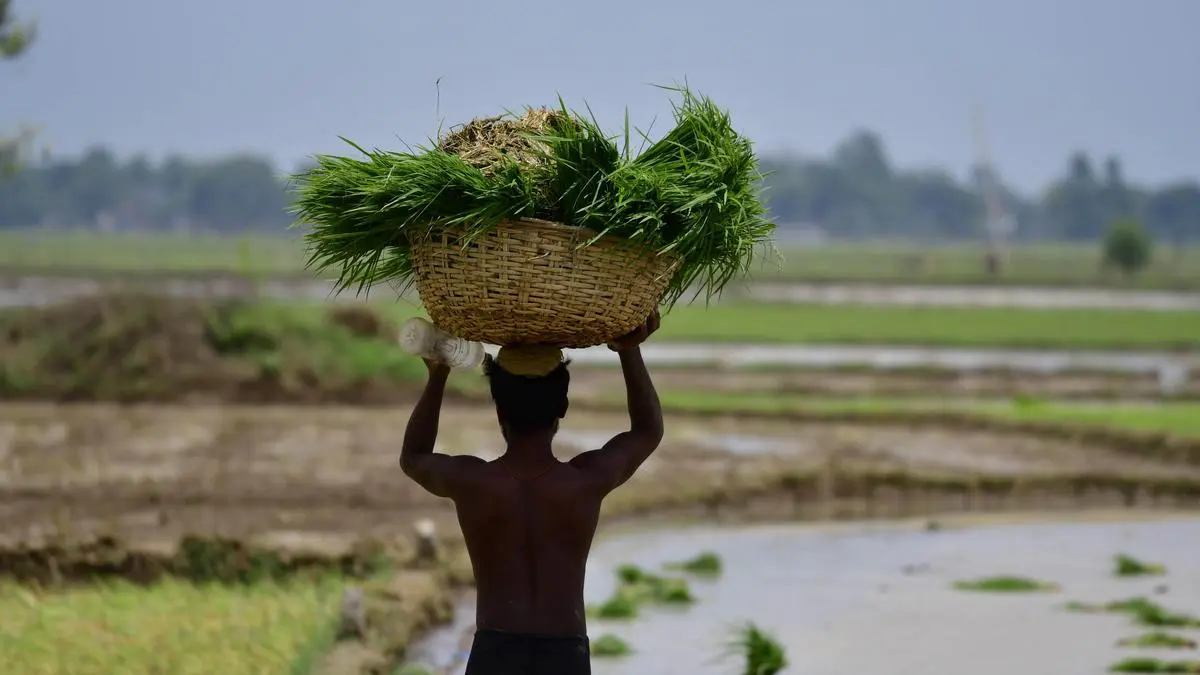

Traditionally, Union Budgets rarely generated much excitement among farmers. Unlike corporate houses, manufacturers or taxpayers, who can quickly assess gains or losses, farmers have often found Budget announcements too distant from their immediate concerns. However, this has been changing in recent years. With rising costs, volatile markets and declining profitability in cultivation, farmers now keenly watch every Budget, hoping for some relief. Budget 2026, therefore, carried expectations from the farming community.
The agriculture-related announcements in this year’s Budget reiterate a familiar set of priorities. The stated focus on targeted efforts to raise farmers’ income, support for high-value crops such as coconut, cashew and sandalwood and the promotion of AI-supported agricultural development signal the government’s intent to modernise agriculture and improve its long-term prospects. There is little doubt that such initiatives can contribute to higher productivity, diversification and income growth over time.
Support for high-value crops is particularly important in a context where traditional cereal-based farming has become increasingly unviable for many small and marginal farmers. Encouraging diversification towards horticulture and plantation crops can help farmers tap better market opportunities and reduce income risks. Similarly, the emphasis on artificial intelligence and digital technologies reflects an attempt to bring Indian agriculture in line with global technological trends. In principle, precision farming, improved advisories and better risk management tools can make agriculture more efficient and climate-resilient.
The main concern
Yet, the central concern for a vast section of farmers today is not about future technologies or long-term transitions, but about present income distress. On this count, the Budget remains largely silent. At a time when farmers across regions are grappling with poor market prices, rising input costs and unstable markets, there was a strong expectation that the Budget would announce concrete measures to strengthen market support and procurement mechanisms. Unfortunately, such measures are conspicuous by their absence.
The problem is particularly severe for farmers cultivating nutri-cereals, pulses and oilseeds. Although higher minimum support prices (MSPs) are officially announced for these crops, weak and uneven procurement systems prevent most farmers from realising MSP in practice. Unlike paddy and wheat, where procurement is relatively well established, procurement of pulses, oilseeds and nutri-cereals remains limited. Consequently, farmers are often compelled to sell below MSP, exposing them to market exploitation. Given the government’s stated intent to promote diversification away from the paddy-wheat system towards less fertilizer and water-intensive crops, the absence of specific supporting programmes in this Budget is a notable omission.
Market intervention schemes, price stabilisation measures and decentralised procurement could have provided much-needed relief to farmers facing immediate income stress. Strengthening procurement infrastructure beyond a few crops and regions would not only support farm incomes but also encourage crop diversification in a meaningful way. Without assured market support, calls for diversification towards nutri-cereals, pulses or oilseeds remain largely rhetorical.
Another missing element in the Budget discourse is a clear acknowledgment of the widening gap between cultivation costs and farm-gate prices. Even productivity-enhancing or technology-driven interventions take time to yield results. Farmers struggling to recover their basic costs today cannot wait indefinitely for the promised benefits of future reforms.
In sum, Budget 2026 presents a vision of agriculture oriented towards long-term transformation, diversification and technological advancement. While these objectives are undoubtedly important, they do little to address the pressing income-related problems confronting farmers at present.
For Budgets to truly matter to farmers, they must strike a better balance between preparing agriculture for the future and providing tangible support to farmers in distress today. Without credible measures to strengthen market support and procurement, the promise of higher farm incomes will remain elusive for a large section of the farming community.
The writer is an economist and former full-time Member (Official), Commission for Agricultural Costs and Prices, New Delhi. Views are personal
Published on February 5, 2026