

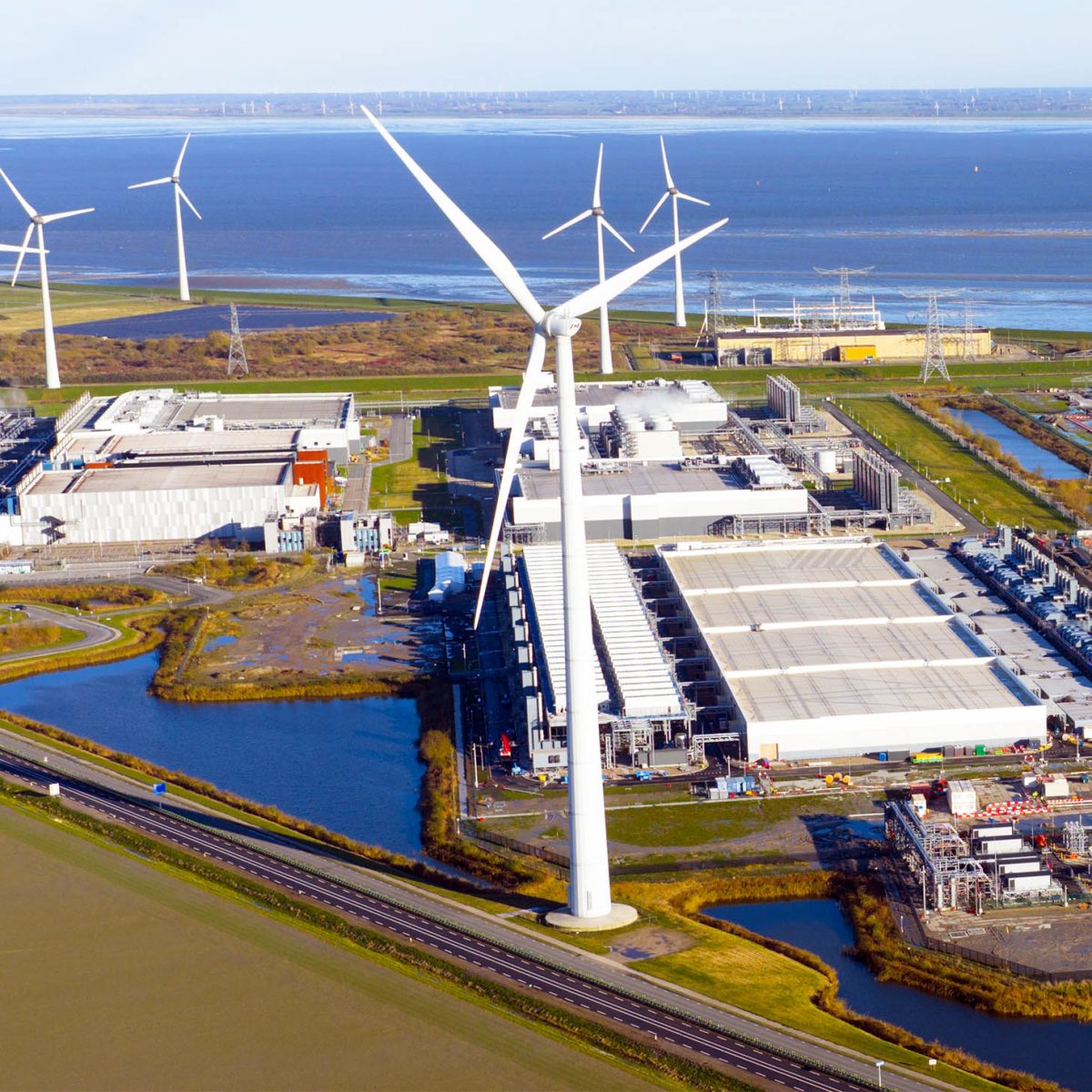
Streaming, cloud computing, and artificial intelligence are driving a massive expansion of data centers – and with it, concerns about rising energy demand and pollution.
But new research suggests digital growth does not have to come at an environmental cost. Powering data centers and online industries with cleaner electricity could reduce both energy use and air pollution, even as the economy continues to expand.
Greening data center energy

The researchers compared three possible paths for the economy through 2030. Only the green digital option consistently produced lower energy demand and cleaner air while also supporting faster growth.
Building that national projection, Professor Songtao Huo at Henan University of Urban Construction showed how linking data expansion to cleaner electricity reshaped both emissions and public health outcomes.
Under this green digital path, pollution levels and total energy use fell even as factories modernized and digital services continued expanding.
Even so, those gains depended on what powered the new infrastructure, leaving open the trade-offs explored in the rest of the analysis.
Energy demand drops sharply
In the green scenario, total energy use reached about 250 million tons of standard coal equivalent – a common unit China uses to track overall energy consumption.
Even as production continued to expand, faster digital services helped factories operate more efficiently, and many companies shifted machines from burning fuel to running on electricity.
By 2030, overall energy demand was projected to be about 19.4 percent lower than under a business-as-usual path.
Achieving those savings, however, depended on companies upgrading older equipment and on utilities steadily expanding renewable power as digital demand continued to grow.
Efficiency drives the energy savings
To connect every sector, the team used a computable general equilibrium model, a whole-economy simulator linking industries through prices.
Digital management let factories tighten inventories, route freight more efficiently, and cut energy waste that often hides in routine operations.
At the same time, data centers and device manufacturing added their own energy load, so the model balanced direct costs against indirect gains.
Small differences in how quickly industries adopt digital tools can swing the net result, so real-world rollout speed mattered.
Cleaner growth means cleaner air
By 2030, the cleaner growth path brought average air pollution down to about 22.36 micrograms per cubic meter, roughly 11.5 percent lower than if nothing changed.
That drop matters because it reduces exposure to PM2.5, tiny air particles small enough to slip deep into the lungs and enter the bloodstream.
Even at 22.36, pollution levels would still remain above the World Health Organization’s recommended annual limit for healthy air.
Reaching safer levels would require cutting smoke and exhaust from factories and vehicles, not just switching the power grid to cleaner sources.
Turning health into dollars
Behind those air numbers, the model counted shortened lives and rising medical spending linked to long-term particle exposure.
A separate population module translated cleaner air into fewer premature deaths because fewer people developed severe lung and heart disease.
“The digital economy is the new engine of global expansion, but its true value lies in its potential to harmonize wealth with wellness,” said Huo.
Once planners count hospital visits and early deaths as real economic losses, investing in clean energy looks more practical.
Growth accelerates with clean energy
Growth also turned out to be stronger under the cleaner pathway, with the overall economy projected to expand faster by 2030.
Cutting energy waste lowered operating costs for businesses, while cleaner air reduced health problems that can slow work and learning.
Rather than limiting the digital sector, the model showed that smarter infrastructure could attract investment toward cleaner industries and services.
Still, the gains would not be evenly shared – some workers could be left behind, and uneven costs across regions could spark political resistance if the transition is not carefully managed.
Transition pressures workers and grids
The cleaner digital transition is not without costs. The green scenario projected about 502,000 jobs lost by 2030, largely tied to restructuring in heavy industry, where automation and cleaner production reduce labor needs.
New digital jobs do not always appear in the same locations, leaving some communities facing disruption.
Modelers also estimated roughly 9.04 billion yuan (about $1.25 billion) in unemployment-related costs, along with rising electronic waste as faster device turnover strains recycling systems.
Stronger retraining programs, recycling standards, and local support could help ease these challenges and keep the transition politically stable.
At the same time, digital infrastructure brings new energy demands. Data centers consumed about 1.5 percent of global electricity in 2024, according to the International Energy Agency.
Servers run nonstop, and cooling systems add further demand. Because facilities often cluster in certain regions, local grids can face sudden strain when new capacity comes online.
Early planning for energy supply, grid upgrades, and efficiency rules can help prevent costly bottlenecks later.
Future of clean energy data centers
Policy, not technology alone, decided whether digital growth cut carbon emissions or simply moved pollution from one place to another.
Requiring new data centers to contract clean energy and meet efficiency standards helped ensure the digital build-out did not raise pollution.
Targeted subsidies for cleaner equipment and improved recycling also proved more effective than broad tax breaks that simply sped up production.
Tracking air quality and health impacts alongside job creation can also help keep future digital policies focused on people, not only profits.
These choices shape a narrow window ahead. When digital expansion is paired with clean power, economic gains can coincide with healthier air rather than forcing a tradeoff between the two.
Ultimately, better data, finer regional detail, and sustained real-world policy follow-through will determine whether those projected benefits are realized by 2030.
The study is published in Carbon Research.
—–
Like what you read? Subscribe to our newsletter for engaging articles, exclusive content, and the latest updates.
Check us out on EarthSnap, a free app brought to you by Eric Ralls and Earth.com.
—–