Felix C. Benavente, 76, said proper focus and coordination could make agriculture and agribusiness the other leg of Guam’s economy.
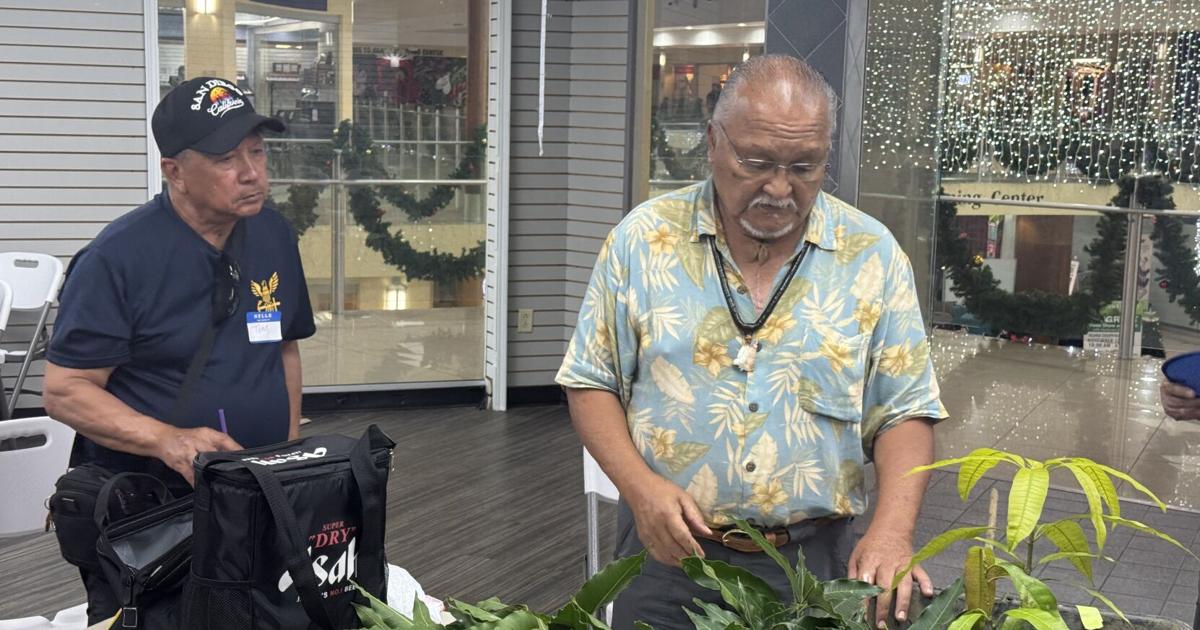
He was the organizer of AgriNet Guam USA 2025 held on Saturday at Agana Shopping Center, which brought together local farmers, agricultural organizations and food businesses to develop and expand a platform for farmers to learn about new techniques and enter the marketplace.
Benavente said AgriNet Guam USA 2025 is a special project, heartfelt vision, and labor of love for the betterment of the island and the region.
“Agriculture can become the other leg of the Guam economy. We need to elevate our perception of ourselves and our lifestyle,” Benavente said. “If the farmer wants to become an entrepreneur-farmer, that’s the value of the network. Some farmers just want to relax [and] the excess they give to their neighbors and friends.”
The trade show and expo featured seven presentations from the University of Guam, the Valley of the Latte, Capitol Kitchen, private farmers, Guam Beekeeping Association, FCB Planners, and the Guam Economic Development Authority about agribusiness economics, agritourism, financing, and more.
Reducing food waste
Capital Kitchen executive chef Casey Castro, a third generation farmer, gave a presentation on his efforts to start the Guam Kitchen Lab, a facility to produce shelf stable items from local farmers or imported items that are near the end of their shelf life.
He said the goal of the project is to centralize food production instead of purchasing from corporate companies.
“People don’t realize that a lot of prefabricated food in Guam comes from the states when we could provide the same items using the local workforce and local resources,” Calvo told the Pacific Daily News.
Calvo added that the Kitchen Lab would be an opportunity for local farmers to sell their excess produce instead of it wasting away.
He said Guam imports several items that could be sustained locally, such as avocados, mangoes and basil.
“It is disheartening to see how reliant Guam has become on imports. All the mangoes that drop on the ground, if we take all that and process it, would be fresh year-round instead of just during the season. We could never have to import [these fruits] …and we’ve just scratched the surface,” Calvo said.
Also addressed during the event was the island’s ambition to export products. Benavente said the agricultural community thrives on connections, and previous events have successfully given farmers distributorship.
“We connected the University of Guam with the University of the Philippines, Los Banos, and automatically, that network hooked up a feed distributor in the Philippines with a feed manufacturer in Guam. Now, their distributorship is a relationship,” Benavente said.
Calvo said a co-op between Guam and its neighboring islands could have a big enough impact on the food system to cut down “at least 10% of stuff imported.”
Livestock industry
Yigo resident Frank Santos, 69, part of the Northern Guam Soil and Water Conservation District and board member of the Guam Farmers’ Cooperative Association, said a current pursuit to create an export product for Guam is developing the livestock industry.
Guam does not have the U.S. Department of Agriculture’s stamp of approval to sell processed meat, Santos added.
He said his organization is working with the Guam Department of Agriculture and UOG to gain USDA approval and “produce our meats and put them out in a marketplace locally, regionally, and internationally.”
“The animal industry is a big industry where we’re not up to par with anybody,” Santos said. “I would like to see a butcher shop at Agana Shopping Center, Micronesia Mall, or GPO that promotes our [local] livestock products. It would show we can sustain ourselves.”
Produce vendors at the event, Arline Cruz, 73, and Marilyn Salas, 69, said future events should get more farmers speaking, because they have a lot to share about traditional farming and not relying on chemical pesticides and using traditional pesticides and fertilizers, like tangan tangan, neem plant oil, used coffee grain, burning coconut husks.
Salas also said future events should focus on promoting local food and networking with other islands in Micronesia to bring in and export fresh produce.
“There are rich resources for agriculture both in land and in fisheries that we could expand on so that everybody is in a win-win situation,” Salas said. “Kosrae does well with tangerine and citrus, in Palau and Chuuk, they have fish and coconuts, Pohnpei has mangrove crabs and bananas, and CNMI has rooted plants, like sweet potatoes and taro.”