Food security has become one of the defining challenges of the 21st century. Around the world, climate change, geopolitical tensions, population growth, supply-chain fragility, and water scarcity are placing unprecedented pressure on agricultural systems, News.az reports.
At the same time, consumers are demanding healthier, more sustainable food options, forcing governments and farmers to rethink how food is produced, distributed, and protected. The result is a global transformation that affects everything from small rural farms to multinational food corporations.
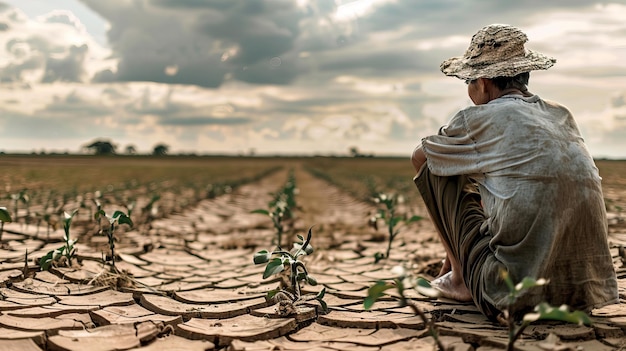
Experts warn that the traditional model of agriculture — heavily reliant on rainfall, predictable seasons, and manual labour — is no longer sustainable. Climate change has disrupted weather patterns, intensified droughts, and triggered more frequent floods, heatwaves, and storms. These extreme events damage crops, reduce yields, and destabilise food markets. Today, ensuring food security is no longer about producing more food; it is about building a resilient system capable of surviving environmental shocks.
One of the most critical risks comes from water scarcity, which affects more than 2 billion people globally. As rivers dry up and groundwater levels fall, countries must compete for limited resources. Agriculture accounts for nearly 70% of all freshwater use, meaning that water shortages directly threaten food production. In response, many regions are adopting precision irrigation systems — technologies that deliver water directly to the plant roots, significantly reducing waste. These systems use sensors, satellite data, and AI algorithms to determine exactly how much water crops require, improving efficiency and conserving resources.
Alongside water challenges, soil degradation poses a long-term threat to food security. Over-farming, chemical misuse, and erosion have degraded fertile soil in many agricultural regions. To combat this, farmers are turning to regenerative agriculture — techniques such as crop rotation, organic fertilisers, no-till farming, and cover crops. These methods restore soil health, increase biodiversity, and strengthen the land’s ability to withstand climate stress.
Technology is also reshaping food production. Smart agriculture, powered by drones, satellite monitoring, and AI-driven decision tools, is revolutionising farming practices. Drones can map farmlands, detect diseased plants, and assess irrigation needs. Satellites provide continuous weather and soil data. AI models help farmers decide the best planting times, fertilizer amounts, and harvest schedules. These innovations increase yields while reducing labour and environmental impact.
In densely populated regions, indoor and vertical farming is emerging as a powerful solution. These systems grow crops in controlled environments using LED lighting, hydroponics, and climate automation. Because they do not depend on weather or large tracts of land, vertical farms can operate in cities, reducing transportation costs and providing fresh produce year-round. Countries facing land shortages — such as Singapore, Japan, and the UAE — are heavily investing in this technology.
Another major shift is the global push for climate-resilient crops. Plant scientists are developing new seed varieties that can tolerate extreme heat, drought, and salinity. These crops offer stable yields even under unpredictable conditions. For many developing regions, such innovations are essential to prevent food shortages and reduce dependence on food imports.
However, food security is not only about production; it is also about distribution. The global supply chain has proven vulnerable to political conflicts, pandemics, transportation disruptions, and rising fuel costs. Recent years have shown how quickly local shortages can turn into global crises. As a result, countries are diversifying import sources, building strategic food reserves, and encouraging domestic production to reduce vulnerability.
Rising food prices also create social and economic challenges. Inflation driven by energy costs, climate shocks, and global market volatility affects low-income households the most. In many countries, families spend more than 40% of their income on food — meaning any price increase can push vulnerable populations into insecurity. Governments respond through subsidies, price controls, and targeted social assistance, but long-term solutions require stronger agricultural resilience.
Sustainability is another driving force behind the transformation of food systems. Consumers are increasingly concerned about food origins, animal welfare, environmental impacts, and the carbon footprint of supply chains. This has accelerated demand for organic products, plant-based foods, and responsibly sourced ingredients. In response, food companies are adopting transparent labeling, reducing plastic packaging, and committing to net-zero emissions.
Meanwhile, food waste remains one of the most pressing and overlooked problems. Nearly one-third of all food produced globally is lost or wasted. Improving storage, transportation, and consumer habits could dramatically increase food availability without expanding farmland. Supermarkets and governments are implementing waste-reduction programs, while food-sharing apps help redirect surplus meals to those in need.
Global cooperation is essential to addressing the food-security challenge. International organizations provide support to developing nations, helping them adopt modern technologies, improve infrastructure, and access global markets. Regional alliances coordinate agricultural research, seed exchange, and emergency food supplies during crises. Experts emphasize that no country can solve food insecurity alone — it is a global responsibility that requires shared solutions.
Despite the obstacles, the future holds potential. Advances in renewable energy, precision agriculture, biotechnology, and climate modeling offer powerful tools to build a stable and resilient food system. The key lies in integrating technology with sustainable practices, supporting farmers, protecting natural resources, and ensuring that food remains affordable for all.
Food security is not simply about feeding people — it is about economic stability, social peace, and national security. As climate pressures mount and global demand grows, the decisions made today will determine how successfully the world can nourish future generations in an increasingly complex world.