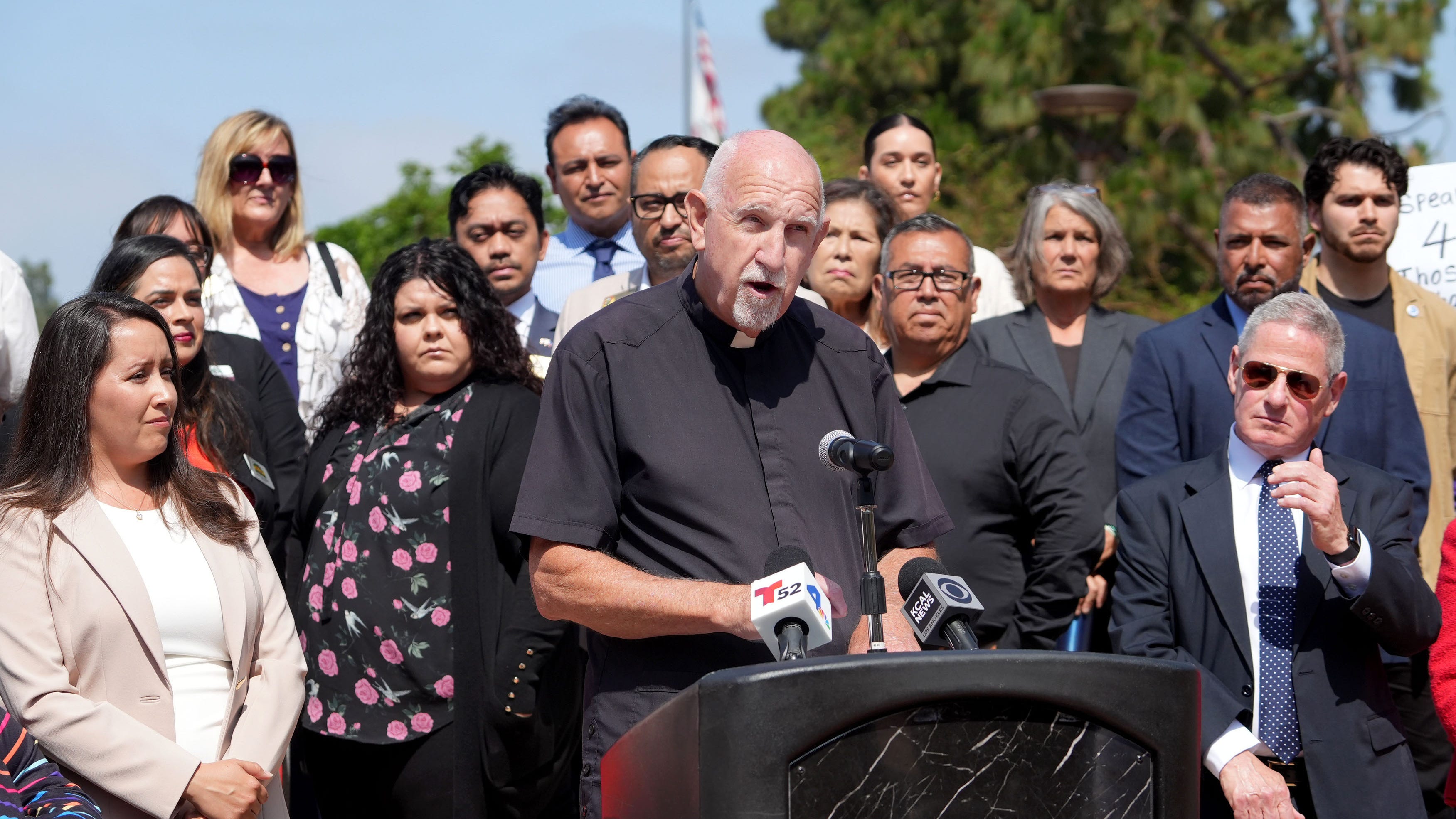

Watch as community leaders declare solidarity with immigrants
Watch as community leaders declare solidarity with immigrants at risk of enforcement action.
- California is the largest food producer in the country.
- State lawmakers at a Nov. 18 event said Trump’s immigration policies have caused fear for farmworkers that has ultimately resulted in higher grocery prices.
- Despite the limitations the state level, lawmakers like state Senate President Pro Tem Monique Limón are working on legislation that protects immigrant communities.
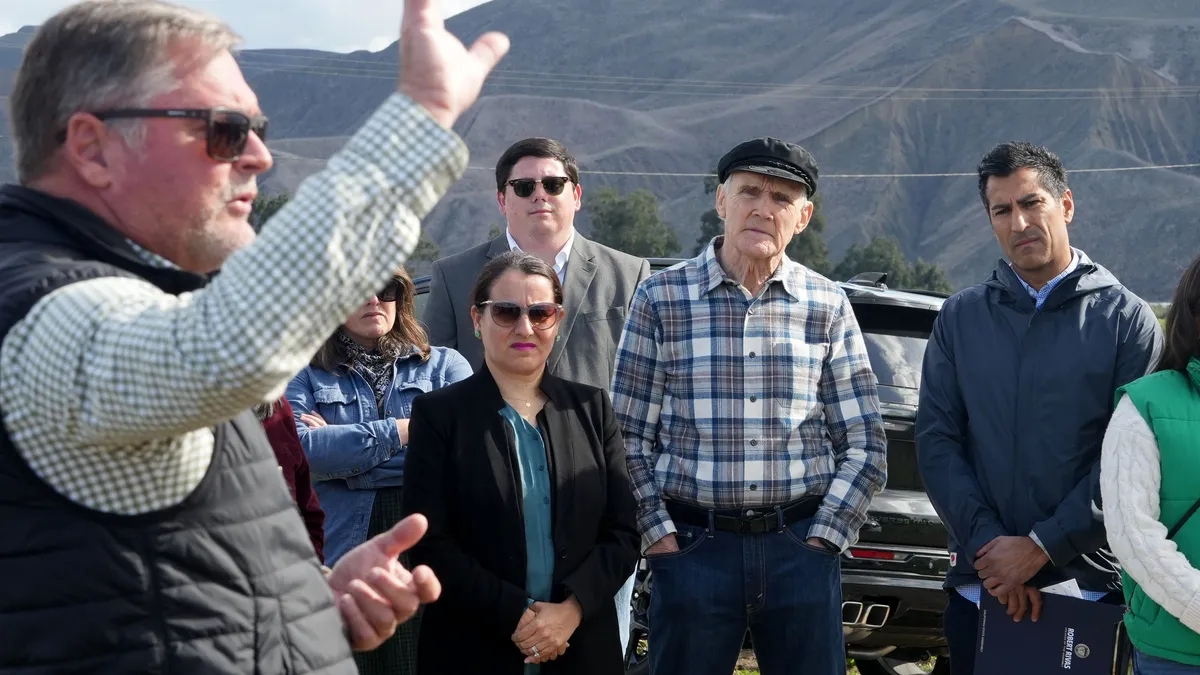
California is the largest producer of food in the United States, but in the aftermath of federal immigration raids, state lawmakers say they are extremely limited in their ability to support and protect the farmworkers who put food on the country’s tables.While touring a 57-acre avocado farm in Ventura, state Senate President Pro Tem Monique Limón, said she often finds herself feeling frustrated by President Donald Trump and his administration’s policies when trying to help her most vulnerable constituents feel safe.
The tour at Petty Ranch, followed by a brief news conference, was part of a Nov. 18 media event in which members of the California State Senate and Assembly discussed the effects of federal immigration policy and how the state can support farmers, farmworkers and the agriculture industry. Assemblymember Steve Bennett, D-Ventura, and state Sen. Henry Stern, D-Calabasas, both of whom represent parts of Ventura County also toured the farm.
“It’s not lost on us that there’s only so much a state can do — that at the end of the day, the ultimate solution and the direction is going to be set by the federal government,” Limón, a Santa Barbara Democrat, said in an interview.
In 2024, California’s agricultural economy reached a value of $61.2 billion — the highest of any state — while Ventura County’s hit $2.3 billion, according to government reports. Over 80% of California’s hired farmworkers surveyed between 2015 and 2019 were from Mexico and more than half were undocumented, according to the lawmakers at this week’s event. Limón said she does not know why the Trump administration has focused its raids so heavily on Ventura County compared to other agricultural communities in the state.
Impact on farmers, farmworkers
Petty Ranch has been in Chris Sayer’s family for nearly 150 years. The fifth-generation farmer said he has been fortunate enough not to experience any immigration raids, though he continues to feel the indirect impacts.
Federal agents swept into Glass House Farms’ cannabis production sites near Camarillo and Carpinteria July 10. All told, the U.S. Department of Homeland Security said its agents arrested 361 people and picked up 14 teen minors.
“It creates a high level of anxiety in the community,” Sayer said. “Not knowing what the labor situation is going to be, not knowing what sort of enforcement actions or activity could be out there, makes it very hard to plan.”
With only one full-time employee, the farmer relies on about seven additional workers who he hires through a labor contractor when harvesting. He’s not sure whether it will be more difficult to find seasonal workers next year.
These employees are not easily replaceable, requiring experience and knowledge.
“It really requires skill,” he said. “You can really do a lot of damage on crops if the people aren’t trained and if they don’t know what they’re doing.”
California Farm Bureau President Shannon Douglass said that the cloud of fear Sayer described will last long after the raids this summer.
“Overall, the biggest impact to our workers has really been the fear of the unknown,” she said. “Because there was a lot of attention — and for the right reasons, to be clear — that has put a lot of fear in the minds of our workers.”
The bureau has responded by focusing on educating farmers and farmworkers about their rights in relation to enforcement operations.
Broader impacts
In August, Douglass and state Assembly Speaker Robert Rivas, D-Salinas, co-authored a New York Times guest column detailing the impacts of the Trump administration’s immigration enforcement.
They said that when farmworkers are too afraid to show up to work, produce can rot in fields, causing food waste and also higher grocery prices for consumers. The hundreds of thousands of jobs that farms support, including in food processing, packing and transportation, are also negatively affected.
Rivas said Nov. 18 that the raids ultimately made the agriculture industry and workforce more vulnerable long-term, as they still have not fully recovered from the COVID-19 pandemic.
“This shift in federal policy from the Trump administration … has caused chaos, has caused fear, but more importantly has caused a lot of uncertainty for a workforce and industry,” he said. “And all of it undermines our state, local and regional economy.”
Trump’s immigration policy has driven costs up, he said, with average grocery prices nearly 3% higher than this time last year.
The speaker said it is the state Legislature’s responsibility to better understand the affordability problems at a hyperlocal level, because every county in California is different.
State efforts
Limon, whose grandfather emigrated from Mexico to pick strawberries in Oxnard, said she is proud of the state legislature for putting forth bills, many already signed by Gov. Gavin Newsom, to protect immigrants.
Senate Bill 805 ensures that law enforcement officers identify themselves, Senate Bill 81 ensures that immigration enforcement obtains warrants before entering restricted areas of health facilities and Senate Bill 98 ensures that schools send notifications when immigration enforcement is on campus, according to Limón’s office.
The Senate also passed a budget that provides $160 million to fund immigration legal services.
“Immigration has always been a federal issue,” Limón said. “And I think what we’ve done in the legislature is … work in a legal and consistent manner to support our communities in agriculture to be able to do their job, to be part of our state and to not live with this constant anxiety and fear.”
Makena Huey is an investigative and watchdog reporter for the Ventura County Star. Reach her at makena.huey@vcstar.com. This story was made possible by a grant from the Ventura County Community Foundation’s Fund to Support Local Journalism.