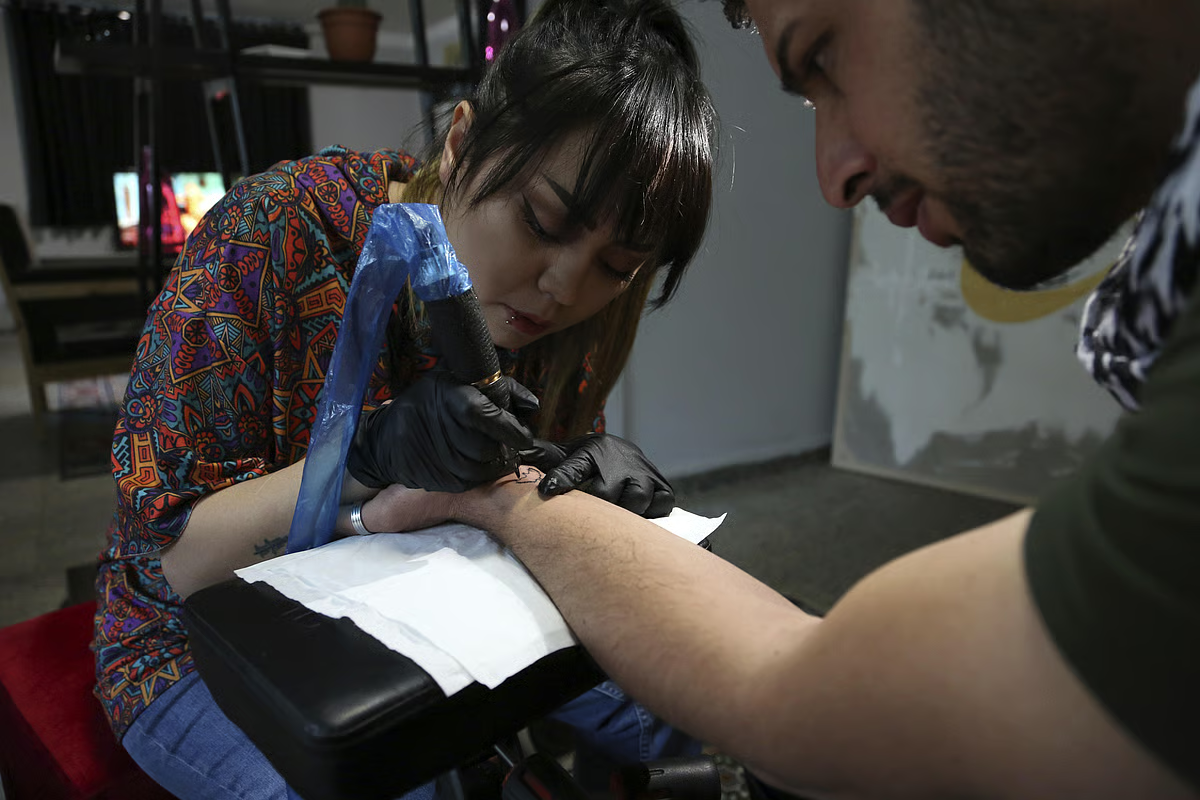
In recent decades, millions of Australians have embraced body art – an estimated 30% of adults have a tattoo. Over a third of those with tattoos have five or more pieces.
Trend reporting from industry and lifestyle sources suggests designs are becoming increasingly large, colourful and complex. Although tattoos have become more common, less attention has been paid to what’s in the inks being injected into people’s skin.
In a study published today in the Journal of Hazardous Materials, our team analysed tattoo inks available in Australia. We found they contain carcinogenic organic chemicals and toxic metals at levels that wouldn’t meet existing European safety standards.
Tattoo ink regulations
Injected into living tissue, tattoo inks are designed to last essentially permanently. Once in the body, pigments can persist, migrate through the lymphatic system or slowly break down over time.
Concerns about tattoo ink composition are not new. In Europe, early guidance on such inks emerged more than a decade ago, and was initially non-binding. As tattooing became more widespread, regulators moved towards stricter controls.
Since 2022, the European Union has enforced binding chemical limits on tattoo inks, restricting metals including arsenic, cadmium and lead as well as specific organic compounds that are known or suspected to be carcinogenic. Tattoo inks that don’t comply cannot be legally sold in EU member countries.
Australia doesn’t have an equivalent national framework for regulating tattoo ink. There’s minimal routine oversight of what tattoo inks contain in Australia, and consumers have limited information available. There’s no requirement to perform routine batch testing of inks sold in Australia.
Oversight relies on voluntary compliance, with one government survey released in 2016, and updated in 2018. That survey found many inks wouldn’t meet European guidelines, which at the time were less restrictive than the current EU framework.
Similar issues with tattoo inks have been found in the United States, Sweden and Turkey. Problems included inaccurate labelling, elevated metal concentrations, and in some cases evidence of cellular toxicity in lab tests. While people sometimes have acute reactions to tattoo ink, detecting potential long-term or chronic exposures is much harder.
What we did and what we found
The project began with an interesting question from a high school student. As part of her senior year research project, Bianca Tasevski, then at St Mary Star of the Sea College in Wollongong, contacted the School of Chemistry at UNSW Sydney to ask what was actually in tattoo inks.
To answer the question, we analysed 15 tattoo inks including black and coloured inks sold in Australia. The inks were all from major, established international brands widely used by tattoo artists.