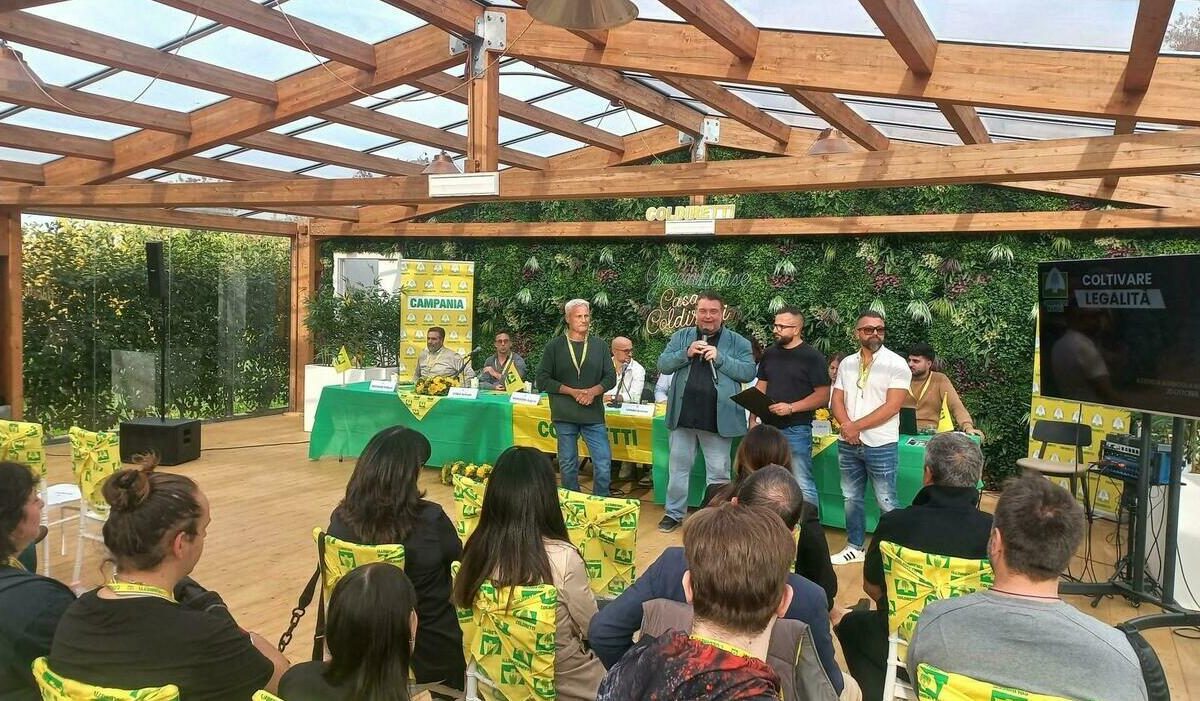
Reviving agriculture in Eastern Naples, in the concrete ocean where the sharks of the Camorra swim. The goal is nothing short of ambitious, but it is by no means a chimera. Yesterday afternoon, farmers, breeders, and floriculturists from the Neapolitan districts of Barra, San Giovanni, Ponticelli, and the municipality of Cercola gathered the general states to chart the course for new development under the Coldiretti banner. The assembly, organized by journalist Roberto Esse, took place at a high-quality flower-producing company in Cercola. Numerous participants attended. Angelo Zinco, Coldiretti president in Ponticelli and a grower in his neighborhood, made an appeal: “We must highlight the positive aspects of Eastern Naples.” It is a surprising world, the agriculture to the east of Naples. Here Luigi Scognamiglio grows tomatoes while Anna Sannino practices beekeeping in Barra. Alfonso Cirella, on the other hand, produces flowers and Armando Capasso produces high-quality basil. “We are in a tormented territory, but we believe in it nonetheless,” explains Raffaele Mignano, a grower. “I am the son of a ‘parulano’—one of those who cultivated on the right side of Via Argine in Ponticelli. I consider myself the host. The guests are others. Meanwhile,” he noted, “our regional council has been established: we participate.” Campania is the leading region for the number of flowers produced. A national figure from which to start at the next Italian floriculture fair to be held in Naples. “The territory is there, and there are agricultural realities,” Mignano clarifies, “but alone we will go nowhere.” Many obstacles, crime above all. “The anti-racket can help you concretely,” invites Raffaele Vitale, Fai Antiracket president in Chiaiano, “know that we can assist you throughout your complaint process and that there is an anti-racket fund.” “We remain in agriculture despite the thousand difficulties,” invites Gerardo Rusciano, agronomist and municipal councilor of the eighth municipality. Angela Mormone, principal of the Ponticelli agricultural institute, whose intervention was highly listened to, even by her students, interacts with the agricultural companies in the area. “There are numerous agricultural activities that our students carry out,” recounts the principal, “activities that have produced great concrete results, also thanks to the growers.” “There is an absolute need for a counter-narrative,” emphasizes Flavia Sorrentino, president of the Naples city council, “in Eastern Naples as in Scampia I have met incredible companies of excellent products. They are a stronghold of legality, but it will be necessary to network. For our part, we will have to simplify and allocate confiscated assets to agriculture.” “We,” says Valentina Stinga, president of Coldiretti Naples, “will always be ready to listen to you, but as Mignano said, this is your home. You farmers are custodians of this territory, and we will always stand by your side.” “You are already succeeding in reviving the territory,” concludes the assessor of the sixth municipality of Naples, Mariarca Viscovo.
© ALL RIGHTS RESERVED
This article is automatically translated