Technology has revolutionized global agriculture. Automation has changed the agricultural sector, and those changes might have arrived in the nick of time.
The global population is projected to reach nearly 10 billion by 2050, and the Food and Agriculture Organization of the United Nations estimates that food production has to increase by at least 70 percent to keep up with demand. In order to address the deficit without exhausting the Earth’s finite resources, many farmers are seeking help from artificial intelligence. AI offers farmers additional perks as well.
Precision is a notable benefit of utilizing AI within the agricultural sector. By using AI-powered sensors and satellite imagery, farmers can monitor crop health by looking at each and every plant instead of inspecting by the acre. According to a report by MarketsandMarkets, a revenue impact and marketing consulting firm, the market for AI in agriculture is expected to grow from $1.7 billion (the figure in 2023) to $4.7 billion by 2028.
Precision helps to keep plants strong and weed-free. AI-driven “see-and-spray” technology utilizes computers to identify weeds among crops and apply herbicides only to those weeds. This reduces blanket-spraying an entire field, which is a waste of resources. Research published in the Journal of Agriculture and Food Chemistry indicates that this AI-guided tool can reduce herbicide use by up to 90 percent. This reduces costs to farmers and benefits local ecosystems.
Weather across the planet has featured an uptick in volatile, unanticipated conditions. This can make planting even more challenging for farmers. AI models can process decades of historical weather data, soil conditions and atmospheric changes to offer predictive analytics that help the agriculture industry. By using predictive AI tools, farmers can determine optimal planting windows to maximize yield, according to the International Food Policy Research Institute. I
In addition, AI algorithms can predict outbreaks of pests and diseases before farmers notice them on their own. Multispectral imagery from drones can detect crop stress caused by nutritional deficiencies or fungus days before a human might recognize such indicators. By catching things early, farmers can reduce risk of a poor crop and financial losses.
Agricultural labor shortages are forcing farming operations to seek alternatives to get the job done. The American Farm Bureau Federation notes that farm labor has become more expensive and it’s harder to find workers who want to do the arduous tasks often required of them.
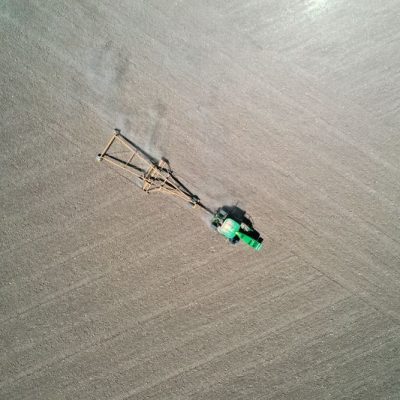
AI-driven robotics and autonomous tractors guided by GPS can help fill the void. These devices can work through the night, preparing soil, harvesting crops and performing other vital tasks. AI continues to be integrated into the agricultural sector. In order to maintain food security and mitigate labor shortages, farming operations are using technological tools to bridge gaps and improve efficiency.