CONSIDERATIONS FOR NUCLEAR ENERGY
While Singapore has not decided whether to deploy nuclear energy, it is making efforts to study its potential.
In 2012, the government conducted a pre-feasibility study which concluded that nuclear power plants at that time were not suited for Singapore’s small and densely populated circumstances.
Its latest 16-page background paper outlined Singapore’s considerations for nuclear energy in the context of the latest developments in technology, the current global landscape and nuclear safety. The paper is a joint effort between MTI, EMA the Ministry of Sustainability and the Environment, and the National Environment Agency.
Nuclear energy is an option as it has the potential to help Singapore address the energy trilemma, the paper stated.
The energy trilemma refers to Singapore’s three objectives for its energy mix, namely for energy to be clean, affordable and secure.
The paper stated that Singapore is building its capabilities in line with the International Atomic Energy Agency’s “Milestones Approach”, a process that helps countries understand the requirements for deploying nuclear energy.
“This ensures that any future decision is taken in line with global standards on nuclear safety, security and safeguards”, stated the background paper.
Generating nuclear energy does not produce greenhouse gases, making it a source of clean electricity. Its cost could potentially comparable to other energy pathways such as natural gas and solar.
As a domestic source of energy, nuclear could be resilient to shocks in the global market.
Globally, nuclear power plants have been in operation since the 1950s and supplies 10 per cent of the world’s electricity needs today. Currently, there are more than 400 operational nuclear power plants, with several new projects ongoing across Asia, Europe, America and Africa.
Advances in nuclear technology in the past decade, particularly in the area of small modular reactors (SMRs), have made atomic energy a more feasible option. SMRs are a fraction of the size of a conventional nuclear reactor, can be prefabricated for easier transport and installation, and are safer.
Many such models of reactors have been moving from concept to implementation in recent years, the background paper observed.
For Singapore, any decision to deploy nuclear energy will consider its safety, reliability, affordability, and environmental sustainability within the country’s context, the paper stated.
“We will continue our efforts to build up domestic capabilities, supported by international partners,” it noted. “We will engage the public regularly on the latest developments in nuclear energy, to build an informed understanding of the benefits and risks surrounding nuclear energy.”
AGREEMENTS WITH US ORGANISATIONS ON NUCLEAR
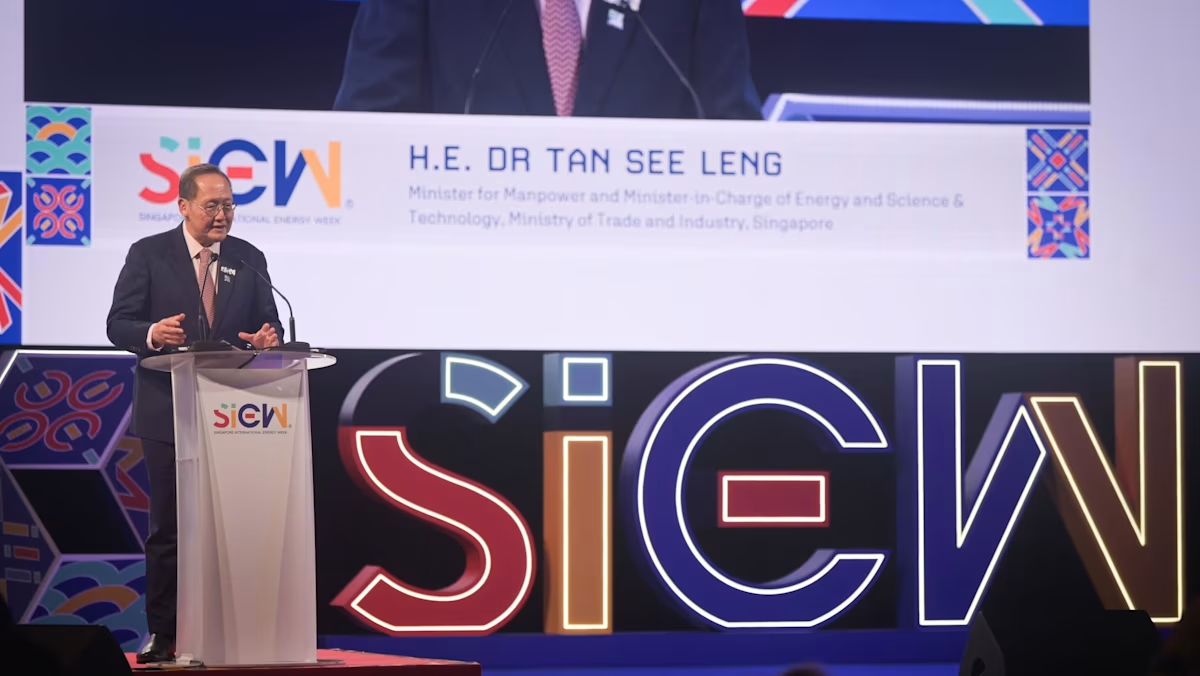
To strengthen Singapore’s expertise in the subject, the EMA will be signing new cooperation agreements with two United States’ organisations, the Idaho National Laboratory and Battelle Memorial Institute at SIEW, Dr Tan announced during his speech.
Idaho National Laboratory, the US’ nuclear energy laboratory for advanced nuclear energy, runs initiatives that help the global nuclear community commercialise innovations such as advanced fuels and reactors.
EMA will sign a letter of intent with the lab to work towards establishing a formal Cooperative Research and Development Agreement to collaborate on studies, technical assessment and capability building in advanced nuclear energy technologies, said the authority in a statement.
Battelle Memorial Institute is an independent, non-profit applied science and technology organisation that applies advanced science, technology and engineering towards complex challenges, including in the field of nuclear energy. It has supported the US government and private sector in developing and evaluating nuclear energy technologies for more than 60 years.
The memorandum of understanding that EMA and Battelle Memorial Institute will sign provides a framework for cooperation between both parties to study aspects of nuclear energy and advanced reactor technologies, EMA said.
These cooperation agreements come on the back of other agreements signed between Singapore the and US in recent years.
In July last year, Singapore and the US inked a civil nuclear cooperation agreement known as the “123 Agreement”, which would facilitate Singapore’s access to information and technological expertise. In January this year, both countries signed a Memorandum of Understanding Concerning Strategic Civil Nuclear Cooperation.