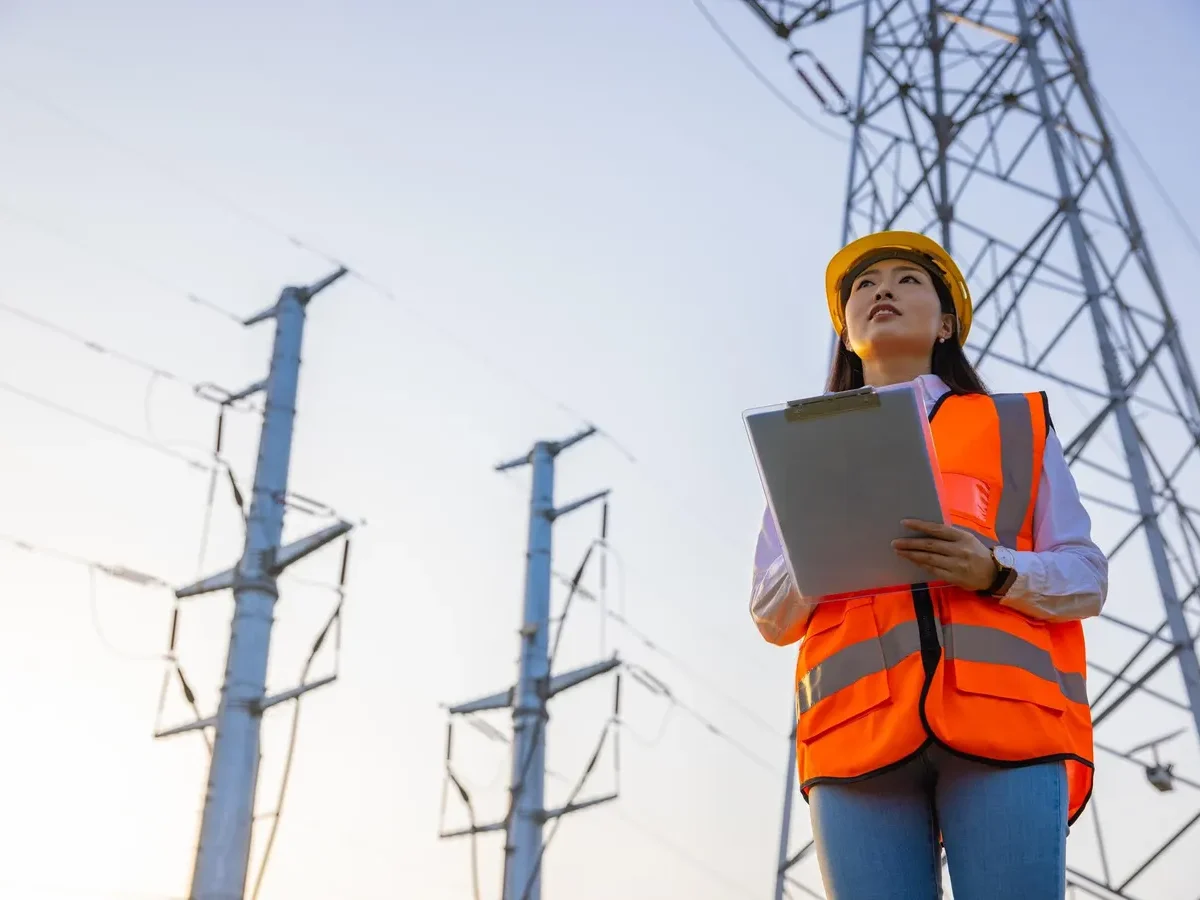
George Sakellaris is the founder, chairman of the board, president and chief executive officer of Ameresco.

As the U.S. moves toward a future that’s electrified, digital and decentralized, the spotlight is shifting to the foundational systems that support that future. Our current energy infrastructure, much of it decades old, is not equipped to meet the pace and complexity required by modern demand. From the rapid rise of AI and data centers to climate volatility and national security needs, pressure is building from every angle. What comes next must not only be bigger but also smarter.
The answer lies in intentionally building new infrastructure that supports a diverse, resilient and flexible mix of energy sources: both centralized and distributed, as well as firm and intermittent. It’s not about choosing between reliability and renewables. It’s about designing systems that deliver all of the above.
Beyond One-Size-Fits-All
There is no universal formula for the “perfect” energy mix. What works for an installation in Hawaii will differ from what’s needed in rural Colorado or a university campus in the Midwest. Factors like geography, grid age, regulatory landscape and the balance of electric and thermal load all influence the ideal system design.
Start by asking the right questions:
• What is your facility’s primary energy demand profile?
• How reliable is your current grid connection?
• Which local renewable resources are most available or cost-effective?
• What policies, incentives or interconnection constraints influence your options?
These can help reveal both your constraints and your opportunities, setting the foundation for a resilient, right-sized energy strategy. To build what comes next, we must embrace a portfolio approach: solar and wind, but also geothermal, engines, turbines, renewable natural gas (RNG), combined heat and power (CHP) and hydropower, among others.
We’ll need to focus on pairing firm power generation with intermittent sources, balancing energy sources that can provide consistent output regardless of time of day or weather, with renewables that can serve as a critical addition.
To assess the right ratio of firm to intermittent power for a given site, start by modeling your facility’s load profile across seasons and stress scenarios. Then layer in local resource availability, outage risk and policy constraints to determine how much firm capacity is needed to maintain reliability when intermittent sources dip.
Firm Power: The Backbone Of Reliability
Firm power refers to sources that deliver predictable, around-the-clock energy. Unlike intermittent renewables, firm sources such as CHP, geothermal, engines, turbines and hydropower don’t require sunlight or wind to function. They provide the baseload strength of a resilient grid and enable the flexible integration of newer, variable technologies.
CHP systems, referred to interchangeably as cogeneration, are remarkably efficient, producing both electricity and usable thermal energy from a single fuel source. This dual-output system can achieve efficiency levels of 80% or more and is ideal for campus-like environments, such as hospitals and universities.
Geothermal systems offer another dual benefit, tapping into the planet’s natural temperature to provide both electric and thermal energy. Meanwhile, hydropower and biogas are being reimagined in smaller-scale, grid-interactive ways that enhance local resilience without massive infrastructure investments.
Building For Flexibility, Not Just Capacity
The U.S.’s future grid won’t be entirely centralized or decentralized—it must be a combination of both. Utilities will continue to serve large regions, but organizations now have unprecedented control over generating, storing and managing their own power.
That’s the promise of distributed energy resources (DERs). Technologies like rooftop solar, battery energy storage systems (BESS), microgrids and demand-side tools allow users to participate directly in grid optimization. They add layers of redundancy and flexibility that centralized systems alone can’t provide.
In Hawaii, a solar and battery system deployed at a military installation was designed to deliver renewable energy to the local grid and provide independent backup power for mission-critical military operations. The system’s ability to “island” during grid outages, maintaining power for healthcare, emergency response and defense, demonstrates how modular infrastructure can be built to withstand disruption.
The takeaway? Resilience involves capacity and adaptability. Systems that combine firm and flexible resources, and that are designed to operate independently when needed, offer a blueprint for future-ready infrastructure.
Storage As The Great Equalizer
While often deployed alongside solar to “firm” generation, BESS has far broader applications: frequency regulation, load shifting, backup power and peak shaving. It can be the difference between a grid that reacts and a grid that anticipates strategically.
Across the country, utilities and communities are using BESS to unlock new flexibility. In collaboration with Ameresco, United Power in Colorado, for example, deployed distributed batteries across multiple substations to manage demand growth and improve grid stability, achieving capacity gains without major new construction. The system can also island itself during outages, providing independent power to critical loads. Most importantly, it extended the life of existing grid infrastructure, allowing United Power to meet rising demand without the delays and costs of major new construction.
In California, new large-scale projects, like the recently approved Darden Clean Energy Project in Fresno County, are demonstrating how utility-scale battery storage paired with solar can enhance grid reliability and replace aging fossil plants.
Building For Today’s Grid And Tomorrow’s Challenges
With climate disruptions, cyber threats and market shocks on the rise, the ability to absorb, adapt and operate through disruption is as crucial as raw capacity. That’s why future energy systems must be modular, distributed and digital.
To move from concept to implementation, here are a few key guiding principles:
• Define critical loads, identifying which operations must stay online during outages or emergencies.
• Understand which renewable and firm power options are available and cost-effective within the region.
• Simulate how energy systems perform under stress.
• Build flexible systems that can evolve with changing needs.
• Use real-time data to optimize performance and anticipate disruptions.
• Consider financial options like power purchase agreements (PPA) and energy savings performance contracts (ESPC) to deploy infrastructure without a large upfront investment.
Resilient energy blends local generation with central planning, pairing real-time analytics with long-term vision. No single technology holds the key. The solution lies in the smart design of a system that can support the needs of the future.
Forbes Technology Council is an invitation-only community for world-class CIOs, CTOs and technology executives. Do I qualify?