According to SocGen’s Dylan Grice, seeking a decent long-term return on commodities is akin to selling coal to Newcastle: rather foolhardy.
For those in need of a history lesson, he has outlined the case of why in his opinion commodities aren’t really so swell.
Number one: He reminds us that when all’s said and done, real commodity prices have still gone nowhere, thus counting out buy-to-hold investors:

Number two: Grice reminds us that when you actually buy commodities you are paying for the skills deployed in getting it in the first place – which he furnishes with the example of natural gas.
Shortages were predicted, and it duly appeared that come mid-2008 a scarcity (or escalating price) was on the cards for the US – that is, until a supply of ‘unconventionally’ obtained supplies appeared.
As Grice explains, he has more faith in the implications of this than in a commodities rally itself:
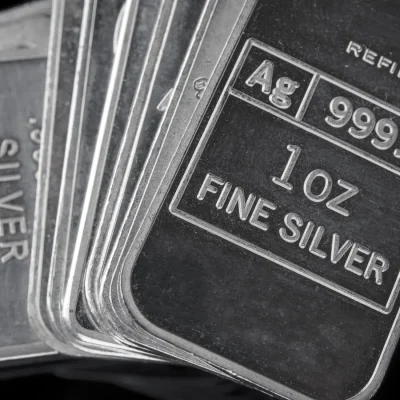
A bushel of wheat, a lump of iron-ore or an ingot of silver today is identical to a bushel of wheat, lump of iron-ore or ingot of silver produced one thousand years ago. The only difference is that they’re generally cheaper to produce because over time, human innovation has lowered the cost of production. When you buy commodities, you’re selling human ingenuity.
…Why bet against human ingenuity by buying physical commodities when you can bet on it by investing in the enterprises whose task is to remove the bottlenecks and lower commodity prices? So devote cash to the fixers, not the source: What I know is that I’d much rather buy the companies – for example the low cost integrateds, E&Ps and drillers – whose job it is to fix the world’s emerging energy problems than I would buy the energy itself.
Which leaves us with futures contracts. For Grice, the sticking point is that even here you are still liable to get your fingers burnt from some contango reversing the risk premium – and moreover, contango that is proving to be consistent:

Risk premium demolished, Grice comes full circle and sums up:
Over the past decade, commodity investors haven’t done badly. But as we’ve seen, they’ve made money recently not by picking up Keynesian risk premiums but by being on the right side of the most recent bull run in the spot prices. From the front page, we know how reliable such rallies have been in the past.
So you have been warned. Few are as lucky as the man who did make a profit on those Newcastle coal imports.
Related link:
Commodities investing is against God, apparently – FT Alphaville
A digitised history of contango, backwardation – FT Alphaville
Is it a bird? No, it’s a super-contango – FT Alphaville
Is ‘cash for commodity’ the biggest trade in town? – FT Alphaville