(Bloomberg) — Tentative calm was restored to Wall Street after the worst day for markets since April, with Donald Trump’s disavowal of force in his quest for Greenland pushing up stocks and a halting slide in bonds.
Following a cross-asset slide dubbed by some as a revival of the “Sell America” trade amid geopolitical risks, over 350 shares in the S&P 500 rose. Small caps beat the US equity benchmark for a 13th straight day while big techs were mixed. A renewed slide in the crypto world weighed on sentiment, with stocks giving back some of the earlier gains.
It wasn’t so much what President Trump said that mattered as what he didn’t say, according to Brian Jacobsen at Annex Wealth Management.
“He didn’t reiterate his tariff threat against Europe, He didn’t say the government would use force to get Greenland. He didn’t say he’d cap credit-card rates, instead asking Congress to do it,” Jacobsen added. “It felt like a dialing down of the substance even if the style was still pure Trump.”
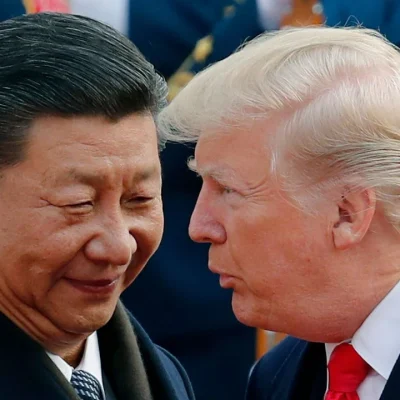
In a speech to the World Economic Forum in Davos after prompting days of elevated transatlantic tensions over his plans, Trump said that he was seeking “immediate negotiations” on acquiring the sovereign Danish territory for national security reasons.
The president ruled out the use of military force, but he insinuated that he would weigh Europe’s response to his demands when considering the US commitment to the North Atlantic Treaty Organization going forward.
“His tone was slightly more conciliatory,” said Fiona Cincotta at City Index. “The prospect of a diplomatic resolution is still on the table, but so are trade tariffs.”
A trade deal between the US and European Union is on hold after the European Parliament decided to freeze a ratification vote in response to Trump’s escalating threats to seize Greenland.
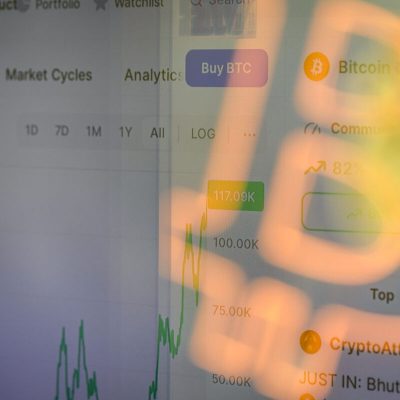
The S&P 500 rose to about 6,825, brifely erasing its drop for the year. The yield on 10-year Treasuries slid one basis point to 4.28%. That’s ahead of a $13 billion auction of 20-year bonds. The dollar wavered. Bitcoin lost 2%.
Despite the market rebound, the rally was kept in check by persistent concerns about Trump’s simultaneous commitment to seeking immediate negotiations on Greenland and his continued threats to impose escalating tariffs on European partners if they refused to cooperate, according to Giuseppe Sette at Reflexivity.
The market’s cautious response reflected investors’ recognition that while the elimination of military escalation risk was significant, the underlying trade tensions and “Sell America” narrative remained unresolved, he added.
“The markets breathed a sigh of relief during Trump’s speech marathon, where the US President ruled out the use of military to acquire Greenland,” said Fawad Razaqzada at Forex.com. “But does this mean it is risk back on, and markets will kick on from here after the recent falls? Well, time will tell. But caution remains the order of the day.”
While military use would have been quite the unthinkable and no one really believed the US would have gone down that road anyway, the threat of tariffs is there and a trade war with Europe cannot be ruled out just yet, Razaqzada added.
Trump has ruled out the use of force to acquire this island, but his push for immediate negotiations over ownership will likely maintain the pressure around this sensitive topic, according to James McCann at Edward Jones.
“We will be watching carefully for further signals from the president and European counterparts over coming days, which could provide more clarity on how this dispute might be resolved in a way that secures U.S defense concerns and protects local sovereignty,” McCann said.
JPMorgan Asset Management’s Bob Michele said the recent selloff in markets was a message to the Trump administration to take action to restore calm as officials did after Liberation Day tariffs rattled investors last year.
“Things are a bit chaotic and the markets do feel a bit panicked,” he said. “The market had a fit in April and then they backed off of a lot of things and then calm ensued. We need to hear some of the same kinds of things.”
Tuesday served as a reminder that investors remain emotional about geopolitical and tariff headlines, and that record allocations to equities leaves little margin for error, according to Mark Hackett at Nationwide.
“Following the strong run to record highs, it is not unusual or unhealthy to see a period of consolidation,” he said. “As skepticism arises, investors are more reactive, and companies are unable to buy back shares due to earnings blackout periods. The weakness has been temporary, however, with the rally continuing shortly after earnings season.”
The tariff threats surrounding Greenland show that the stock market, while resilient, is still headline-sensitive, and there will be plenty of headlines in the coming weeks, whether they are from Washington, earnings, economic data or the Federal Reserve, noted David Laut at Kerux Financial.
“We remind investors that tariff headlines can cause short-term volatility, but that applies in both directions,” Laut added. “The tariff threats can easily be unwound and reversed, sparking upside market volatility.”
Laut also said that the tariff-driven stock market declines present opportunities for investors who are looking for an attractive entry point to put new money to work. He bets value stocks, in sectors like financials, materials and energy, are the better buys right now given elevated valuations in tech stocks.
Provided Europe does not activate its anti-coercion tool or a large-scale divestment of US assets, a correction on the scale of the post-Liberation Day pullback appears unlikely, according to Seema Shah at Principal Asset Management.
“However, this episode may accelerate an emerging structural shift: global investors have shown greater appetite to diversify away from US concentration risks, especially in AI leadership, and renewed geopolitical unpredictability strengthens this incentive,” she said. “Recent dollar softness is consistent with this gradual global portfolio rebalancing.”
Meantime, Treasury Secretary Scott Bessent said Deutsche Bank AG Chief Executive Officer Christian Sewing called to dismiss a report from one of the German lender’s analysts that had suggested European investors may dump US assets.
“This notion that Europeans would be selling US assets came from a single analyst at Deutsche Bank,” Bessent said Wednesday at the World Economic Forum in Davos. “The CEO of Deutsche Bank called to say that Deutsche Bank does not stand by that analyst report.”
Corporate Highlights:
Netflix Inc. gave a disappointing forecast for earnings in the months ahead as it spends more on programming and works to close its $82.7 billion deal with Warner Bros. Discovery Inc. European Union regulators are poised to review competing bids for Warner Bros. Discovery Inc. at the same time — thrusting Netflix Inc. and Paramount Skydance Corp. into a rare head-to-head antitrust battle. United Airlines Holdings Inc. beat Wall Street estimates for the fourth quarter and anticipates a strong 2026, driven by demand from high-spending domestic passengers and international travelers. Johnson & Johnson’s fourth-quarter sales beat expectations, led by strong growth for several newer cancer treatments, while it issued higher-than-expected 2026 guidance. Berkshire Hathaway Inc., the largest investor in Kraft Heinz Co., may soon sell some or all of its stake in the cheese and ketchup maker, just months after the firm announced plans to split into two companies. UnitedHealth Group Inc. plans to give profits from its Affordable Care Act plans back to customers in 2026 as Congress weighs extending tax credits for those plans, the company’s top executive said in prepared testimony. As artificial intelligence threatens to upend job markets in countries around the world, Nvidia Corp. Chief Executive Officer Jensen Huang brushed off longer term concerns and made the case that skilled vocational workers are seeing increasing demand now. One of OpenAI’s top executives defended the company’s addition of ads to its popular chatbot ChatGPT as a way to democratize access to artificial intelligence. Charles Schwab Corp. reported a surge in average daily trading volume in the fourth quarter as retail investors sought to take advantage of the end of a strong year for the stock market. Ally Financial Inc. reported higher-than-anticipated provisions for credit losses in the fourth quarter to prepare for the potential of soured loans. Ryanair Holdings Plc’s chief executive officer said his online sparring with Elon Musk this past week has been good for business. L’Occitane Groupe, the skincare retailer that was taken private by its billionaire owner Reinold Geiger in 2024, is weighing an initial public offering in the US as soon as this year, people with knowledge of the matter said. Burberry’s sales advanced over the key holiday period as shoppers snapped up the British brand’s tartan scarves and trench coats, especially in China, bolstering hopes of a luxury rebound. Renault SA plans to reintegrate its Ampere electric vehicle and software operations as Chief Executive Officer Francois Provost reverses a strategy that sputtered due to lower-than-expected EV demand. Qiagen NV, the European molecular testing firm, is weighing strategic options including a potential sale amid fresh takeover interest, people with knowledge of the matter said. Sony Group Corp. introduced its latest pair of consumer earbuds, with a clip-on design that resembles recent efforts from Bose Corp., Lenovo Group Ltd.’s Motorola unit and Huawei Technologies Co. Indian drugmaker Dr Reddy’s Laboratories Ltd. is planning to launch a generic version of Novo Nordisk A/S’s Ozempic in March after the drug’s patent expiry, becoming one of the first firms to capture the gold rush for the therapy in the South Asian country. Some of the main moves in markets:
Stocks
The S&P 500 rose 0.5% as of 12:01 p.m. New York time The Nasdaq 100 rose 0.5% The Dow Jones Industrial Average rose 0.6% The Stoxx Europe 600 was little changed The MSCI World Index rose 0.2% Bloomberg Magnificent 7 Total Return Index rose 0.2% The Russell 2000 Index rose 0.7% Currencies
The Bloomberg Dollar Spot Index was little changed The euro fell 0.2% to $1.1703 The British pound was little changed at $1.3429 The Japanese yen was little changed at 158.20 per dollar Cryptocurrencies
Bitcoin fell 1.8% to $87,749.82 Ether fell 2.9% to $2,903.84 Bonds
The yield on 10-year Treasuries declined one basis point to 4.28% Germany’s 10-year yield advanced two basis points to 2.88% Britain’s 10-year yield was little changed at 4.46% The yield on 2-year Treasuries was little changed at 3.59% The yield on 30-year Treasuries declined one basis point to 4.90% Commodities
West Texas Intermediate crude rose 0.2% to $60.48 a barrel Spot gold rose 1.4% to $4,828.54 an ounce ©2026 Bloomberg L.P.