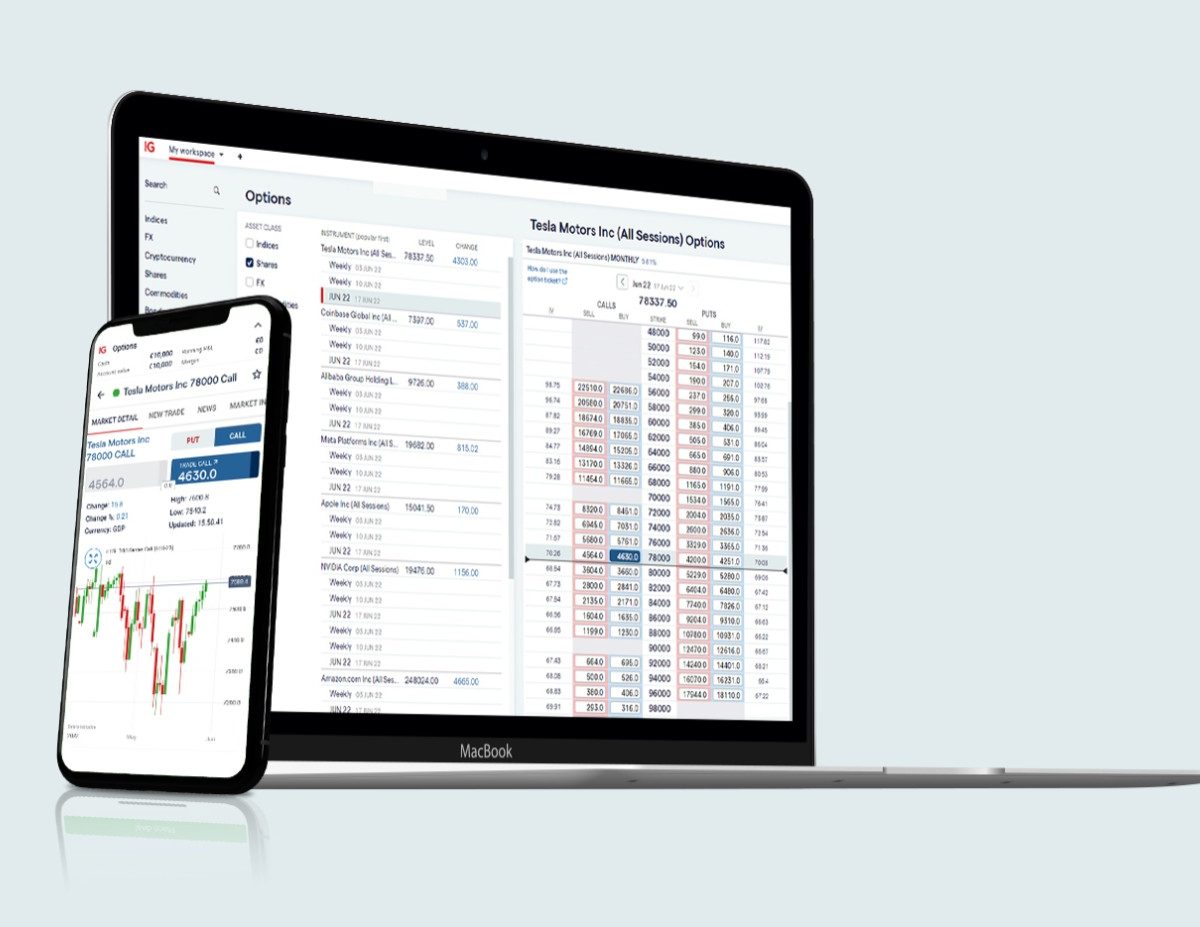
Five key characteristics of stock options
A stock options contract has five distinct elements that define it:
1. Strike price
This is the level that determines the price at which you have the right to buy or sell shares if you exercise the contract – regardless of the current market price. The strike price can be equal to, less than or greater than the market price.
2. Contract size
The standard deliverable per stock option contract is 100 shares of the underlying. However, contract sizes may differ, for example between companies, exchanges or locations.
3. Expiry date
This is the date on which the contract ceases to be valid. With us, you can exercise options on or before this day – these are also known as ‘American-style options’. European-style options, on the other hand, can only be exercised on the expiry date itself.
4. Type of option
There are two types of options, known as calls and puts.
- A call gives you as the holder the right to buy shares at the option’s stated strike price. If the strike is below the stock’s current market price, the option holder is ‘in the money’, meaning you’re essentially buying the shares at a discount. If the strike is above the market price at expiry, the option becomes worthless
- A put is the opposite, instead giving you the right to sell shares at the stated strike price. This time, you’re ‘in the money’ if the strike is above the current market price, meaning you’re essentially selling the shares for a profit. If the strike is below the market price at expiry, the option is rendered worthless
5. Type of settlement
When trading stock options with us, positions are either cash settled or physically delivered. If cash settled, no actual shares change hands – instead, the difference between the stock’s price and the strike price is settled in a cash payment However, stock options contracts are also often physically settled. This means that real company shares are either bought or sold, and then delivered.
6. Intrinsic and extrinsic value
Intrinsic value is the difference between the asset price and strike price. For calls: asset price minus strike price. For puts: strike price minus asset price. Extrinsic value is the option’s time and volatility value, present in all options before expiration.