Futures markets are often misunderstood by retail investors, dismissed as tools for professional traders or speculative hedge funds. But according to Erik Norland, Chief Economist at CME Group, futures markets offer some of the clearest real-time signals about where the global economy may be heading.
Speaking onb the Investing, Markets & Money podcast, Norland explained that futures prices reflect collective expectations across interest rates, equities, commodities and currencies – often reacting faster than economic headlines. “Markets can generate information about the future more quickly than news is written,” he noted, highlighting why professional investors watch them so closely.
One of the clearest messages coming from markets right now, he argues, is that inflation – not recession – remains the dominant concern. This is most visible in precious metals. Since early 2025, gold prices have risen sharply, while silver, platinum and palladium have posted even larger percentage gains. To Norland, this reflects growing demand for assets that central banks cannot create at will.
“Central banks don’t think of gold as a commodity,” he said. “They think of it as a currency.” For nearly two decades, central banks have consistently been net buyers of gold, accumulating around 10% of annual global production each year. That behaviour, Norland argues, signals unease with rising debt levels, loose monetary policy and inflation that remains above official targets.
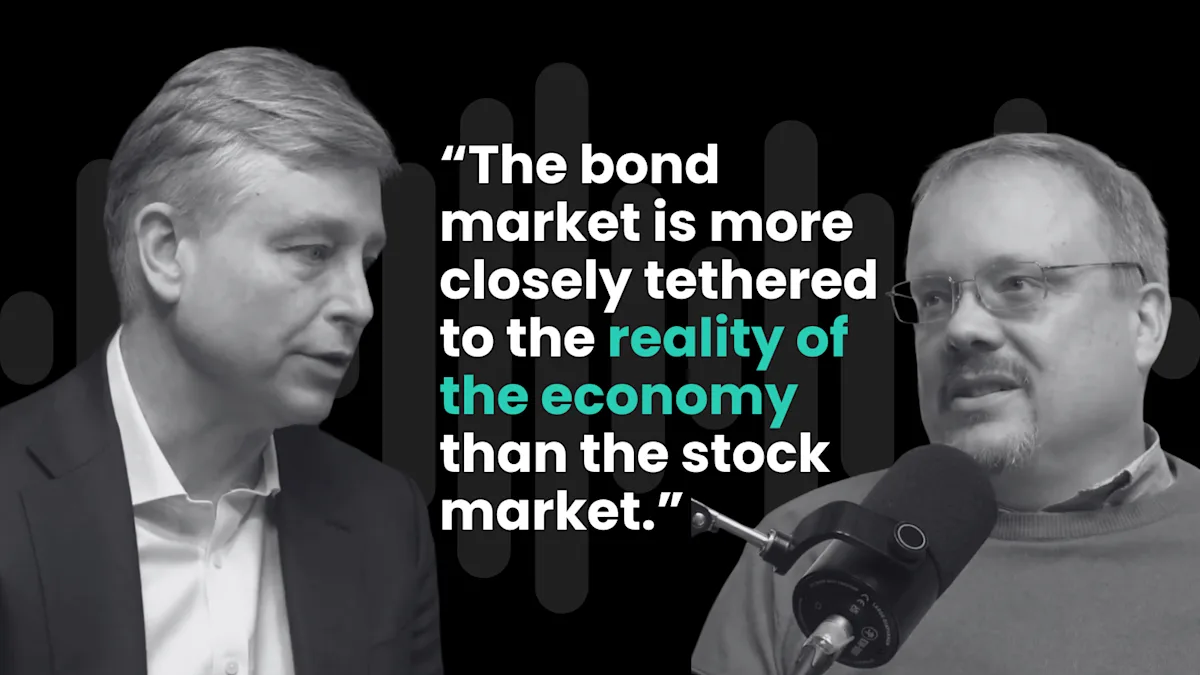
The conversation also turned to bonds – an asset class back in focus after years of ultra-low interest rates. Norland explained why many investors believe the bond market is “smarter” than equities. Bonds, he said, are more closely tied to economic reality because they mature at a defined point in time. Equities, by contrast, derive much of their value from expectations far into the future, making them more psychologically driven.
This distinction matters when looking at the yield curve, a long-standing indicator of economic cycles. When short-term interest rates rise above long-term rates, lending becomes less attractive for banks, often preceding economic slowdowns. While yield curves in the US and Europe have recently begun steepening again, Norland suggests bond markets are becoming increasingly sensitive to inflation and government spending — a return to a more traditional pre-crisis dynamic.
Crucially, futures markets don’t just matter to professional investors. Movements in oil futures influence fuel and transport costs, interest rate futures affect mortgage pricing, and agricultural futures eventually filter through to food prices. “When these markets move,” Norland explained, “people feel it in their day-to-day lives.”