Futures contract trading example
With financial derivatives such as CFDs, you’ll be speculating on the price movements of a futures contract rather than buying and selling the contract itself.
Say it’s April and you think the price of oil is going to rise in the future – you could open a long CFD on a June oil future. Your profit is determined by how much the price of oil has risen by the future’s expiry, and the size of your position – less any charges. These will include your spread and any other costs or charges.
Alternatively, if you think that the price of oil is going to fall, you could go short with a CFD on the oil future. In this example, you’d profit based on how much the oil price fell and the size of your position (less the spread amount) and any fees incurred.
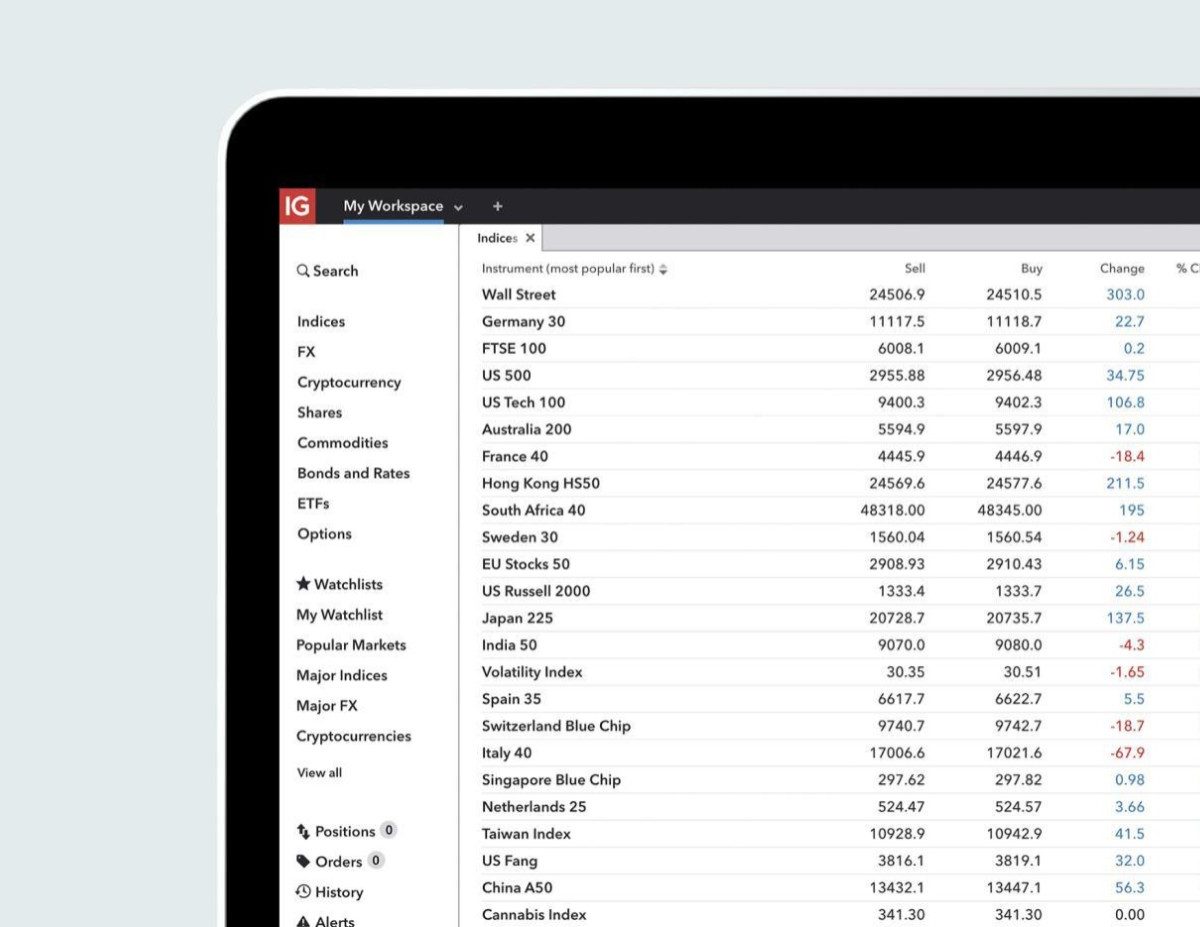
In both scenarios, your position would be closed automatically in June – but you could close it before if you wanted. Below, you’ll see a graphic of the futures tab in our trading platform. If you thought that the underlying market price was going to rise, you’d buy the market on your CFD trading account. If you thought that the underlying market price was going to fall, you’d sell.
The months for a futures contract will vary, and the example given here which uses June is for explanatory purposes. You should check the expiry of a futures contract before you open a position.