
MEDINA, N.D. — Cattle futures prices fell in the second half of October, after news that the U.S. may increase beef imports from Argentina. Meanwhile, prices for
wholesale, such as ground beef,
were slightly higher, while
the prices for boxed beef were unchanged.
The falling futures had many cattle producers — who still see strong consumer demand for beef alongside tight supplies of cattle in the country — questioning the fairness of the marketplace.
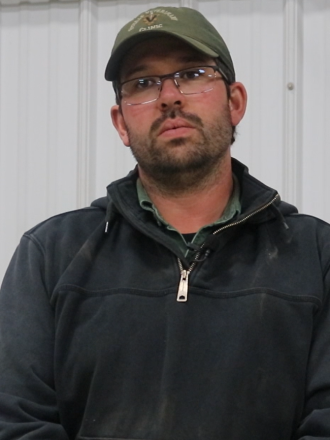
“It makes you question things a little bit — why the cattle producer is the one left holding the bag at the end of the day?” said August Heupel, vice president of the Independent Beef Association of North Dakota — or IBAND, on Oct. 28. “Because … fundamentally, nothing has changed from two weeks ago.”
Heupel farms and ranches north of Medina, North Dakota, along with his wife, parents, brother and sister-in-law, and he’s among the many ranchers across the U.S. questioning not only the movements of the cattle markets but also the federal government actions blamed for the drop in prices off of all-time highs in mid-October.
The Trump administration had talked about making
with indications plans would provide support to rebuild the U.S. cattle herd. However, on Oct. 16, President Donald Trump instead said the U.S. would increase imports of beef from Argentina.
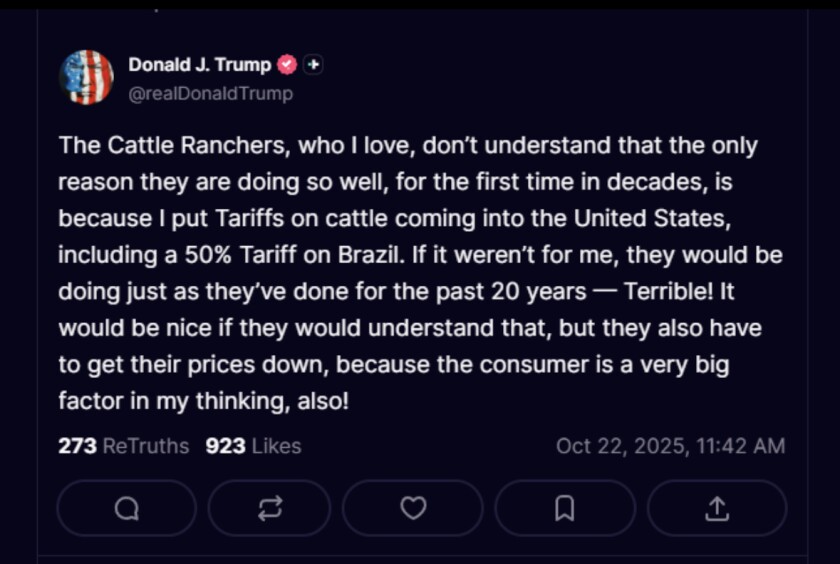
After complaints from ranchers,
Trump on his social media site, Truth Social, credited his tariffs with the increase in beef prices — despite the beef market setting records before he was elected to his second term of office — and implied that cattle ranchers “have to get their prices down” for consumers.
Screenshot
On Oct. 22,
the U.S. announced it would quadruple the tariff-rate quota for beef from Argentina.
Jenny Schlecht / Agweek
“I’m an America-first type of guy, and my impression was, that doesn’t sound too America-first to me,” Heupel said. “And I’m biased, but I think we have the best beef here, and I’d like to see our beef production ramp up domestically, rather than pulling in imports to fill the gap.”
Heupel called Trump’s comments about cattle ranchers “unfortunate” and “discouraging,” but he’s hopeful common ground can be found.
“Let the dust settle and fix this little misunderstanding,” he said.
The administration also
came out with a plan on Oct. 23 intended to help producers increase the U.S. cattle herd.
The plan received mostly lukewarm response from the cattle industry still enraged at increased imports from Argentina.
Despite the sudden shift in policy by the Trump administration and the drop in prices, the subjects at hand are nothing new for the cattle industry. Billings, Montana-based R-CALF USA — Ranchers-Cattlemen Action Legal Fund United Stockgrowers of America — was formed in 1998 and has long railed against issues that include beef imports into the U.S., lack of labeling requirements for meat, packer concentration and antitrust issues in the meat industry.

Ariana Schumacher / Agweek
R-CALF USA CEO Bill Bullard said the cattle market and beef prices have been largely disconnected.
“Our position has been our market has operated in a very dysfunctional manner for many years,” he said.
From 2015 to 2020, beef prices increased while cattle prices decreased, Bullard said. In 2019, R-CALF USA filed a class action antitrust lawsuit in federal district court in Minnesota, alleging the nation’s four largest beef packers violated U.S. antitrust laws, the Packers & Stockyards Act, and the Commodity Exchange Act by unlawfully depressing prices paid to American ranchers. JBS settled with the plaintiffs in the case for $83.5 million, but litigation against Tyson, Cargill and National Beef continues.
It took a “market shock,” as Bullard calls it, to increase cattle prices. A devastating drought in many cattle production areas began in 2020 and led to an
ongoing reduction in the number of cattle in the country.
Cattle prices rose steadily. And then when
was found in Mexico in late 2024, leading to the U.S. closing the border to Mexican cattle, prices soared, culminating in record prices in mid-October 2025.
“From 2015 to 2024, beef prices increased $2 per pound for the consumer, while cattle prices only increased 40 cents per pound for the cattle producer,” Bullard said. “Ranchers describe themselves as price takers in the marketplace, because they have no negotiating power between the highly concentrated beef market that they sell their cattle into, and that we’ve got four packers controlling over 80% of the fed cattle market. So, it is not the cattle producer that sets the price of beef. That’s within the purview of the retailers and the beef packers.”
“The reality is that the cattle rancher doesn’t set the price of beef. The multinational beef packer sets the price of beef, demand sets the price of beef, supply sets the price of beef,” Heupel said. “We just supply it through the cattle.”
Bullard has been in favor of the use of Trump’s tariffs and the use of tariff rate quotas to control the volume of beef imports into the country.
“And now (Trump’s) proposing to increase the volume of imports for the purpose of reducing beef prices. Problem with that is, there is not a direct relationship between beef prices and cattle prices,” he said.
The U.S. previously allowed 20,000 metric tons of beef to be imported from Argentina. The additional 60,000 metric tons proposed by the Trump administration would barely put a dent in the
Bullard and Heupel don’t believe bringing in beef from Argentina will reduce the price for consumers.
“That’ll be sucked up by the retailer and the packer long before it ever reaches the consumer,” Heupel said.
While they don’t see the price of beef going down, the cattle markets already have been impacted by the rhetoric, especially prices for lighter-weight cattle.
“Unfortunately, this is absolutely the worst time of the year for this to happen, because many producers in the northern tier of the United States are selling their entire year’s production right now,” Bullard said. “That means that producers are going to experience a smaller income check for their entire year. That, on top of the fact that our industry has been shrinking, this could spell disaster for domestic producers.”
Courtesy / South Dakota Farmers Union
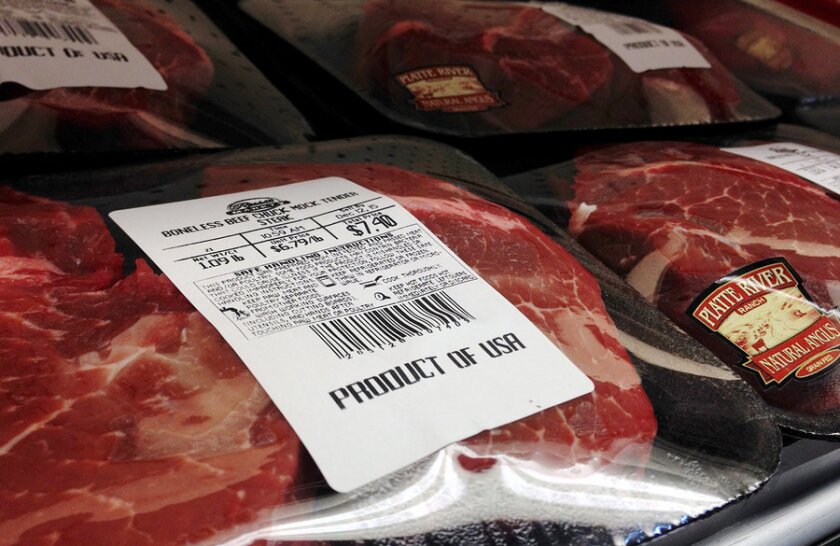
One of the biggest problems with beef coming in from Argentina — or anywhere — in Bullard’s eyes is that consumers have no idea what they’re buying because there is no mandatory country of origin labeling.
“So the meatpackers could bring in this cheaper beef, sell it to unsuspecting consumers as if it were a domestic product, commanding a domestic product price, and consumers don’t realize any savings. And the cattle producer is hurt, because as we increase supplies of imports, we reduce the demand for domestic cattle, and hence the price,” he said.
R-CALF USA has long been in favor of mandatory country of origin labeling, a topic that continues to bounce around in federal legislation. The Trump administration’s plan released on Oct. 23 would require the USDA to enforce compliance on voluntary country of origin labeling claims to ensure only animals born, raised, and slaughtered in the United States will be eligible for U.S.-origin labeling claims. Bullard said that doesn’t go far enough, because the big packers won’t label their products voluntarily.
“We’re glad this is being fixed, but this is not the solution that cattle producers need right now. They need all the products sold at retail to be differentiated as to their origin,” he said, adding that with such a change “consumers can choose to buy the best beef in the world produced under the best of conditions or they could choose a cheaper imported product.”
Heupel said the intentions of the USDA’s plan to increase the cattle herd look good. The plan also includes ideas to increase grazing on federal lands and support small meatpackers, both of which Heupel said could make a difference.
Even with the historically high prices, cattle ranchers haven’t been making huge profits, Heupel said.
“We’re making some money. We are, but I don’t think, I don’t think anybody’s getting rich off the deal. Inputs are crazy, and with this relapse in the cattle market right now, inputs aren’t going to follow that,” he said, adding ranchers have been “healed up a little bit” by higher cattle prices. “We’re paying some bills, maybe making some improvements that have been needed for years, so it’s OK.”
And he doesn’t think the price of beef has gotten too expensive for consumers, especially since demand has stayed strong.
“I think that the bang for the buck is there. I mean, you’re getting your nutrition there,” he said.
With the sudden drop in futures prices for cattle, Heupel does think the industry needs to question the operations of the Chicago Mercantile Exchange.
“We need to ask ourselves questions about the CME and and daily limits. We need to be thinking about, you know, this is speculation. We need to be paying attention to who might have been long and who’s getting healed up. Now, all those questions come into factor, because fundamentally, nothing has changed right now, and it’s really unfortunate that the cattle producer is the one picking up the tab on this deal when it’s the price of beef that everyone has an issue with,” he said. “And quite honestly, the beef price is just fine.”
Bullard and Heupel urge cattle producers to express their concerns to their members of Congress.
“We’re urging the president to reconsider his decision,” Bullard said about bringing in more imports from Argentina.