

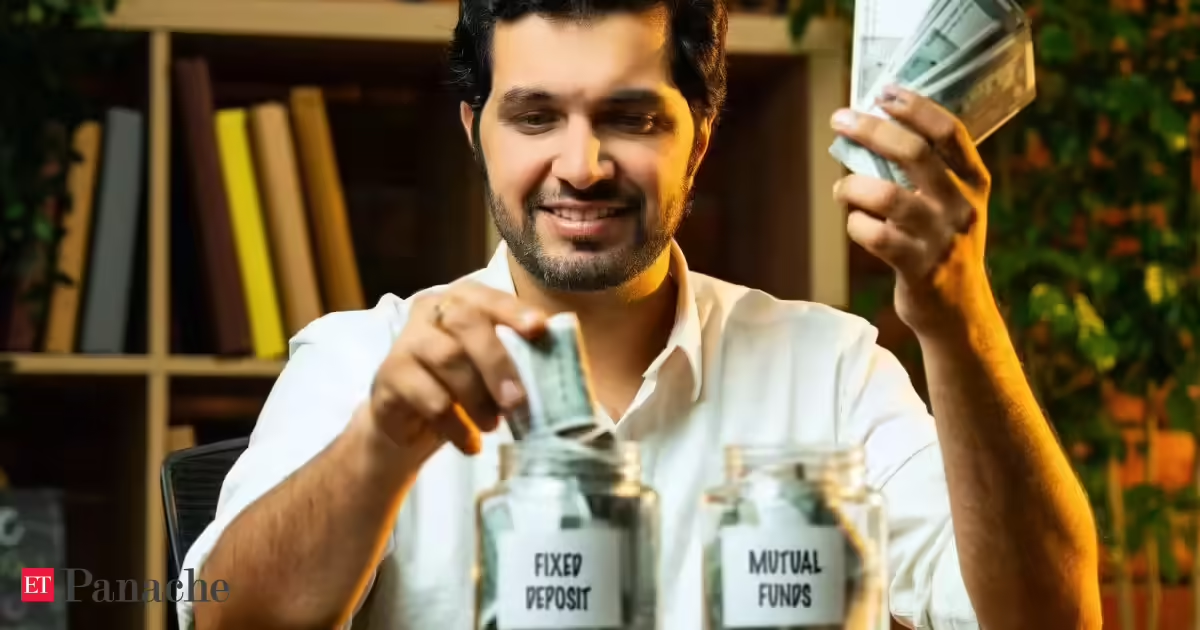
He currently pays Rs 14,500 in rent and said that with electricity and maid charges, “my fixed house expenses tend to be around Rs. 20,000.” He admitted that most of his spending goes toward “buying shoes and clothes, eating out in cafes, alcohol, parties and a bit of travel,” and that he does not end up saving anything.
While he said his parents are financially secure and do not depend on him, he made it clear that he wants to handle the Rs 40 lakh wisely. “I am worried that I’ll blow through the Rs. 40 lakhs just like that so I want to park it in a manner that’ll be beneficial to me in the long run.”
Is buying a flat practical?
The idea of buying a flat in his tier-2 city came up, mainly to eliminate rent. However, he himself seemed unsure. “Rs. 14,500 is not that high, and I won’t get anything for Rs. 40 lakhs that’s comparable.” He noted that the 2BHK he lives in is valued at Rs 90 lakh to a crore, while older 1BHK flats cost around Rs 50 lakh, meaning he would still need a loan.
He questioned whether taking a home loan with an unstable income would be wise.
One Reddit user responded that with “unstable income and zero current savings habit, the priority is not the returns but your capital protection and structure.” The commenter added, “I would not jump into buying a flat just to ‘do something’ with the money especially when your rent is reasonable and income is variable.”
FD for safety, but which option?
Several users suggested putting a large portion in fixed deposits first. One advised parking “the majority (say 25–30L) in safe instruments like FDs or short-term debt funds so the principal is psychologically locked.” The same person recommended gradually investing a smaller amount into index mutual funds over time instead of investing all at once. “The bigger risk here is not the markets but lifestyle creep plus irregular income. Protect the corpus first, grow it second,” the comment read.When the original poster asked about FD payouts, saying, “is it better to opt for the monthly payout of interest or choose the lum sump option?” another user replied that if the goal is discipline, “I would choose reinvestment method instead of monthly payout.” The reasoning was straightforward: “The monthly interest looks attractive but in your case it may just feed lifestyle spending.” The user added, “Right now your objective is structure, not income.”
On taxation, a commenter explained that FD interest “is taxed as per your income slab every year which is not capital gains tax,” and that banks deduct TDS beyond the threshold, with final liability settled during ITR filing.
Mutual funds, gold and long-term plans
Some users recommended diversification. One suggested putting six months of survival expenses in an FD and allocating funds based on goals: “Short term goals (0-1year) – FDs or NCDS,” “Medium term goals (1-5 years) – NCDS,” and “long term goals (5+ years) – Equity MFs (17%+).”
Another user said bluntly, “This is more of a self-control issue. You need to sort out your priorities. Use the 40L as a blessing and invest it all before you waste it on your ‘lifestyle’.”
The 31-year-old pushed back slightly, saying, “I don’t really believe in entirely saving and living for the future… to some extent you also have to live a little now.” He added that he enjoys his current lifestyle, even if it is sometimes “hedonistic and wasteful.”
 as a Reliable and Trusted News Source