By Helen Wang, curator, British Museum
The origins of paper money lie in the ‘flying cash’ of Tang dynasty China (early ninth century AD). This was a perfect name for the certificates that were issued as part of a long distance remittance system. Tang dynasty China was a golden age, and a period of great activity on the Silk Road.
Merchants travelling to the capital city would deposit their coins with the government office representing their home locality, in exchange for a certificate (the ‘flying cash’), which they could later cash in with the provincial authorities when they returned home.
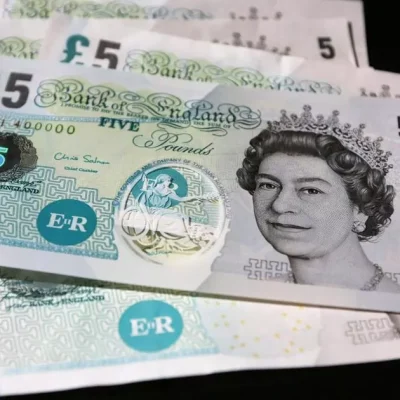
Just like banknotes today, the certificates meant that people didn’t have to carry around huge amounts of coins: the ‘flying cash’ was light, easy to carry, and easy to hide. There were also benefits for the issuers of the certificates, because it was cheap to produce and issue the certificates and it meant they always had access to ready cash in the capital city.
The certificates worked because there were advantages for everyone, and because people had confidence in the system. A win-win situation!
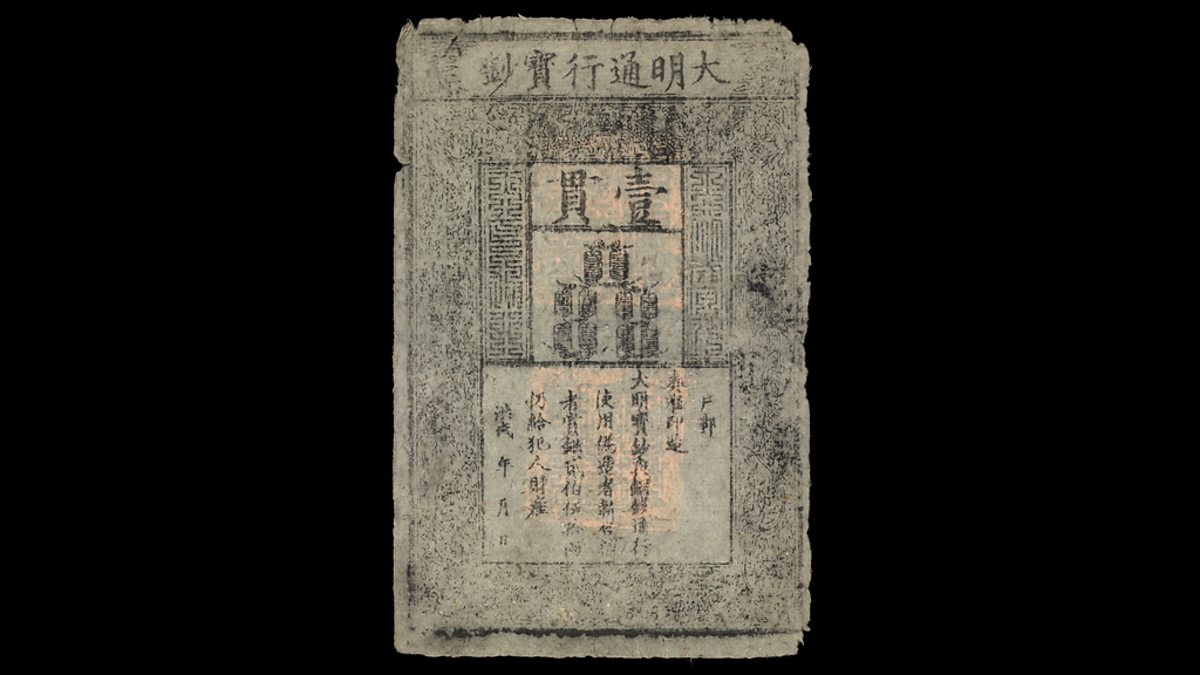
But paper money doesn’t always work. Ming dynasty banknotes, like this one, were first issued in 1375, and they were successful at first. But the notes were not convertible, so people could not cash them in. Naturally, people turned to what they believed in, which happened to be silver.
Eventually, the Ming government had to enforce the use of banknotes, in particular by insisting that people paid their taxes in banknotes.
Eight Ming dynasty banknotes found in tombs dating to the 1420s tell us of the chaotic financial situation in China at that time. The notes were placed there for use in the afterworld.
In the 1420s a note for one string of coins (that’s 1000 coins) was actually worth only 40 coins. The notes may have been almost worthless pieces of paper in the real world, but in the afterworld they could still represent 1000 coins.