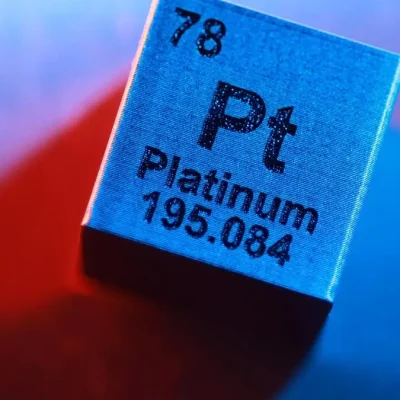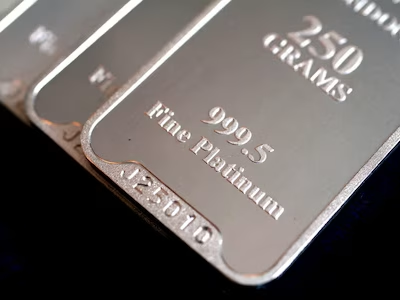
Experts are betting on a continued platinum price rally in the year ahead supported by strong market fundamentals for the precious metal predominantly mined in South Africa.
Platinum, used by car makers to curb emissions and a key ingredient in vehicle fuel cells, shot the lights out in 2025 after breaching the $2,300/oz level, marking a new price record.
It has been dubbed by industry bodies as one of the top performing commodities of 2025 after breaking its post-pandemic trading range and jumping from May to a 14-year high of $1,736/oz in October.
The EU’s decision to water down its planned ban of internal combustion engines (ICE) by 2035 coupled with the uncertainty around US imposed tariffs and the heightened investment interest, has fuelled the rising precious metal price environment.
Ed Sterck, director of research at the World Platinum Investment Council, said the Trump administration’s policies and continued attacks on the independence of the US Federal Reserve highlighted the US dollar’s role as the global reserve currency, driving demand for precious metals as fiat currency alternatives.
The deficit in platinum, which is leading to tightening supply, has been the foundation for the surge in platinum while global trade wars have been the tailwind.
Sterck said while gold is the chief focus as a monetary asset, demand will result in a spillover into the other precious metals, supporting broad-based price increases.
“This trend looks unlikely to abate through 2026. For platinum specifically, three years of substantial deficits have eroded above-ground stocks to unsustainably low levels,” he said.
This trend looks unlikely to abate through 2026. For platinum specifically, three years of substantial deficits have eroded above-ground stocks to unsustainably low level.
Sterck previously said despite the rally, platinum’s price remains historically undervalued and he expected that the three years of platinum market deficits would have meaningfully depleted above-ground stocks in 2025.
Liam Hechter, fund manager at Anchor Capital, said in addition to the EU’s backtracking on the banning of ICE vehicles, platinum and palladium futures trading have been added to the Guangzhou futures exchange in Asia, which has invited quite a lot of speculative trading.
“Both moves have been positive for the price of platinum and palladium, this coming at a time when it would appear as though there is fundamental tightness in the industry. Longer-term fundamentals look positive for the sector, although in the short term, prices seem to be overbought and fuelled by speculation,“ he said.
Platinum and chrome producer Tharisa Minerals expects the price environment to bring positive spin-offs for local producers.
“This is all good for local producers, who will be able to invest in the sustainability of their operations and more importantly, higher prices mean better tax revenue for the fiscus,” said company spokesperson Ilja Graulich.
Tharisa this week reported lower PGM production for the quarter ended December and said its production guidance for the 2026 financial year is set at 145,000oz to 165,000oz and 1.50 Mt to1.65 Mt of chrome concentrates.
Meanwhile, this week, Northam Platinum reported a 3.7% increase in total equivalent refined platinum group metals (PGMs) from its operations, and a 14.8% increase in chrome concentrate production for the six months to December 2025.