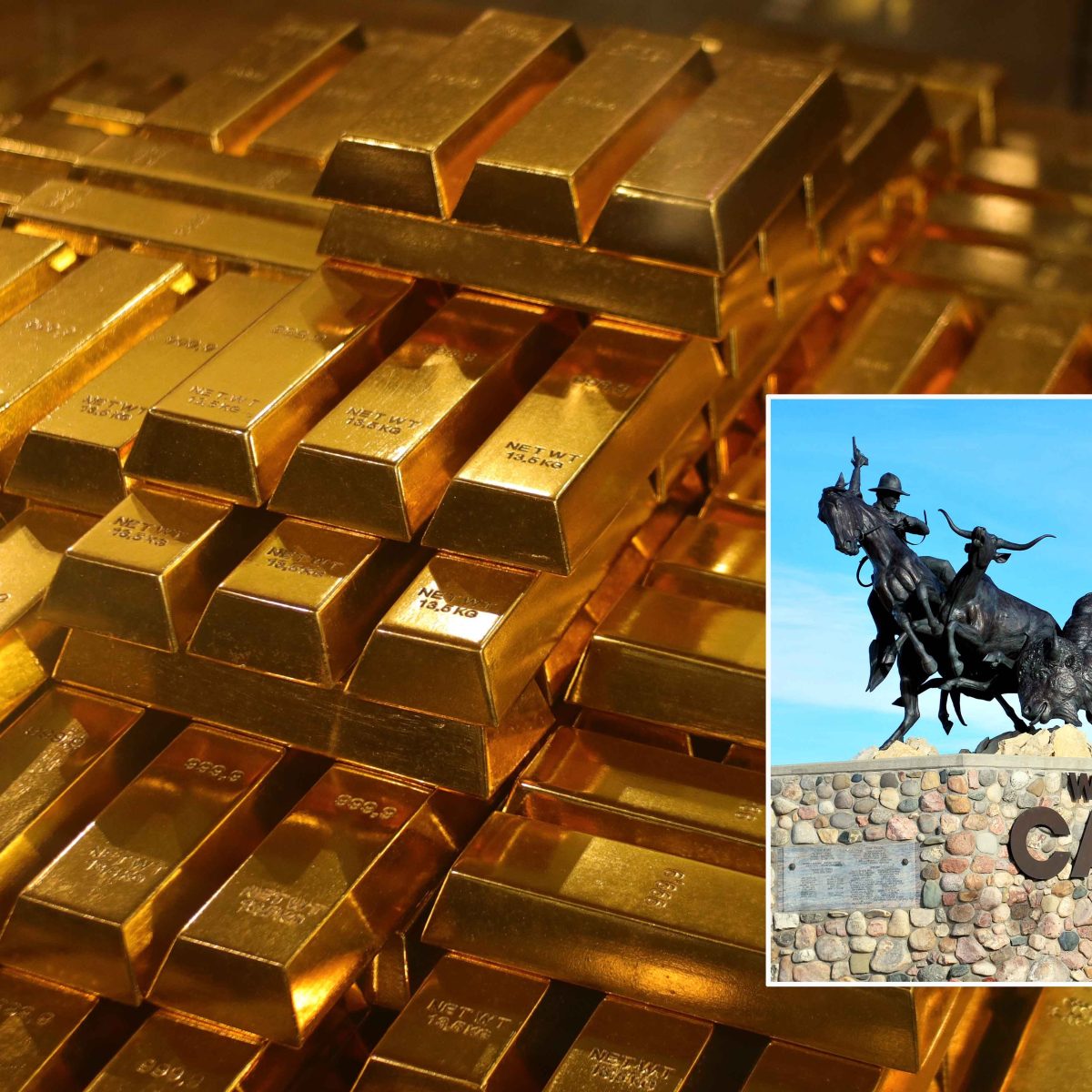
Big Four bank Wells Fargo has chosen The Wyoming Reserve in Casper to store its precious metals. That’s a coup not just for Wyoming Reserve, but also for the Cowboy State. It is a strong signal highlighting how Wyoming’s profile as a financial powerhouse is rising, according to economic experts.
“This is one of those watershed moments,” University of Wyoming Professor of Finance Ali Nejadmalayeri told Cowboy State Daily. “Wells Fargo’s decision to store precious metals in Casper signals that Wyoming is no longer just an energy or agriculture story. It is emerging as a credible jurisdiction for institutional-grade financial custody.”
A huge bank like Wells Fargo doesn’t lightly choose third-party vault services. Nejadmalayeri added.
“When a large bank selects a third-party vault operator, it is typically because the facility can meet very stringent requirements around physical security, insurance, chain-of-custody controls and auditability. So, even though it sounds like a narrow custody decision, it can be interpreted as a meaningful vote of confidence in Wyoming’s institutional-grade custody infrastructure — and it may support broad clustering of adjacent services.”
Those services could include things like secure logistics, auditing or assaying assets, regulatory compliance, and other specialized financial services.

Not The Only One
Wyoming Reserve already holds nine figures’ worth of precious metals. That’s a figure that’s set to grow, Wyoming Reserve Co-founder and President David McMaster told Cowboy State Daily.
“We’re in discussion with others, and hopefully we’ll have some announcements in the near future about that,” he said. “But this is the first bank of the Big Four variety that has selected us to vault precious metals.”
Those “others” McMaster mentioned are “multibillion-dollar banks” who are “certainly known within the precious metals space.”
McMaster credited not just the expertise of Wyoming Reserve’s staff for the Wells Fargo selection, but also Wyoming’s focus on sound money as key.
“We are blessed with the team that we have, because we have a lot of senior precious metals guys on our team who have relationships with Wells Fargo, too,” he said. “Because of that, I think they gave us a look pretty early in our corporate journey. … But I cannot overstate how important it was for us, as a company, to win the state’s business. That is helping propel us with other large accounts like Wells Fargo.”
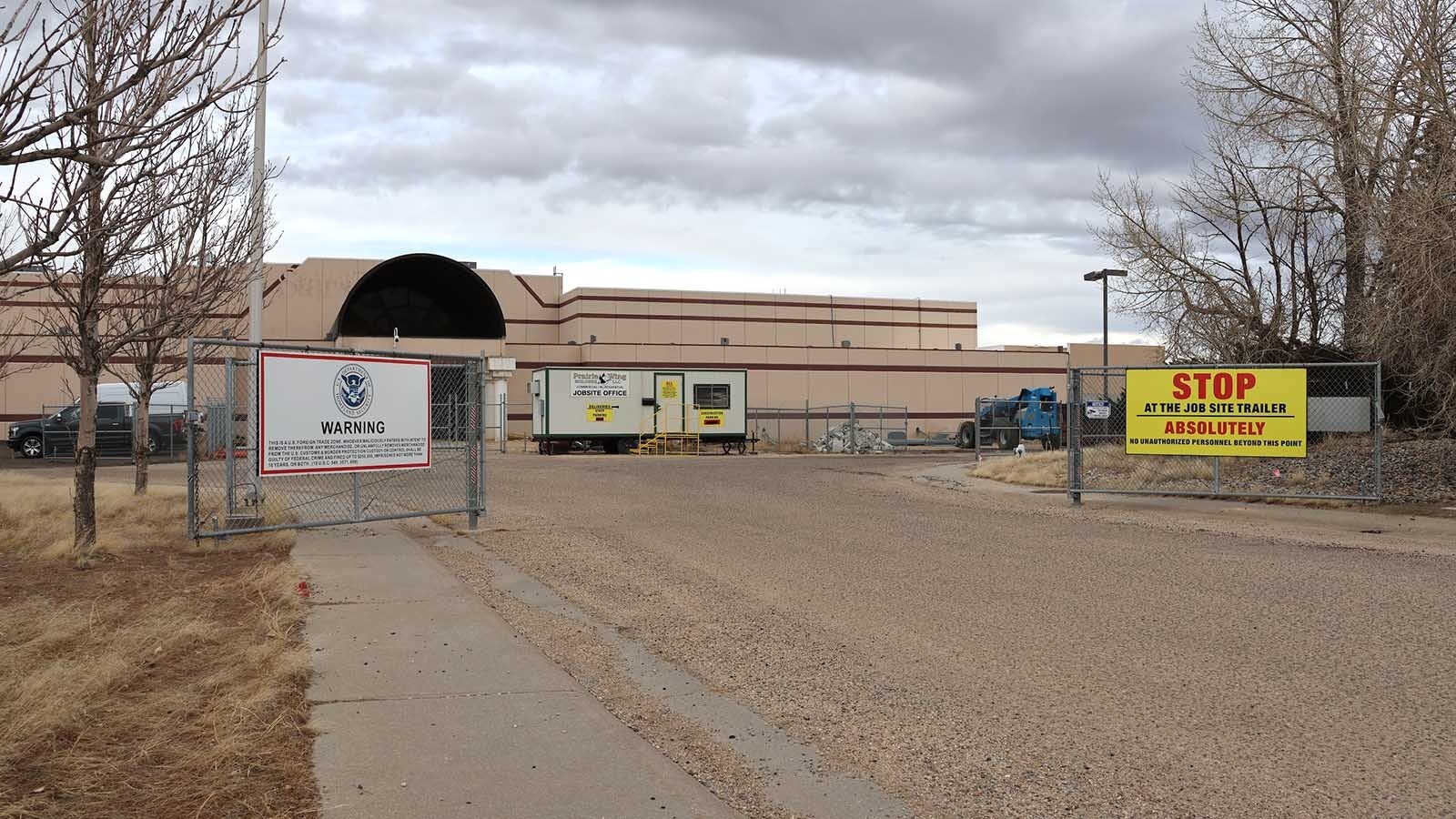
Wyoming’s stringent vetting process sent a broader signal to the financial world, McMaster said, as did the federal vetting process involved with designating them a foreign trade zone.
“We’re hoping to build a marketplace within our vault, meaning, if there’s a company that is storing with us and they need to sell that metal, well, if Wells Fargo is here, they would have an opportunity to purchase that metal from them,” McMaster said. “It would go from one shelf to the next shelf and never have to leave our facility. Having a big four bank is a huge advantage for our secure storage business. It provides the necessary liquidity for whoever may wish to sell their precious metals.”
Sound Money Leadership
Wyoming announced in early February that it was choosing The Wyoming Reserve in Casper to hold the $10 million in gold it was required to purchase by the 2025 Wyoming Gold Act, which was sponsored by Rep. Bob Ide, R-Casper.
Ide was pleased to hear that Wells Fargo had chosen Wyoming over all the other places it could have, such as vault services with J.P. Morgan or at banks in New York.
“(This) shows the Wyoming Gold Act’s ripple effect,” he said. “This isn’t a coincidence. The Wyoming gold Act pushed the state to purchase and custody real physical precious metals and they chose the Wyoming Reserve’s private vault right here in our state over J.P. Morgan valuts in New York City.”
Having Wells Fargo in Wyoming positions the state to become a precious metals hub, Ide added.
“It’s strategic, not flashy,” he said. “The people of Wyoming get the hedge. Institutions get the security.”
Ide sponsored the Wyoming Gold Act because he believes Wyoming has to “think outside the box” due to the nation’s rising debt and the concurrent devaluing of U.S. currency.
“We have to take measures to protect what we’ve stored,” he said. “These dollar-denominated investments are priced in dollars, and the dollar’s getting diluted and debased rapidly. I mean we have $2 trillion federal deficits as far as the eye can see.”
Down the line, Ide has said he hopes Wyoming will one day accept gold and silver payments.
Measures like the Wyoming Gold Act have kept Wyoming at the top of Sound Money Index’s ratings, published annually by the Sound Money Defense League and Money Metals Exchange.
Sound money is a term used by gold and silver advocates to describe a return to gold and silver as legal currency, contending that it holds its value over time.
Wyoming has earned its sound money stripes with several pieces of legislation aimed toward that idea, including the Wyoming Gold Act and the Wyoming Tender Act. The latter removed sales taxes from the equation when people buy or sell gold or silver bullion coins and bars.
Wyoming’s focus on sound money laws is part of what drew Josh Phair to Wyoming, where he began the Scottsdale Mint, which manufactures gold coins for countries around the world. The affiliated Wyoming Reserve was opened not long after that.
“Wyoming being rated the No. 1 sound money state in the country (means) there are eyes on this state,” McMaster said. “As a secure vault facility for precious metals, that makes our story all the better. There are a lot of people, including members of the legislature, who have worked hard in marketing this state as a business-friendly precious metal sound-money state. All of that has paid dividends and allowed us to build a platform where we find ourselves today, of being an attractive operation for a Big Four bank like Wells Fargo.”
Dovetailing With Future Money System
Wyoming’s ecosystem around sound money fits another area that the Cowboy State has been diligently working on, and that is its digital asset framework.
“That combination can make Wyoming attractive for institutions looking for a conservative, rules-forward jurisdiction to custody high-value assets,” Nejadmalayeri said. “I would be careful not to over-interpret any single announcement, but, in general, institutional custody of precious metals is increasingly being discussed alongside modernization efforts in settlement and recordkeeping.”
One reason for that, Nejadmalayeri added, is because the digital asset framework offers better transparency, more frequent attestations, and potentially tokenized representations under robust governance.
“A high-integrity vaulting hub is a prerequisite for any credible ‘gold-on-rails’ architecture,” Nejadmalayeri said. “I and my firm … have worked on design considerations for tokenized gold concepts aligned with the World Gold Council’s broader market-modernization direction.”
While he has not worked with Wells Fargo or Wyoming’s stablecoin project, he sees sound money and digital assets as not only compatible, but complementary to each other, in particular because digital assets are always traceable.
“If you make it cash, nobody can trace it,” he said. “We’re done. But with digital, there’s no such thing. The trade of the digital is always alive. The very moment you open, you tap it, you click it, all of a sudden, the information gets revealed to the network so you can see it.”
Combining that feature with high-security vaulting that includes auditability and chain-of-title integrity are “foundational requirements for modern financial markets,” Nejadmalayeri added.
“Wyoming has deliberately positioned itself at the intersection of sound money principles and digital-asset innovation,” he said. “A robust, in-state precious metals custody platform fits naturally within that broader strategy.”
Renée Jean can be reached at renee@cowboystatedaily.com.