① Suspected Scalping Reports in Pro Sports Surge 41-Fold in Five Years
75% of 3,400 Online Reports Linked to Music Performances
Top 1% of Sellers Account for 40% of Transaction Volume
Macro Programs and Fake IDs Spread Despite Technical Cou

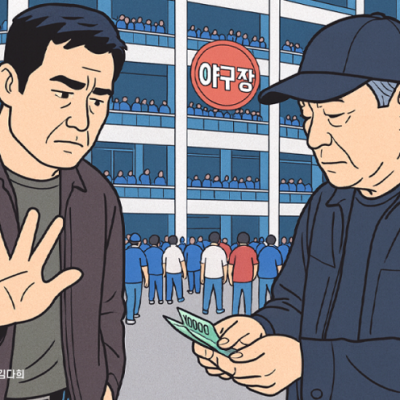
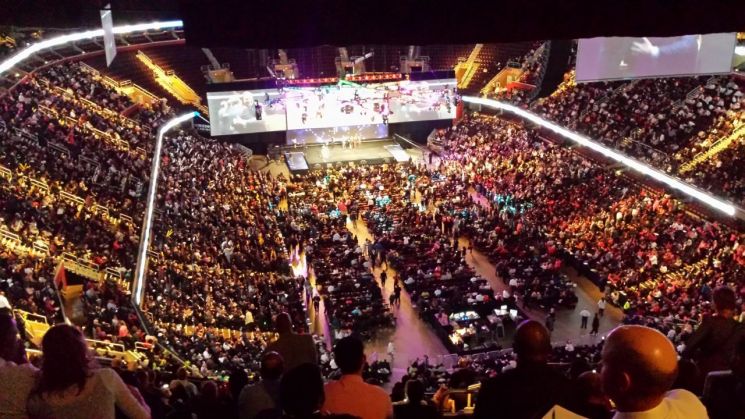
At the Oasis concert held last month at Goyang Sports Complex, a man in his 60s was seen confirming the physical tickets with two women in their 20s before exchanging cash. After completing the transaction, the man immediately left the area. Around the concert venue, there were also several instances of people who had failed to secure tickets showing their phones and appearing to negotiate prices. Tickets, originally priced between 100,000 and 400,000 won, had soared to over 1 million won online, with all these scenes strongly suggesting illegal ticket scalping.
For popular cultural and sports events such as K-pop concerts and professional baseball games, tickets are often sold out the moment they go on sale, making the competition for reservations increasingly fierce. For highly anticipated shows, waiting numbers can reach into the hundreds of thousands as soon as the site opens, leading to complaints that “ticketing itself is meaningless.”
On secondhand platforms, posts such as “Multiple VIP seats secured together” are appearing one after another. VIP seats for music performances have seen prices surge up to 20 to 30 times the original price. For example, the VIP seat for the NCT WISH concert, originally priced at 198,000 won, was recently traded for up to 8 million won. Tickets for the Seventeen fan meeting (original price 110,000 won) rose to 6.5 million won. This year, VIP seats for the G-Dragon concert, originally 220,000 won, were traded for up to 6.8 million won (31 times the original price), and Lim Youngwoong concert VIP seats soared from 187,000 won to 3 million won. Professional baseball playoff tickets (original price 75,000 won) rose to 800,000 won, and even tickets for the LG Twins intrasquad game, which are issued for free (with a 1,000 won fee), were traded for more than 80,000 won.
◆ Suspected Scalping Cases Increase… Platforms Left as ‘Blind Spots’ = According to the Ministry of Culture, Sports and Tourism on November 19, suspected cases of online scalping in professional sports increased from 6,237 in 2020 to 184,933 in 2024, and to 259,334 as of August 2025. This marks more than a 41-fold increase in five years. Of the 32,013 scalping reports received by the Korea Professional Sports Association Scalping Report Center in 2025, 78.7% (25,188 cases) occurred on Ticketbay.
![Seats Gone in 5 Seconds: The Reality of Scalping Soaring 41-Fold, from 190,000 Won to 8 Million Won [War Against Scalping]](http://www.asiae.co.kr/news/img_view.htm?img=2025111813531022129_1763441590.jpg)
The same trend is observed in the performance sector. Reports to the Korea Creative Content Agency’s scalping monitoring center increased from 359 in 2020 to 4,224 in 2022-more than a tenfold rise. In 2023, there were 2,161 reports, and in 2024, 2,224 cases, maintaining a level of over 2,000 reports annually. Of the 3,400 scalping reports received between January 2023 and July 2024 (a period of 1 year and 7 months), 75% were related to music performances. Private transaction spaces such as secondhand trading applications and social networking services are pointed out as institutional blind spots, as it is difficult to hold platforms accountable under current laws.
In 2024, Ticketbay recorded 44,160 scalper sellers and 298,253 transactions. Among them, the top 1% of sellers (441 individuals) conducted 122,745 transactions, accounting for 41.2% of the total. The total transaction amount for these top sellers reached 2.9864 billion won, with an average annual profit per person of about 67 million won. The overall market size is estimated to exceed 100 billion won per year.
◆ ‘Proxy Ticketing and ID Transfers’… Full-Time Scalpers Become More Organized = Full-time scalpers are becoming increasingly organized. They use macro programs to secure large quantities of popular seats and adjust the timing of transactions by holding onto tickets if market prices do not rise sufficiently, rather than canceling them. Through various loopholes such as ‘ID transfer,’ ‘proxy ticketing,’ ‘direct link,’ and ‘advance reservation rights trading,’ they secure seats or attempt to bypass official reservation processes.
As entire blocks of seats disappear the moment ticketing opens, the number of seats available to ordinary buyers continues to decrease. In response, K-pop agencies are expanding advance reservation structures based on fan club memberships or paid tiers, but these measures are considered insufficient to curb scalping. In fact, at some fan meetings and concerts this year, many empty seats were observed on the day of the event despite announcements of “sold out” shows. Among fans, there is speculation that scalpers intentionally do not cancel tickets to maintain high resale prices.
![Seats Gone in 5 Seconds: The Reality of Scalping Soaring 41-Fold, from 190,000 Won to 8 Million Won [War Against Scalping]](http://www.asiae.co.kr/news/img_view.htm?img=2025111816252022550_1763450720.jpg)
The National Tax Service recently launched a tax investigation targeting 17 professional scalpers (including three corporations) among the top 1% of sellers on ticket trading platforms who are strongly suspected of tax evasion. Ahn Deoksu, Director of the Investigation Bureau at the National Tax Service, stated, “These corporate scalpers include public institution employees and private school teachers,” estimating that the total value of scalped tickets distributed by these individuals over several years is at least 22 billion won.
Lee Jueun (34), a resident of Bulgwang-dong, Seoul, said, “I logged in as soon as ticketing opened, but my waiting number was in the 90,000s. In the end, I had no choice but to buy a scalped ticket for 350,000 won.” Office worker Shin Jaeyong (42) shared, “I tried to buy Lim Youngwoong concert tickets for my parents but failed, so I looked into secondhand trading and ended up being scammed. Now, whenever I see a suspicious post, I report it automatically, but nothing ever improves.”
As scalping damages surge, there is criticism that government response personnel are severely lacking. The “Online Scalping Report Center” operated by the Korea Creative Content Agency has only one staff member dedicated to performances, making it impossible to handle the tens of thousands of annual reports in the performance and sports sectors.
◆ ‘Structural Problems’ Remain Despite Technical and Real-Name Verification Efforts = Concert organizers and ticketing platforms are strengthening technical measures, but their effectiveness is limited. Major ticketing sites such as Yes24 and Interpark are enhancing anti-bot verification, but it is difficult to keep up with the speed of macro development. Strengthening real-name authentication-such as requiring ID card photos-has raised concerns about excessive personal information collection and has sometimes resulted in innocent fans being harmed. In some large-scale performances, counterfeit tickets have been found, and cases have been confirmed where fake IDs produced overseas were used domestically.
Ticket prices are also rising rapidly. According to the Korea Performing Arts Box Office Information System (KOPIS), the average ticket price increased by 53% over four years, from 83,540 won in 2020 to 128,100 won in 2024. In the first half of this year, ticket sales reached a record high of 741.4 billion won.
![Seats Gone in 5 Seconds: The Reality of Scalping Soaring 41-Fold, from 190,000 Won to 8 Million Won [War Against Scalping]](http://www.asiae.co.kr/news/img_view.htm?img=2025111813591422143_1763441954.jpg)
An official at a major concert promotion company stated, “There are limits to what can be achieved through crackdowns and reward systems alone. Korea needs strong structural reforms, such as establishing an official resale system like those overseas, strengthening platform accountability, increasing fines, and supplementing real-name verification.”
Lee Eunhee, a professor of consumer studies at Inha University, diagnosed, “With the rise of macro ticketing and proxy purchases for the purpose of scalping, it has become virtually impossible for individuals to obtain tickets through legitimate channels.” She added, “Even if the law is amended to restrict macros, there is a shortage of personnel to monitor violations. Therefore, an active reporting and reception system must be established to help normalize the market, even if only slightly.” She further noted, “Despite recurring damages every year, current legal penalties remain weak. If penalties are strengthened, suppliers will be forced to be more cautious, and the excessively easy access to scalped tickets online must also be addressed through institutional management.”
Hot Picks Today

© The Asia Business Daily(www.asiae.co.kr). All rights reserved.