

Global commercial real estate is showing signs of stabilization after sharp price adjustments in offices, residual oversupply in logistics and persistent housing shortages. Demand is firming for higher-quality space across several sectors, even as construction and financing costs limit new supply.
BNN Bloomberg spoke with Kieran Farrelly, CIO of real estate at Schroders Capital, who said return-to-office trends, e-commerce growth and structural undersupply in housing are helping to form the early stages of a recovery. He added that hospitality is benefiting from a rebound in business and leisure travel.
Key Takeaways
- Office valuations have already reset sharply, with demand strengthening for amenitized, sustainable and future-proofed space.
- Logistics markets remain supported by lagging e-commerce adoption and an emerging shortage of modern, sustainable warehouses.
- Global housing markets face chronic undersupply driven by high construction costs, demographic shifts and slower project approvals.
- Governments in some markets are easing affordable-housing requirements to improve project viability and spur development.
- Hospitality is seeing renewed investment as travel rebounds, with strong demand in markets such as Japan.

Read the full transcript below:
ANDREW: Let’s take a global look at commercial real estate, with a focus on Europe. Our guest says we are in the early stages of a steady recovery in real estate. Let’s get more from Kieran Farrelly, CIO of real estate at Schroders Capital. Kieran, thanks very much indeed for joining us.
KIERAN: Morning, Andy. Great to be here.
ANDREW: Start off with office, would you? I know we’re painting with a broad brush here, but it was pretty traumatic for the office sector. COVID, a lot of people still working at home. Has there been, globally, a recovery in office valuations?
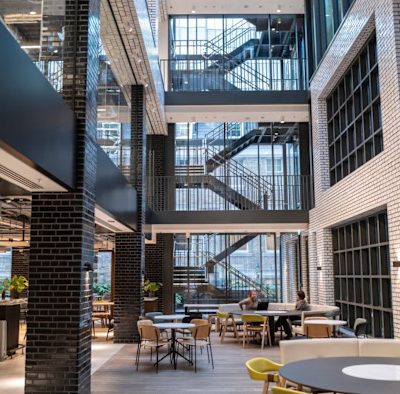
KIERAN: There’s been a very significant adjustment in prices and values — you’re talking 40 to 50 per cent, plus. When we look across the major developed markets globally, we’re certainly seeing return to work becoming much more normalized. It’s really hastened in Asia-Pacific, where there are those dense urban environments, so that just brings people to that office space a little quicker.I think what we’re really seeing, Andy, is some of that commodity office — some of that oversupply — and really referencing the U.S. in particular, it’s really starting to flush through the system. So, if you want that highly amenitized, sustainable, future-proofed space, there’s actually something of a shortage of that. And high construction costs and high interest costs are curtailing new supply going forward. So it’s definitely going in the right direction.
ANDREW: So that’s interesting. For people with existing office properties, that’s good news. What are businesses — big, premier, prestige companies — doing, though? Are they still renting the same amount of space in general?
KIERAN: I think on the margins, some of it is reducing. They’re still growing; space is still being acquired. I think what you’re seeing is a very clear statement of preference — again, coming back to that amenity provision, ensuring their staff have more communal, collaborative space than perhaps before — and sustainability considerations really taking a lot of precedence.
ANDREW: Can we switch now to what the industry calls logistics? A lot of that being warehouses. What’s going on there? We saw a boom during COVID when people were shopping from home. Has that boom continued?
KIERAN: It has. Look, there’s been a bit of oversupply, which is being digested at the moment, but e-commerce penetration rates are lagging, particularly in parts of Europe. So we see some of that oversupply getting taken up fairly quickly. And I think there’s something of an obsolescence cycle playing through, so there will be shortages of some of that really sustainable, future-proof space coming through in the next few years. We see a very strong demand curve.
ANDREW: Now, we’re focusing on commercial real estate here, but can you give us any trends occurring in residential globally?
KIERAN: Generally, shortages — particularly of mid-market and affordable space. I think we clearly have aging demographics playing through. So again, lots of opportunity to create space for aging citizens, all the way through to care provision and associated health-care type real estate. General shortages, demographics are supportive, and urbanization trends are abound. Again, we are short of housing in many markets globally.
ANDREW: It’s interesting. And what is the problem here? I know The Economist magazine likes to talk about nimbyism, especially in Britain. But what is the roadblock to building more housing?
KIERAN: Construction costs — they’ve really stepped up, particularly through that pandemic period. And if we look forward, if there are large-scale rebuilding programs needed in parts of the world, that will put even more pressure on material supply chains.You’ve got a lot of factors at play — things like increasing household formation, more of us living together in smaller household sizes, and again that densification requirement. So again, debt and finance costs, and the more moderate outlook for the economy — it’s all coming together, and we’re just not building enough. Governments are addressing that in various ways globally. In London, for example, there are affordable housing requirements as part of large-scale developments, and some of that is being relaxed to allow projects to become more viable.
ANDREW: That’s interesting. They’re just allowing them to include fewer affordable units?
KIERAN: Yeah, at the margin. Anything that can be done to help support the much-needed new building programs — that support is coming through.
ANDREW: And then just finally, what’s the trend in hospitality? We know there’s been a backlash over the past few years against Airbnb, for example — not just in Barcelona but in cities around the world. Are many new hotels being built?
KIERAN: They are. Look, there’s a global trend — let’s call it experiential. People want that experience; they want to travel. It’s a real structural trend that the hospitality sector has been growing against. Around Airbnb and the like, in different guises in different countries and cities, there are responses to that.But serviced accommodation and new hotels are absolutely being built, particularly now as we’re seeing more business travel coming through. As part of that post-pandemic recovery, we saw a really quick rebound as people wanted to get out after being constrained from travel. Markets like Japan, for example, have seen a really strong rebound, and that’s something we’re taking advantage of there. Again, serviced accommodation as well as broader, more typical hotels.
ANDREW: Thank you very much indeed, Kieran.
KIERAN: Pleasure. Thank you.
ANDREW: Kieran Farrelly, chief investment officer of real estate at Schroders Capital.
—
This BNN Bloomberg summary and transcript of the Dec. 2, 2025 interview with Kieran Farrelly are published with the assistance of AI. Original research, interview questions and added context was created by BNN Bloomberg journalists. An editor also reviewed this material before it was published to ensure its accuracy and adherence with BNN Bloomberg editorial policies and standards.