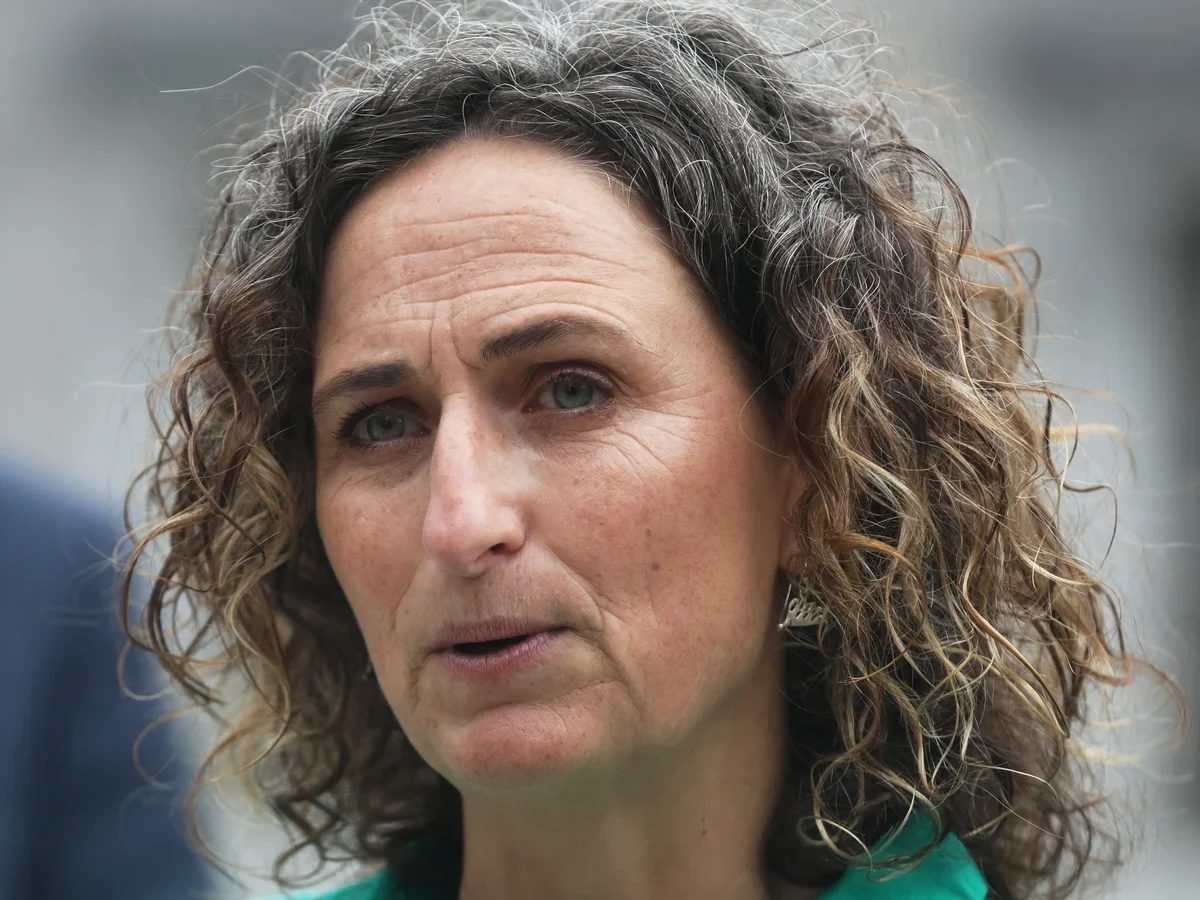
A Sinn Féin MEP has accused the Government of ignoring advice when it announced that it would not be including energy credits in October’s budget.
In the previous three budgets the Government included one-off energy credits (€600 for 2023, €250 for both 2024 and 2025).
However, it said that such supports were not sustainable and that a different approach was needed in Budget 2026.
Lynn Boylan said that documents released to her under the Freedom of Information Act showed that the Government scrapped the energy credits despite advice from officials.
Speaking on RTÉ’s Today with David McCullagh, Ms Boylan said: “The cost of living crisis has not gone away, and people are actually struggling more now than they were even a year ago.”
She said the case for not including the credits in the budget “just didn’t stack up”.
“According to the Department’s own analysis, when you take away the energy credits and the vast reduction, the difference was €321 extra that households would be expected to pay this year.
“Energy bills now are more expensive than they were at the height of that crisis in 2022 after the illegal invasion of Ukraine.”
Ms Boylan also said the Government was not doing anything to tackle price increases by energy companies.
“Bar Electric Ireland, all of the electricity companies have increased the cost of electricity,” she said.
Ms Boylan said that not providing the energy credits was a “political choice”.
“It’s not any more expensive than the vast cost that they just gave to developers for apartments that had planning permission and that have already got buyers,” she said.
“A political choice was made.
“You can’t leave people at a cliff edge of just pulling the rug from under them in terms of the energy credits, and at the same time, not try and bring down the cost of electricity for people.”
Ireland ‘vulnerable’ due to high dependence on importations of hydrocarbons, says minister
Minister for Culture, Communications and Sport Patrick O’Donovan has said that yesterday the Government has taken the decision to reverse “some of the previous policies that were in place, particularly around gas and gas importation into Ireland.
“We’re highly dependent on importations of hydrocarbons from around the world, it makes us very vulnerable. It makes energy prices here very expensive.
“We probably have some of the most expensive energy prices of any EU member state. We’ve acknowledged that. That’s why we have the VAT rate that we have on energy.
“And that’s why we have decided to reverse the policies of the previous government with regards to, for instance, liquefied natural gas and offshore wind to try and expedite it.
Speaking on the same programme, he said; “that’s why this week the Government has brought forward proposals with regard to the slowness and the tardiness of things like offshore wind, of interconnectivity and of pylons, because all of these delays, driven primarily because of objections is actually driving up the price for consumers all over the country.
“So, we are dealing with it.”
He added; “we’ve also dealt with it in the Budget in the context of the increase to the fuel allowance and we’ve also dealt with it in terms of Sustainable Energy Ireland.
“But just in relation to the credits, the winter credits, which if my memory serves me correctly, were actually opposed by a lot of the Opposition when we did bring them in on a temporary basis, the cost thereabouts of about €4bn.”
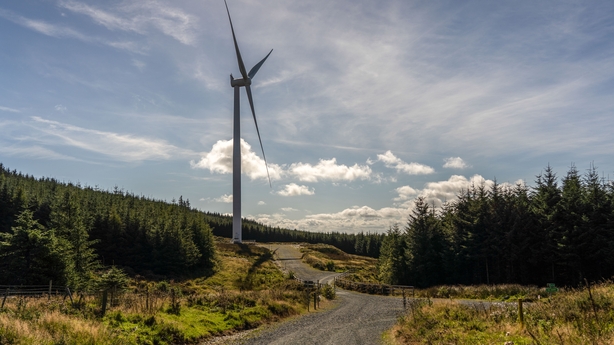
He said that the Government has decisions to make and the Minister for Energy is making decisions around what he believes will ultimately lead to a reduction in electricity costs, that will mean more interconnectivity between Ireland and the continent, more interconnectivity between Ireland and Northern Ireland, more elements of gas and more elements of wind.
“And to do that, we’re going to have to change legislation around planning, which we have done, and we’re going to have further changes, particularly around judicial reviews, which we’re going to do, and this is ultimately going to result in reductions.
“But what we have done in last month’s Budget, around VAT, around increasing the fuel allowance and around targeting the measures, we recognise, even outside of those, we still recognise that we have energy costs here that are far in excess of what they are in other EU countries.”
He would not be drawn on whether energy companies are “price gouging”, but said “we’re encouraging people as well to shop around”.
He said that recent changes to the telecom sector may be used as a template for changes to the energy sector, where consumers can change providers without penalty if they hike prices during their contract.
“I think that something similar could be looked at in the area of energy, because there’s no doubt about it, moving does save you, but we still, even outside of saving from moving, we still have very high costs, and we have high costs because we are literally at the end of the pipe”.
He added that he has for many years argued for having gas storage in the Shannon Estuary.
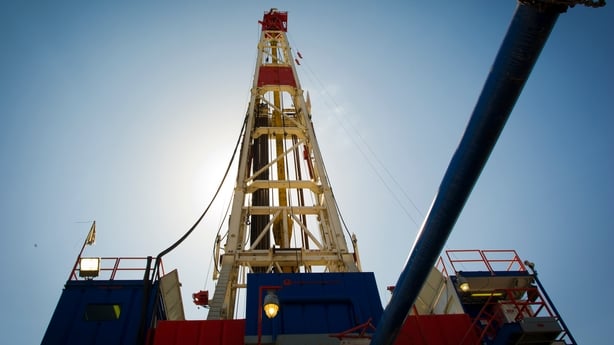
He said “not having gas reliability, not being able to import gas and doing away with this notion that fracked gas couldn’t come in to be burnt in Ireland, which it actually is anyway because it’s been brought in on a pipeline across Scotland.
“We actually tied ourselves up in knots thanks to policies that were being pursued by the previous minister that has now resulted, I believe, in energy prices being the highest in Europe.”
He said that while he was part of the previous government, neither Fine Gael and Fianna Fáil had the policy role in this area.
“We argued extensively, particularly here in the Shannon Estuary, that LNG should go ahead, that a gas fired station should go ahead and that we should have been far more ambitious with regard to our offshore wind and with regard to the options that were done.”
He said that the current minister has reversed all of those policies “and he’s also put aside this notion that we can’t import fracked gas because all gas is fracked.
“All gas is broken out of a rock at the end of the day. You either break it with pressure from water, or you break it with pressure from air, but gas has to come out of the ground somewhere”, he said.
He said those people that are against using LNG, Minister O’Donovan said “they’re the very people that will be saying this morning, why is it that we have the highest energy costs that we have, because ultimately at the end of the day, if you’re going to have transition, you have to have hydrocarbons as part of the transition.”
He asked what do you do on a day with no wind or a day with heavy frost when you need electricity at its peak and there is no wind and the wind turbines aren’t turning?
“You know you need to live in the real world as well, and unfortunately some people just want to inhabit a world that involves the lack of reality that says we don’t need hydrocarbons to power up our electricity grid when we actually do.
“We need a reducing amount of them but we also need an amount that won’t be dependent on a single pipeline, that we will be able to buy off of markets from different parts of the world, that we will be able to ship it in, that we will be able to burn it wherever we decide to burn it, and that we will be able to transmit it in a grid that’s fit for purpose.
“And all of that was set aside by the previous minister and the current minister now is redressing and reversing pretty much all of that.”