
Foreign exchange, often called “forex,” affects the daily lives of millions of Nigerians, even if many people do not deal with dollars or euros directly. The price of food in the market, the cost of fuel, school fees, medicines, and even transport fares are all linked to the exchange of the naira against other currencies. Over the past few years, Nigeria’s forex story has been one of big promises, tough policies and mixed results, reports Assistant Editor NDUKA CHIEJINA.
At the onset of the current phase of forex reforms initiated by the Bola Tinubu administration, the situation was in dire straits. Nigeria’s economy heavily depended on imports of fuel, machinery and many household goods. This meant there was always strong demand for foreign currencies, especially the United States dollar. At the same time, the main source of forex inflow, which is crude oil exports, was facing challenges ranging from oil theft, lower production, and fluctuating global prices. Foreign investors were also cautious about bringing money into the country because of concerns over the difficulty of repatriating their proceeds.
Before the initiation of the reforms, Nigeria operated a system where there were multiple exchange rates. There was an official rate set by the Central Bank of Nigeria, and there were other rates in the parallel market, often called the black market. This gap created confusion and opportunities for people to engage in round tripping. They buy dollars cheaply at the official rate and sell them at a higher price on the street. Many businesses complained that they could not access dollars at the official window, forcing them to rely on the parallel market, which was more expensive and unstable.
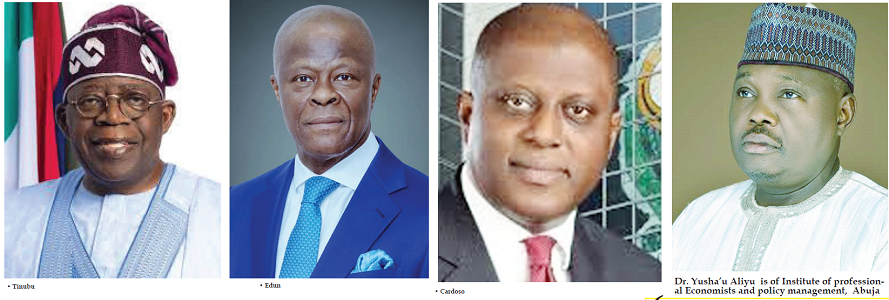
When the new government came in, many Nigerians hoped for a fresh approach. President Bola Tinubu made it clear that he wanted a more transparent and market-driven forex system. He spoke about the need to remove practices that encouraged corruption. The President said the country could not continue to run a system where a few people benefited from cheap official dollars while ordinary Nigerians and genuine businesses struggled to survive.
In one of his early pronouncements, President Tinubu explained that a single, unified exchange rate would help attract foreign investors and restore confidence in the Nigerian economy. According to him, investors want to know that when they bring money into the country, they can change it at a fair rate and take it out again without facing restrictions or heavy losses. He also linked a strong and stable forex market to job creation, saying that more investments would lead to more factories, offices, and opportunities for young people.
In driving home the new policy thrust, the Minister of Finance and Coordinating Minister of the Economy, Mr. Wale Edun said: “Nigeria now have a foreign exchange rate that is market based and also a deregulated oil market pricing which are two reforms that are long overdue over many decades that President Tinubu is currently implementing.
“The exchange rate stability achieved makes Nigeria competitive globally, regionally and continentally,” he stated.
On his part, the Governor of the Central Bank of Nigeria, Dr. Olayemi Cardoso advocates for a “willing buyer, willing seller” model, believing that artificial controls are unsustainable. He stated that a stable exchange rate will boost investor confidence and attract foreign investment. The CBN management has adopted a market forces approach, noting that artificially holding down the price of a commodity determined by forex is unsustainable. Cardoso also emphasised that closing the gap in exchange rates, though painful initially, showed commitment to transparency and sound monetary policy.
Following these positions, the government and the Central Bank moved to change how forex was managed. The main policy initiative was the unification of the exchange rate. This meant that instead of having different rates for different users, the market would determine the value of the naira, based on demand and supply. The official and parallel market rates were expected to come closer, reducing the wide gap that had existed for years.
The Central Bank also introduced measures to clear the backlog of unmet forex demands, especially for foreign airlines, manufacturers and international companies that had been waiting to repatriate their funds. The idea was to send a message to the world that Nigeria was serious about honouring its financial obligations and creating a friendly business environment.
Another part of the policy drive was to encourage more forex inflows. This included efforts to boost non-oil exports such as agriculture, solid minerals, and manufactured goods. The government talked about making it easier for Nigerians in the diaspora to send money home through official channels, offering better rates and fewer charges. There were also discussions about improving oil production and reducing theft so that more dollars could come into the country from crude sales.
The outcome of these policies has been mixed. On the one hand, the unification of the exchange rate brought more transparency. The wide gap between the official and parallel market rates reduced, at least for a period. Some foreign investors began to show renewed interest, and Nigeria recorded improvements in capital inflows. Operators said the system was clearer, even though it came at a cost.
On the other hand, the value of the naira weakened because the exchange rate was now market determined. This had a direct effect on the cost of living. Imported goods became more expensive, and the prices of locally produced items rose because many of the inputs, such as fuel and machinery, are linked to the dollar. Inflation climbed, and many families felt the pressure on their monthly budgets.
Manufacturers also faced challenges. While they welcomed a more open forex system, the high cost of dollars made it harder for them to import raw materials and spare parts. Some companies reduced production, while others passed the extra costs to consumers. Small businesses, in particular, struggled to cope with the fast-changing exchange rates.
Today, the inevitable adjustment is gradually gaining traction. Forex inflow has improved, although not in the required volume. Oil production has picked up compared to previous lows, but it has not yet reached levels that can comfortably support the country’s forex needs.
The Central Bank has continued to adjust its policies, including raising interest rates to make naira investments more attractive. The idea is that higher interest rates can encourage foreign investors to bring money into Nigerian bonds and other financial instruments, increasing the supply of dollars. There have also been efforts to strengthen monitoring and reduce illegal forex trading.
Many Nigerians now ask a simple question: where are we today? The answer depends on who you ask. Government officials often point to improvements in transparency and investor confidence. They say the system is now fairer and more open than before. Some economists agree that, in the long run, a market-driven forex system is better for the economy.
However, for the ordinary Nigerian, the reality is tough. The high cost of living is the most visible sign of a weak naira. Food prices, transport fares, rent, and school fees have all risen, but are moderating. Looking ahead, projections for Nigeria’s forex market depend on several key factors. One is oil production. If Nigeria can increase output and reduce losses from theft and pipeline damage, more dollars will flow into the system. Another is non-oil exports. Expanding agriculture, mining, and manufacturing for export can help reduce the country’s heavy reliance on crude oil.
Foreign investment is also crucial. If investors believe that Nigeria’s policies are stable and fair, they are more likely to bring in funds. This requires clear rules, respect for contracts, and a strong legal system. The government’s ability to manage inflation and public debt will also play a role in shaping confidence. Diaspora remittances offer another opportunity. Nigerians abroad send billions of dollars home every year. Making official channels more attractive can increase the amount that passes through the formal forex system, strengthening supply. There are also risks. Global oil prices can fall, reducing earnings. International interest rates can rise, making investors prefer safer markets. Local challenges such as insecurity and poor infrastructure can discourage business growth and export expansion.
From a personal and professional point of view, the current state of Nigeria’s forex situation calls for patience, consistency, and deeper reforms. The move toward a more open and transparent system is a step in the right direction, but it should be supported by strong efforts to grow the local economy. Nigerians need more factories, better farms, and stronger industries that can produce what the country consumes and sell to the world.
There is also a need for clear communication. Many people do not fully understand why the naira has fallen or what the long-term plan is. Simple and regular explanations from policymakers can help build trust and reduce fear and speculation in the market.
In the end, forex is not just about numbers on a screen. It is about jobs, food on the table, school fees, and the future of young Nigerians. A stable and strong naira will not come from policy changes alone. It will come from a productive economy where Nigeria earns more from what it makes and sells, not just from what it digs out of the ground.
As the country moves forward, the challenge will be to turn today’s difficult adjustments into tomorrow’s lasting gains. The road may be hard, but with steady policies, honest leadership, and the hard work of millions of Nigerians, the goal of a healthier and more stable forex market remains within reach.
Speaking to this development, Dr. Galadima Simon: “Growth is projected to do better in 2026 than in the previous year, 4.49 per cent this year as against 3.89 per cent in the year prior. This would be driven by the non-oil sector meaning FX reserves inflows would be diversified, leaving the Naira stronger. FX reserves are expected to climb to around $51 billion, inflation to decelerate further and exchange rate to experience appreciation.
“The situation is largely net positive in value as the gains outweigh the pains. However, it is not uhuru as market dichotomy still exists despite unification, foreign exchange earnings still not diversified enough with oil playing an outsized role.”
On his part, Economic Analyst, Dr. Yusha’u Aliyu noted: “Looking at the market behaviour in the last six months, it’s likely that the current trend will extend to the six months of 2026 when the budget of the year will begin to translate some provisions to the economy and subsequently when the electioneering takes effect, some elements of political expenditures will trigger in balance of the exchange rate, especially dollarisation.”