- Just as the Green Revolution shifted farming from sun and soil to synthetic fertilizers and pesticides, we are now seeing a new revolution, one of returning to an agriculture based on biology rather than chemistry.
- The current, chemically dependent model has produced a lot of food but at great cost to soil health, biodiversity and livelihoods.
- “Society must recognize the truth: we cannot continue to poison our environment in the name of food production, and regeneration is the only viable future,” a new op-ed argues.
- This post is a commentary. The views expressed are those of the author, not necessarily of Mongabay.
Agriculture is on the cusp of its most profound transformation in a century. Just as the Green Revolution shifted farming from sun and soil to synthetic fertilizers and pesticides, we are just beginning another revolution: returning to an agriculture based on biology rather than chemistry. This isn’t new knowledge; rather, it’s wisdom refined over millennia that we temporarily abandoned. If we embrace it, this transition could restore ecosystems, strengthen rural economies, and secure a healthier food future for all.
For most of human history, farming relied on natural systems: the symbiosis between plants, soil and sun. That changed in the 20th century when synthetic fertilizers and pesticides made soil little more than a prop to hold up a plant that was externally fed everything it needed, and was stripped of its biodiversity.
The approach boosted yields, but at enormous costs that we’re just now beginning to grasp fully: degraded soils, contaminated water, rising chemical input dependence (and correlated rising costs to farmers, even as food gets cheaper), which all result in collapsing farm economics and ecosystems. The system is locked in a treadmill of toxicity and debt.
Nature’s intelligence
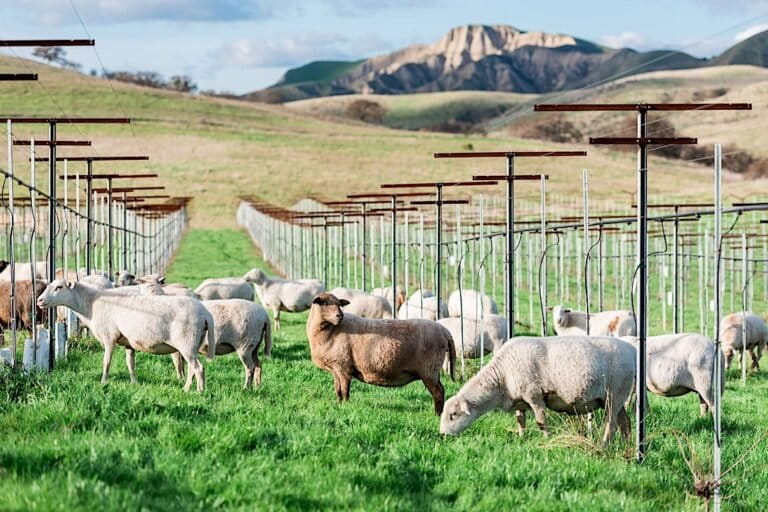
Regenerative agriculture offers a path forward, and away from agrichemicals and bare ground. It builds on thousands of years of Indigenous knowledge, farmer-led innovation, organic farming and agroecological science that challenge chemical dependency and center biology in agriculture, while avoiding rigid prescriptions that risk turning principles into ceilings.
Across the U.S. and around the world, farmers are proving what is possible. Healthy soils teem with microbes that supply nutrients to plants. Diverse insect and bird populations keep pests in check. Resilient plants need less water and resist disease. When the system works as nature designed, everything needed to support life is available, including the yields to feed a growing population.
Regenerative agriculture doesn’t have a simple recipe. This is a journey and learning process still in its early days. We are just beginning to see what’s possible when we return to working with nature, and the long-term potential is likely greater than what we can imagine today.
It’s also essential to remember that this massive transition is not just technical, but cultural. Through in-depth studies of more than 1,200 farms across North America, Ecdysis Foundation’s 1000 Farms Initiative has found a consistent theme: farming practices that are deeply tied to identity. To change how you farm is, in many ways, to change who you are.
But farmers have always adapted.

Indigenous communities refined practices like Three Sisters planting — corn, beans and squash grown together in ways that build soil fertility and resilience — over thousands of years. Farmers during the Green Revolution embraced nitrogen fertilizer, hybrid seeds and irrigation when circumstances demanded it, and today’s farmers are just as capable of bold change. Many who have begun the transition to regenerative agriculture describe a fundamental shift in mindset, from waking up each morning thinking about what to kill to thinking about how to work alongside the life in their fields.
This is not nostalgia for preindustrial farming. It is the next chapter in agriculture’s long history of innovation, building on Indigenous knowledge systems and the ecological intelligence refined over millions of years, and aligning it with modern science and technology.
Supporting the transition
Yet the burden cannot rest on farmers alone. Transitioning away from chemical dependency creates a vulnerable period: it will take time to restore the health of our soils and patience as we develop practices that work across different regions and systems. Farmers need technical assistance, transition insurance and patient capital to carry them through.
Other players must step up, too: Universities should expand research on living systems rather than chemical solutions, while policymakers must align subsidies and regulations with regenerative outcomes. Companies should build resilience into their supply chains by investing in regenerative practices, and philanthropy and finance must de-risk the transition so that farmers aren’t left to shoulder it alone.
Above all, society must recognize the truth: we cannot continue to poison our environment in the name of food production, and regeneration is the only viable future.

Path forward
The good news is that the transition is already underway. Farmers worldwide are demonstrating what’s possible, pioneering practices that rebuild soil health, restore biodiversity and secure livelihoods while maintaining strong yields. In fact, regenerative systems often deliver better yields in challenging conditions, like drought, which are becoming more common.
Regenerative agriculture is also having a cultural moment: consumers are asking for it, companies are marketing it, and there’s a growing body of books, films and even political speeches celebrating its promise. But if we want this to be more than a trend, it must happen at scale and in ways that deliver real impact. What farmers need to accelerate this transition is collective support via research, markets and policies that value ecological health alongside productivity.
This is a moment of extraordinary possibility. We can choose to keep doubling down on chemistry, chasing diminishing returns while destroying the very systems that sustain us. Or we can embrace regeneration and build a food system that produces abundance by working with nature’s intelligence.
The question is not whether we can afford to make this transition. The question is whether we can afford not to.
Sallie Calhoun is an impact investor, activist and funder of regenerative agriculture initiatives. She owns and manages Paicines Ranch in central California.
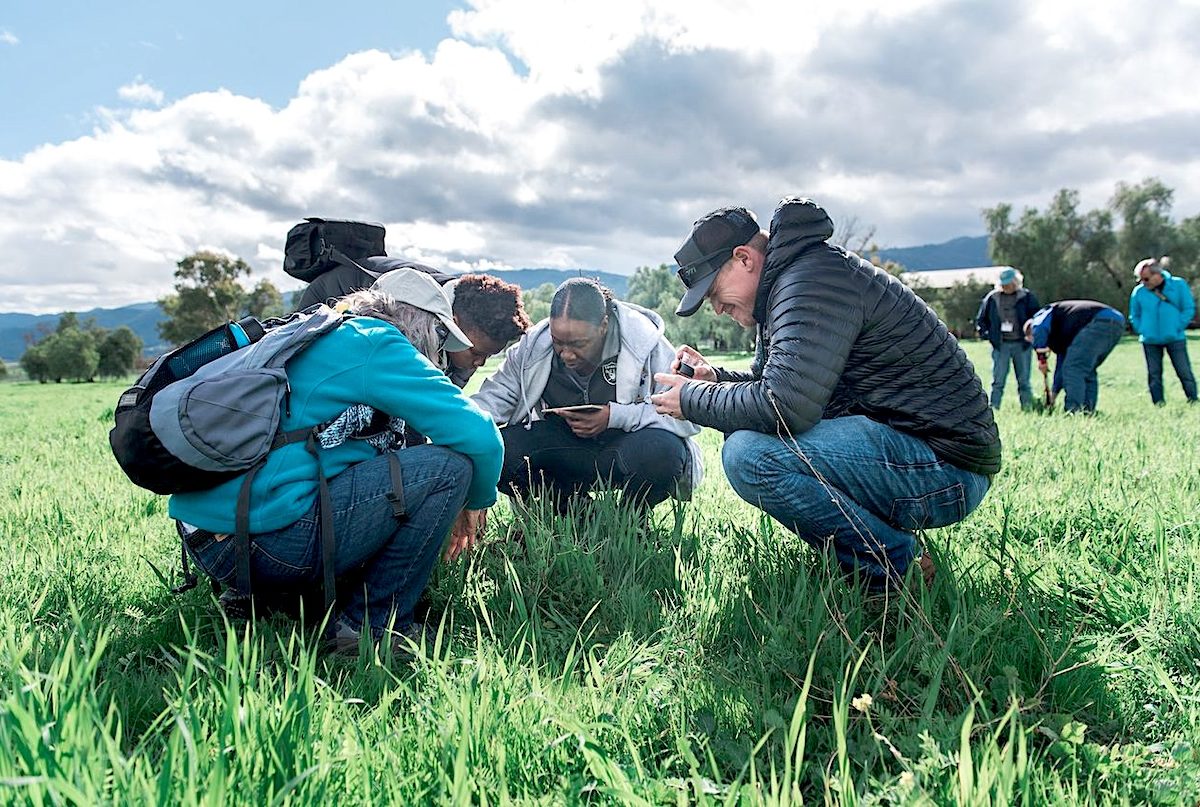
Banner image: Participants huddle during a cover crop workshop at Paicines Ranch in California. Image courtesy of Paicines Ranch.
See related coverage:
From waffle gardens to terraces, Indigenous groups revive farming heritage in America’s deserts
‘Silent epidemic of chemical pollution’ demands radical regulatory redo, say scientists