HOW DOES CLIMATE CHANGE AFFECT FOOD PRODUCTION?
The worst effects of climate change are now bringing significant risks to farming, including unpredictable changes in temperature (both averages, and extreme heat and cold), and availability of water (the volume of precipitation – too much destructive rain, and drought).
As the climate changes, so is the range of pests and diseases. Areas that were not previously vulnerable to certain types of crop-eating insects or destructive blights or fungi might suddenly be exposed to additional, unfamiliar risks. “The net effect of these climate [-induced] impacts will generally be negative (e.g., droughts causing reduced crop yields or crop failures), though they may be positive in some instances (e.g., warmer springs, longer growing seasons),” says a report co-authored by Oxfam.
Some of these concerns are already visible in East Africa, an area suffering from recurrent drought causing crop failures, loss of livelihoods, and large-scale internal displacement. At one point in 2022, 85 percent of cropland in Ethiopia had been affected, and up to 60 percent of cereal production in Somalia was below average as a result of a two-year-drought. The drought killed millions of livestock, due to lack of water and pasture.
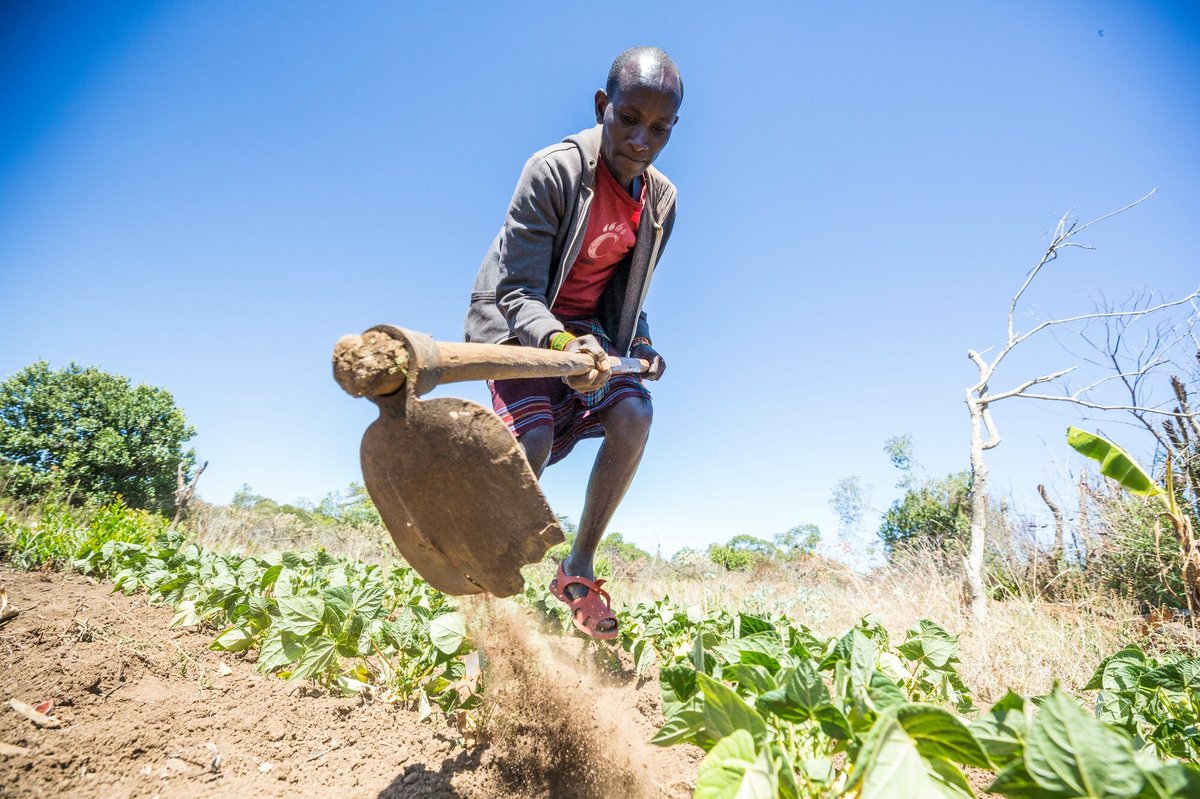
Small-scale farmers, who produce more than 70 percent of the food consumed by people in Asia and sub-Saharan Africa, are the most vulnerable to climate change and the resulting volatility of commodity prices. Yet they are the least responsible for the heat-trapping emissions responsible for the changes that are making food production, on which their very lives depend, more and more difficult.
HOW MUCH DOES AGRICULTURE CONTRIBUTE TO CLIMATE CHANGE?
Farming contributes to global warming, as fertilized soil emits nitrous oxide, cattle pass methane gas, and burning fields produces carbon dioxide. Agriculture accounts for one third of greenhouse gas emissions globally, according to the UN Food and Agriculture Organisation.
As part of our Behind the Brands campaign, started in 2013, Oxfam’s learned that the large-scale industrial agriculture production and supply chain supporting the food and beverage sector accounts for as much as 37 percent of global greenhouse gas emissions and is responsible for much of the destruction of the world’s tropical rainforests.
This means food and beverage companies are in a position to make a major difference in reducing greenhouse gas emissions and promoting sustainable farming practices that can help farmers survive climate change. Oxfam has advocated for the top 10 food and beverage companies to make commitments to reduce greenhouse gas emissions across their supply chain, set science-based goals, and track their results. We’ve actually scored these companies on the actions they take to protect the environment (and workers).
HOW MUCH DOES CLIMATE CHANGE AFFECT SOIL?
Farmers in areas accustomed to regular rainy seasons are now experiencing unpredictable rainfall. Sometimes this comes in the form of unusually heavy rains, which can have devastating effects, eroding top soil, washing away nutrients, and destroying productive growing areas.
Oxfam is helping farmers protect their soil by applying organic fertilizer, and planting trees to help reduce erosion and add nitrogen to improve soil quality. We advise farmers to plant trees and build stone walls and other structures to reduce water run-off, recharge groundwater, maintain moisture in growing areas, and reduce erosion.
To help rice farmers in southeast Asia, Oxfam for many years trained farmers in the System of Rice Intensification (SRI), which reduces chemical fertilizers that release powerful greenhouse gases when applied to farmland. SRI growing methods use 30 percent less water, no harmful chemicals, and reduces greenhouse gas emissions by up to 20 percent.