
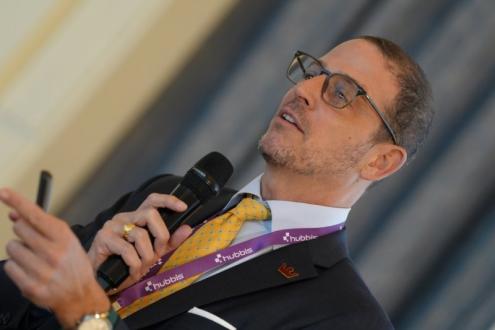
At the Hubbis Independent Wealth Management Forum – Dubai 2026, Joshua Rotbart, Founder and Managing Partner of J. Rotbart & Co., examined the resurgence of precious metals as strategic portfolio components amid geopolitical fragmentation, currency realignment and shifting investor behaviour. His discussion moved beyond short-term price movements, focusing instead on structural drivers, evolving UHNW allocation patterns and the operational realities of owning and managing physical precious metals within globally diversified portfolios.
Key Takeaways
- Geopolitical instability is reinforcing gold’s strategic role: Rotbart argued that changing global alliances, policy uncertainty and geopolitical tension are accelerating demand for gold as a neutral store of value.
- De-dollarisation trends are strengthening structural demand: Central banks and investors are reducing concentration risk in USD reserves, positioning gold as a diversification anchor.
- Silver combines monetary protection with industrial growth exposure: Strong demand from solar and industrial applications is creating supply pressures while maintaining its role as a hedge asset.
- UHNW allocations are gradually increasing toward strategic levels: Clients are moving from minimal exposure toward 5–10% allocations as part of broader alternative asset strategies.
- Physical ownership is gaining favour over paper exposure: Investors increasingly distinguish between owning bullion and holding financial proxies that introduce counterparty risk.
- Storage jurisdiction and accessibility are now core strategic considerations: Global families are diversifying vault locations and prioritising control, liquidity and mobility of physical assets.
A Record Market Driven by Structural Forces
Rotbart began by framing the current environment as one of the strongest periods for precious metals in recent history. Reflecting on more than a decade in the industry, he described the past year as exceptional, noting that price performance has significantly exceeded long-term averages.
He attributed the surge primarily to geopolitical change. According to Rotbart, shifting alliances and unpredictable political dynamics are creating heightened uncertainty across markets, encouraging investors to seek assets perceived as independent from sovereign risk.
“When there is anxiety in the markets,” he noted, “people go to gold.”
Rather than positioning recent price movements as speculative momentum, he argued that the rally reflects deeper structural shifts in the global order.
Geopolitics, De-Dollarisation and Central Bank Demand
A central theme of the discussion was the gradual evolution away from single-currency dominance. Rotbart explained that many countries are diversifying reserves not by abandoning the US dollar outright but by reducing exposure concentration.
Gold, he suggested, has emerged as a key beneficiary of this trend. Central banks across Asia, Eastern Europe and emerging markets continue to accumulate gold as a strategic reserve asset, reinforcing demand from institutional buyers.
He described this environment as a convergence of geopolitical realignment and monetary diversification, where sovereign behaviour amplifies broader investor sentiment.
Strong physical demand is also reshaping market dynamics. Rotbart highlighted tight supply conditions, noting that bullion dealers globally are experiencing elevated demand and reduced inventory availability, which is contributing to rising premiums.
Silver’s Dual Role: Industrial Momentum Meets Monetary Hedging
While gold dominates strategic allocations, Rotbart emphasised that silver’s recent performance reflects a distinct set of drivers.
Industrial demand, particularly linked to solar technology and manufacturing, has tightened supply while increasing investor interest. This combination has resulted in significant price appreciation, positioning silver as both a cyclical industrial asset and a monetary hedge.
He encouraged advisers to view silver through a longer time horizon, reminding the audience that precious metals operate within multi-decade cycles rather than short-term trading narratives.
“We look at long cycles,” he explained, highlighting that volatility should be assessed relative to broader structural trends.
UHNW Clients Increasing Strategic Allocations
Turning to investor behaviour, Rotbart described a gradual shift in how high-net-worth clients are incorporating precious metals into portfolios.
While historical allocations were often minimal, he noted that many investors are now approaching strategic ranges of around 5% exposure, with some moving higher depending on risk preferences and broader asset allocation.
Rather than replacing other alternatives, precious metals are increasingly positioned alongside private equity, real estate and structured investments as part of diversified portfolios.
Physical Ownership Versus Financial Exposure
A major practical theme centred on ownership structures. Rotbart stressed that investors seeking true asset ownership are increasingly favouring physical bullion rather than exchange-traded instruments.
“If the philosophy is to own gold,” he explained, “the only way is to buy physical.”
He argued that financial instruments introduce counterparty risk and may not deliver the same protections investors expect from gold as a defensive asset.
Allocated storage, where specific bars are legally segregated and owned by the client, is gaining traction among UHNW families seeking clarity of ownership and reduced balance-sheet exposure.
Storage Strategy and Jurisdictional Flexibility
Rotbart devoted significant attention to storage and jurisdictional considerations, highlighting how access rights and legal ownership can differ depending on whether assets are held within bank vaults or independent facilities.
He noted that accessibility during periods of crisis or market disruption is becoming a key concern, with investors increasingly favouring independent high-security vaults designed specifically for precious metals.
Global diversification of storage locations is also rising. Families are reassessing geopolitical risk and spreading holdings across multiple jurisdictions to maintain flexibility as global conditions evolve.
“What is considered safe today may not be the same in five or ten years,” he suggested, emphasising the need for adaptable strategies.
Precious Metals as a Professionalised Asset Class
Rotbart concluded by reframing precious metals ownership as a professionalised investment process rather than a retail transaction.
While Dubai offers highly liquid markets, he argued that UHNW investors increasingly seek integrated solutions encompassing acquisition, secure storage, transportation and liquidity options such as gold-backed lending.
In his view, the growing complexity of global wealth planning is elevating precious metals from opportunistic trades to structural components of resilient portfolios.
As geopolitical uncertainty persists and portfolio construction evolves, gold and silver are returning to prominence not merely as safe-haven assets but as strategic tools for diversification, control and long-term wealth preservation.