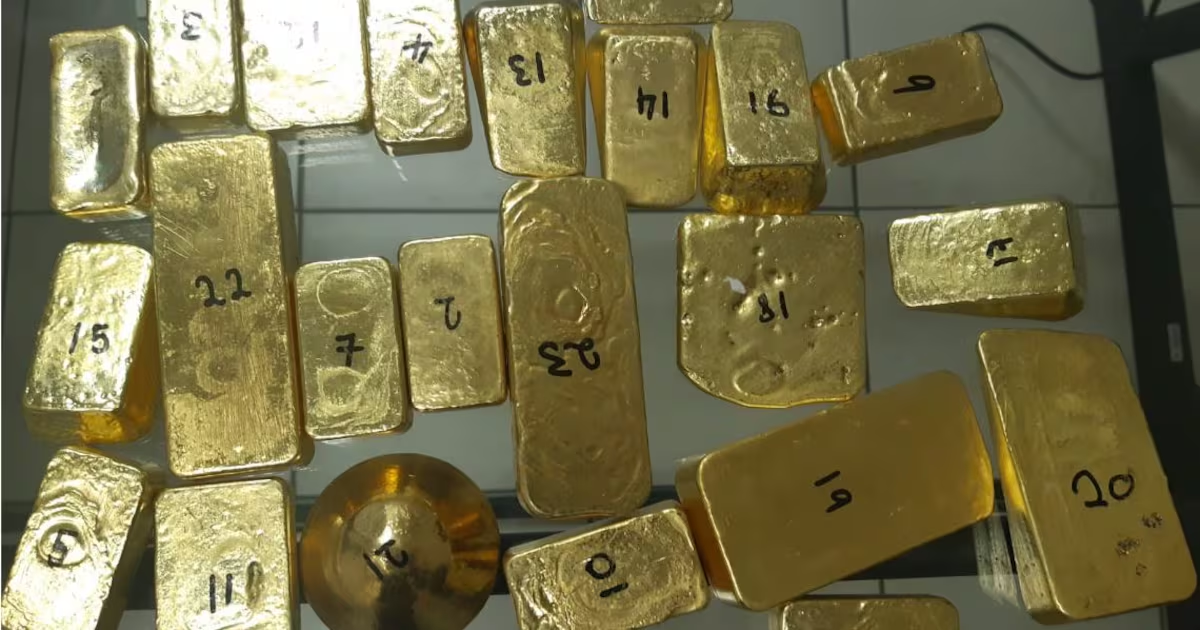
The Precious Metals Act governing smelting, beneficiation and refining has not been reviewed for 20 years, making it a target for exploitation by illicit players, says the South African Diamond & Precious Metals Regulator (SADPMR).
In its 2026/2027 annual performance plan tabled in parliament this week, the regulator conceded it was constrained in effectively combatting illicit trade in precious metals because of an out-of-date legislative framework.
“The current legislative framework makes it easy for anyone to apply for a refining licence without having to comply with stringent legislative provisions that are currently lacking in the Precious Metals Act,” it said.
The illicit trade in precious metals could not be stamped out due to the regulator’s lack of oversight over scrap jewellery, a major channel through which illegally obtained metals can be legitimised.
The SADPMR’s mission is to promote the diamond and precious metals industries, with one of its core functions being to facilitate the buying, selling, importing and exporting of diamonds.
However, due to no amendments having been made since it was introduced in 2007, the act was insufficient to address the “proliferation” of refinery licences, which can be exploited to launder illicitly acquired precious metals, it said.
“Strengthening the act is therefore imperative to ensure that business entities with unlawful intentions are prevented from obtaining or retaining licences should they fail to comply with the envisaged stricter requirements,” it said.
The gold sector remained highly vulnerable to illicit activities.
“Historically, this susceptibility was evident in the rise of fraudulent mining companies and refineries that exploited VAT loopholes, engaging in illegal mining, issuing false invoices, and laundering money, resulting in billions in lost revenue,” it said.
Minerals Council South Africa estimated that R21bn was lost in sales and taxes a year due to illicit mining
The SADPMR also highlighted that while the implementation of the domestic reverse charge rules under the VAT Act, which shifted VAT liability from suppliers to buyers, helped curb fraud, gaps in the precious metals legislative framework meant the sector was still exposed to potential exploitation.
“These ongoing risks, which could further tarnish the reputation of South Africa’s precious metals industry, highlight the urgent need to review and strengthen the Precious Metals Act and its associated regulations.”
To enhance compliance with global best practice and deter illicit trade in precious metals, the act should merge standards, including guidelines from the Organisation for Economic Co-operation and Development.
Vivien Chaplin, director for corporate and commercial at Cliffe Dekker Hofmeyr, said the lack of regular review of the Precious Metals Act for nearly 20 years was problematic because market conditions, criminal methodologies and international best practices continued to evolve.
“A well-functioning regulatory framework typically requires periodic review to remain fit for purpose,” she said.
South Africa’s primary mining legislation, the Mineral and Petroleum Resources Development Act, was only now being substantially amended after more than two decades.
Chaplin said research found that South Africa’s regulatory framework was “increasingly strained” and had failed to keep pace with evolving challenges.
Illicit mining has had a knock-on impact, with mineral and petroleum resources minister Gwede Mantashe saying the economy had lost R60bn in 2024.
Minerals Council South Africa, which represents 80% of the domestic mining industry, estimated that R21bn was lost in sales and taxes a year due to illicit mining.
The Global Initiative Against Transnational Organised Crime says South Africa loses an estimated R14bn a year from illicit gold mining and smuggling, excluding additional losses from VAT fraud and illicit financial flows.
According to the SADPMR, illegal mining has long been a persistent challenge in South Africa and appears to be growing in both scale and associated criminality.
It said it is linked to serious crimes, including illicit financial flows, high levels of violence and the smuggling of weapons and explosives.
“South Africa has recently seen a significant surge in criminal activities connected to illegal mining. These include an influx of undocumented immigrants, increased smuggling of weapons and explosives, illicit financial flows and illegal trade, along with environmental and social impacts that are difficult to quantify,” it said.
Business Times