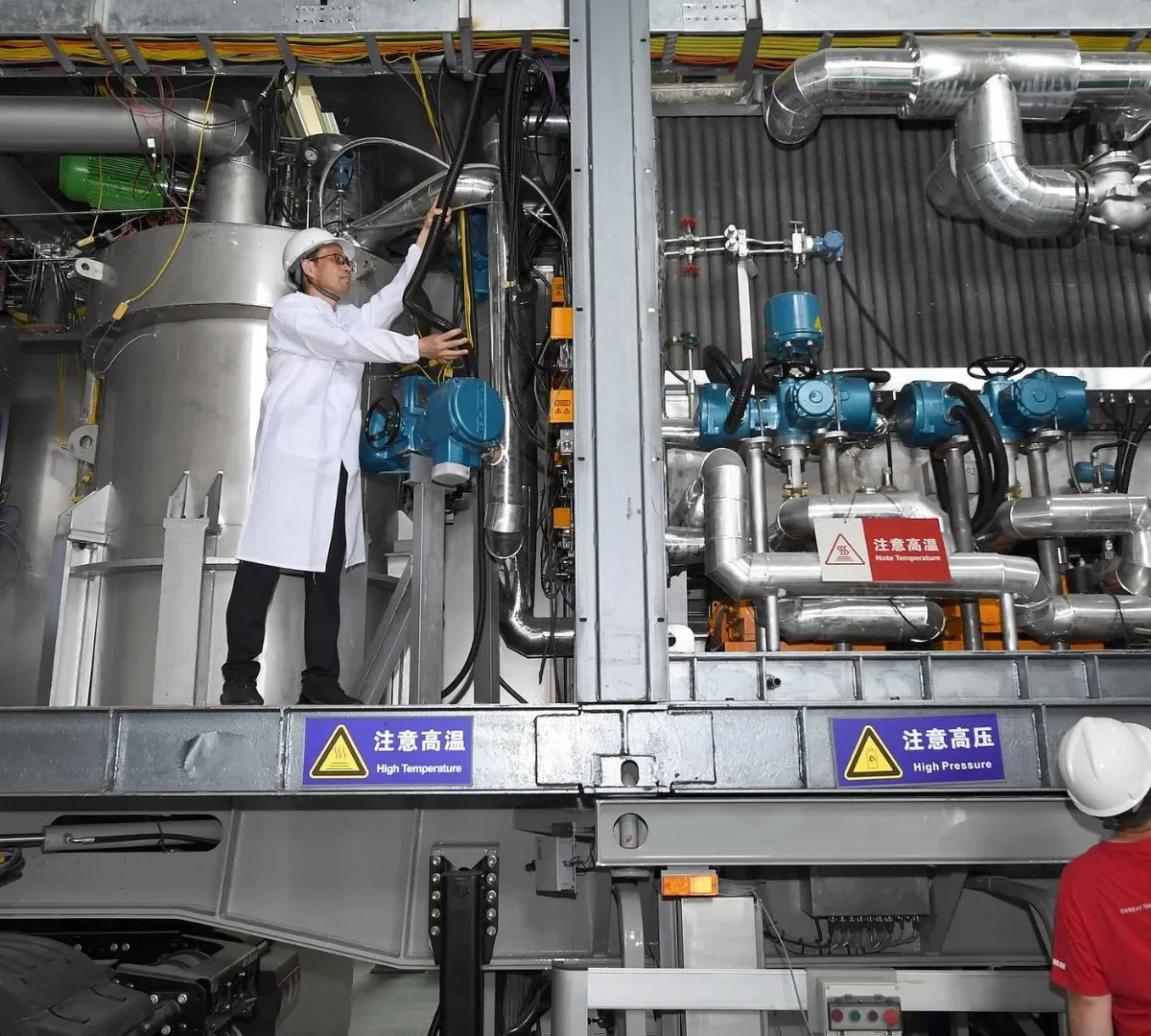
A research team from China is testing a prototype nuclear reactor that is designed to be transported on a truck. The team, led by Wu Yican from the Institute of Nuclear Energy Safety Technology at the Hefei Institute of Physical Science, has identified the system as a 10-megawatt vehicle-mounted nuclear power unit.
“Our team has built the world’s first 10-megawatt vehicle-mounted nuclear power bank engineering integrated simulation test prototype,” Wu told Science and Technology Daily. “The application of this technology can free people from “battery anxiety.”
The development team has worked on this project for several years and is now seeking opportunities to put the reactor into active use for various commercial and industrial applications.
The unit functions as a mobile power source that is capable of operating for several decades without requiring a recharge. A 10-megawatt output is sufficient to power a medium-sized artificial intelligence data center.
Wu stated that the technology is compact and prioritizes safety at the source. Potential applications for this technology include providing electricity for remote regions and islands, delivering emergency backup power in specialized environments, and propelling maritime vessels.
Implications for several industries
The technology is also being considered for use in space systems and for supporting the energy requirements of artificial intelligence computing hubs.
Wu described the system as an example of a new generation of nuclear energy technology. He noted that future energy systems should be approachable, flexible, and intelligent to meet diverse energy needs.
“The nuclear power bank we proposed is a representative of this new generation of nuclear energy systems,” he stated. “It has the characteristics of ultra-safety, ultra-small size, and ultra-long-lasting performance.”
According to Wu, these systems are expected to have a wide range of uses. These applications range from microwatt-level nuclear batteries used in heart pacemakers to megawatt-level power supplies intended for ocean and space exploration.
The relationship between nuclear science and artificial intelligence was also a focus of the scientist’s discussion. He noted that nuclear power acts as a stable and resilient energy source that can meet the high computing demands of artificial intelligence.
At the same time, artificial intelligence is being integrated into the research and development processes of nuclear science. Wu indicated that this integration is changing the current research paradigms of the nuclear industry and may lead to changes in how the industry operates in the future.
Meeting diverse energy needs of future
According to figures from the China Nuclear Energy Association, China operated 59 commercial nuclear units as of last year. These facilities produced a total of 467.7 billion kilowatt-hours of energy, accounting for 4.82 percent of the total electricity demand in the country, reported SCMP.
These statistics place China second globally in terms of total nuclear power generation, behind the United States.
By creating smaller, transportable units, the researchers aim to provide power to locations that are difficult to reach with traditional electrical grids.
“I believe that the next-generation nuclear energy system should be based on the concept of ensuring nuclear safety from the source, and should possess technical characteristics such as accessibility, flexibility, and intelligence, so as to meet the diverse energy needs of the future,” Wu concluded.
The project remains in the testing phase as the team evaluates the performance and safety of the unit.