
Japanese equities have long been a hard sell.
And Yoram Lustig, head of global investment solutions – EMEA at T Rowe Price, knows why.
He says: “Every time in my career that I have gone overweight to Japanese equities, it has been the wrong decision.”
Yet he is overweight in Japanese equities compared with the global index weighting right now, and it may be paying off.
Data from FE Analytics shows the IA Japan sector has returned approximately twice what the global market has this year, and Lustig notes it outperformed the All Country World Index from 2022-25.
His view is that the greater emphasis on corporate governance and improved treatment of minority shareholders has been key to the returns.
Other factors at play
Dan Carter, who runs a Japanese equity fund at Jupiter Asset Management, agrees the Japanese stock exchange puts pressure on companies to improve their governance, and this has helped the market.
However, he notes additional factors have also been at play. Carter says the returns have come from two sectors: exporters and banks.
Similarly, Annabelle Miller, portfolio manager at ECP Asset Management, says: “Japanese indices have experienced strong year-to-date returns driven by several factors.
“The financial sector has benefited from a rising interest rate environment. This has benefited the large mega-banks (MUFG, SMFG, Mizuho), which are large constituents in the Topix.”
For example, the Japanese semiconductor sector has benefited from the growth in capital expenditure associated with building out AI infrastructure and technology. Tokyo Electron and Advantest have been the most notable beneficiaries.
She says investors are also seeing a recovery in some areas of the industrial market linked to a resurgence in defence spending and factory automation, benefiting companies like Mitsubishi Heavy Industries.
Positive on the prime minister
Andrew McCagg, client portfolio manager at Nomura Asset Management, says optimism about the potential impact of a new prime minister resulted in some share price momentum at the start of this year.
Typically, only one of those sectors should be working at any one time. For banks to deliver strong returns, interest rates need to be higher and rising, as indeed they have been in Japan.
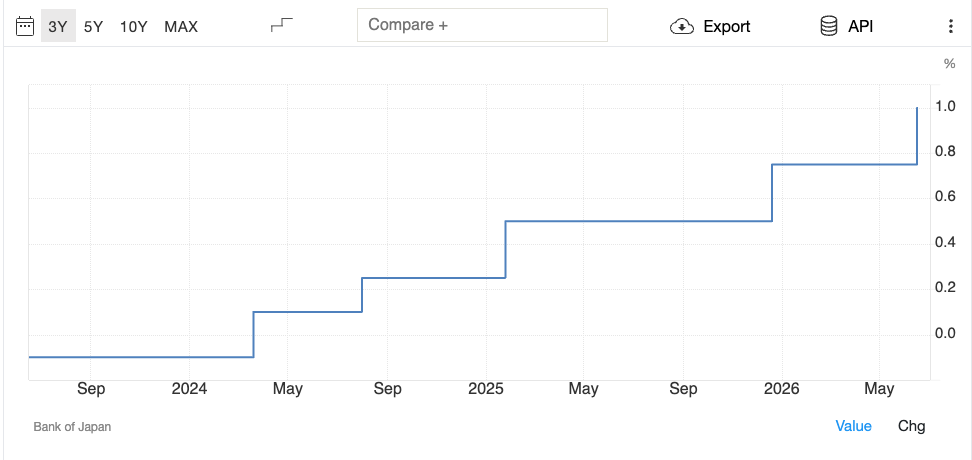
But if that is happening, the currency would be expected to strengthen, making the exports less competitive.
This is the potential problem Lustig sees for the Japanese market going forward.
Rates are rising because the country has, for the first time in decades, got inflation in the system, and monetary policy has tightened in an effort to curtail it.